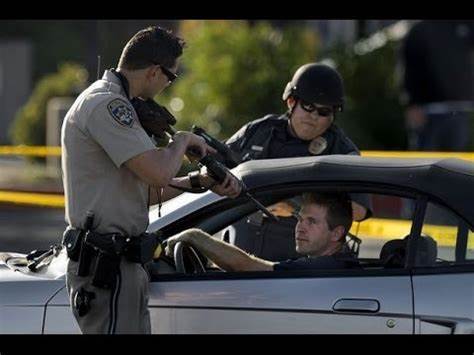

Why were there no mass shootings in the 1970s? Does the mood of the country in relation to generational turnings contribute?
Libertarian
boosted
Wherever weâre headed, America is evolving in ways most of us donât like or understand. Individually focused yet collectively adrift, we wonder if weâre heading toward a waterfall. Are we?
The president and congress no longer even pretend to be fiscally responsible.
They didnât even pretend to try and pay for the increased spending. Trumpâs tax cuts were sold as a way to have mega-corporations repatriate hundreds of billions from overseas and reinvigorate the economy with a surge in job creation.
With half the working public already paying little or no taxes, the tax cuts heavily favored the .1% and put $200 billion more into the coffers of the biggest corporations with the most powerful lobbyists. So, the politicians keep spending more on the military industrial complex and corporate tax revenues have plunged by two thirds, which will leave us with a $1.3 trillion deficit next year, even if we donât fall into recession.
Libertarian
boosted
The Townsend Acts led the Sons of Liberty to dump British tea into the Boston Harbor, known forevermore as the Boston Tea Party. In retaliation, the British passed a series of acts later known as the Intolerable Acts, all designed to punish and reshape the colonial governance system to make it easier for the British to control the colonies. Ultimately, the economic warfare devolved into a shooting war that led to the existing social and political order being swept away.
The Civil War is commonly seen as a conflict only over slavery, but there was a huge economic component to the war. The industrial revolution in the North, during the first few decades of the 19th century, brought about a machine age urban economy that relied on wage laborers, not slaves. At the same time, the warmer Southern states continued to rely on slaves for their rural farming economy and cotton production. In 1805 there were just over one million slaves worth about $300 million; fifty-five years later there were four million slaves worth close to $3 billion.
In the 11 states that eventually formed the Confederacy, four out of ten people were slaves in 1860, and these people accounted for more than half the agricultural labor in those states. In the cotton regions the importance of slave labor was even greater. The value of capital invested in slaves roughly equaled the total value of all farmland and farm buildings in the South. More than two-thirds of all urban counties were in the Northeast and West; those two regions accounted for nearly 80 percent of the urban population of the country. By contrast, less than 7 percent of people in the 11 Southern states lived in urban counties.
Southerners viewed any attempt by the federal government to limit the rights of slave owners over their property as a potentially calamitous threat to their entire economic system. The Southâs economic investment in slavery explains the willingness of Southerners to risk war when faced with what they viewed as a serious threat to their âpeculiar institutionâ after the electoral victories of the Republican Party and President Abraham Lincoln the fall of 1860.
The industrial power of the North virtually insured victory, the longer the conflict extended. This may explain Leeâs aggressiveness in trying to strike a knockout blow during the early years of the war. The clear delineation of states based on their beliefs in 1860 sure resonates today when you view how the country voted in 2016. Will the drastic discrepancy in beliefs about how to govern this country lead to a similar outcome?
Libertarian
boosted
The causes for World War II are many, but the underlying source for the deaths of 65 million people was economic. The Treaty of Versailles, blaming the Germans solely for the First World War and demanding crippling reparations, was the nexus of World War II. Germany was forced to surrender colonial territories and militarily disarm, creating German resentfulness of the treaty. In 1923 the Weimer Republic delayed reparation payments, leading France and Belgium to occupy the Ruhr Valley, effectively appropriating the coal and metal production that took place there.
As much of German manufacturing was dependent on coal and metal, the loss of these industries created a negative economic shock leading to a severe contraction. This contraction, as well as the governmentâs continued printing of money to pay internal war debts, generated spiraling hyperinflation. This economic suffering and humiliation ultimately led to the population turning to Adolf Hitler as their savior.
The global trade contraction exacerbated the mistrust and anger building throughout the world. Tariffs and counter-tariffs made the Great Depression greater than it had to be. The protectionist policies of countries around the globe denied key raw materials to countries dependent upon imports. While the British, French, Soviets and Americans had large colonial empires to turn to for access to much needed raw materials, countries such as Germany, Italy and Japan did not.
âHave-notâ nations found it increasingly necessary to use military force to annex territories with the much-needed resources. Such military force required extensive rearmament and, the case of Germany, meant a direct violation of the Versailles Treaty.
This ultimately resulted in war breaking out in Europe. The American oil embargo on Japan ultimately resulted in the attack on Pearl Harbor and the start of the Pacific war.
The things that will destroy America are prosperity at any price, peace at any price, safety first instead of duty first, and love of soft living and the get-rich-quick theory of life.
The causes for World War II are many, but the underlying source for the deaths of 65 million people was economic. The Treaty of Versailles, blaming the Germans solely for the First World War and demanding crippling reparations, was the nexus of World War II. Germany was forced to surrender colonial territories and militarily disarm, creating German resentfulness of the treaty. In 1923 the Weimer Republic delayed reparation payments, leading France and Belgium to occupy the Ruhr Valley, effectively appropriating the coal and metal production that took place there.
As much of German manufacturing was dependent on coal and metal, the loss of these industries created a negative economic shock leading to a severe contraction. This contraction, as well as the governmentâs continued printing of money to pay internal war debts, generated spiraling hyperinflation. This economic suffering and humiliation ultimately led to the population turning to Adolf Hitler as their savior.
The global trade contraction exacerbated the mistrust and anger building throughout the world. Tariffs and counter-tariffs made the Great Depression greater than it had to be. The protectionist policies of countries around the globe denied key raw materials to countries dependent upon imports. While the British, French, Soviets and Americans had large colonial empires to turn to for access to much needed raw materials, countries such as Germany, Italy and Japan did not.
âHave-notâ nations found it increasingly necessary to use military force to annex territories with the much-needed resources. Such military force required extensive rearmament and, the case of Germany, meant a direct violation of the Versailles Treaty.
This ultimately resulted in war breaking out in Europe. The American oil embargo on Japan ultimately resulted in the attack on Pearl Harbor and the start of the Pacific war.
The politicians in Washington exacerbated the recession and created the Great Depression by trying to reverse the economic cycle. The Smoot-Hawley Tariff Act raised American tariffs to unparalleled levels, virtually closing our borders to foreign goods.
American exports fell from $5.5 billion in 1929 to $1.7 billion in 1932. Our main exports were agricultural. The main creditors of American farmers were rural banks. When agriculture collapsed, the rural banks closed their doors collapsed.
Some 2,000 banks, with deposit liabilities of over $1.5 billion, closed their doors between August 1931, and February 1932. The whole nation, in fact, the whole world, fell into the cataclysm of despair and depression in 1931. American unemployment jumped to more than 8 million and continued to rise. Economic conditions collapsed and unemployment in 1932 surged to over 12 million. Again, politicians spewed happy talk as the situation worsened.
The Great Stock Market Crash of 1929 and subsequent Great Depression followed five years of reckless credit expansion by the Federal Reserve. The Federal Reserve credit expansion in 1924 was in reaction to a business downturn and to assist the Bank of England in its wish to maintain prewar exchange rates. The strong US dollar and the weak British pound were to be readjusted to prewar conditions through a policy of inflation in the United States and deflation in Great Britain.
The credit expansion led to the Roaring Twenties. The volume of farm and urban mortgages expanded from $17 billion in 1921 to $27 billion in 1929. Large increases occurred in industrial, financial, and state and local government indebtedness simultaneously. This Federal Reserve spurred expansion of money and credit led to skyrocketing real-estate and stock prices. Sound familiar? The Federal Reserve is good at one thing â creating bubbles and subsequent busts. Notice how politicians always tell you everything is great. Best economy ever!!!
The Townsend Acts led the Sons of Liberty to dump British tea into the Boston Harbor, known forevermore as the Boston Tea Party. In retaliation, the British passed a series of acts later known as the Intolerable Acts, all designed to punish and reshape the colonial governance system to make it easier for the British to control the colonies. Ultimately, the economic warfare devolved into a shooting war that led to the existing social and political order being swept away.
The Civil War is commonly seen as a conflict only over slavery, but there was a huge economic component to the war. The industrial revolution in the North, during the first few decades of the 19th century, brought about a machine age urban economy that relied on wage laborers, not slaves. At the same time, the warmer Southern states continued to rely on slaves for their rural farming economy and cotton production. In 1805 there were just over one million slaves worth about $300 million; fifty-five years later there were four million slaves worth close to $3 billion.
In the 11 states that eventually formed the Confederacy, four out of ten people were slaves in 1860, and these people accounted for more than half the agricultural labor in those states. In the cotton regions the importance of slave labor was even greater. The value of capital invested in slaves roughly equaled the total value of all farmland and farm buildings in the South. More than two-thirds of all urban counties were in the Northeast and West; those two regions accounted for nearly 80 percent of the urban population of the country. By contrast, less than 7 percent of people in the 11 Southern states lived in urban counties.
Southerners viewed any attempt by the federal government to limit the rights of slave owners over their property as a potentially calamitous threat to their entire economic system. The Southâs economic investment in slavery explains the willingness of Southerners to risk war when faced with what they viewed as a serious threat to their âpeculiar institutionâ after the electoral victories of the Republican Party and President Abraham Lincoln the fall of 1860.
The industrial power of the North virtually insured victory, the longer the conflict extended. This may explain Leeâs aggressiveness in trying to strike a knockout blow during the early years of the war. The clear delineation of states based on their beliefs in 1860 sure resonates today when you view how the country voted in 2016. Will the drastic discrepancy in beliefs about how to govern this country lead to a similar outcome?
Wherever weâre headed, America is evolving in ways most of us donât like or understand. Individually focused yet collectively adrift, we wonder if weâre heading toward a waterfall. Are we?
The president and congress no longer even pretend to be fiscally responsible.
They didnât even pretend to try and pay for the increased spending. Trumpâs tax cuts were sold as a way to have mega-corporations repatriate hundreds of billions from overseas and reinvigorate the economy with a surge in job creation.
With half the working public already paying little or no taxes, the tax cuts heavily favored the .1% and put $200 billion more into the coffers of the biggest corporations with the most powerful lobbyists. So, the politicians keep spending more on the military industrial complex and corporate tax revenues have plunged by two thirds, which will leave us with a $1.3 trillion deficit next year, even if we donât fall into recession.
The two parties proved they have absolutely no interest in reducing or even slowing spending. They agreed to a two-year deal that will add at least $200 billion more to the annual deficits and increased the debt ceiling so they can keep borrowing. And this is even before the mandatory spending for Social Security, Medicare, and Medicaid kick into high gear in the coming years.
The fact doubling the national debt in the last ten years has not caused a catastrophe â yet â has created an arrogant hubristic ruling oligarchy who are sure they can run the debt to infinity with no adverse consequences. They have bought off the politicians, control the media, and use their Deep State surveillance assets to insure their continued control of the system and obscene riches. Meanwhile, the average American continues to be screwed and ripped off by both parties.
The immense debt, stock and real estate bubbles, created by feckless central bankers, corrupt politicians, and spineless government apparatchiks, have set the stage for the greatest financial calamity in world history.
Rather than taking the bitter medicine of purging the system of bad debt and allowing zombie banks and corporations to die, the ruling class has chosen to ramp up the debt orgy and reward themselves and their cronies with ill-gotten riches, while impoverishing the masses. Their arrogance and hubris have grown to vast proportions and will eventually result in a bloody backlash from those they have screwed over.
The election of Donald Trump over the hand-picked candidate of the oligarchy, was a reaction to the raping and pillaging of Main Street by the greedy soulless psychopaths in suits on Wall Street and in the halls of the Eccles building in Washington D.C. The average hard-working American has seen eight years of âgovernment of the bankers, by the bankers, for the bankersâ.
Wall Street was bailed out and rewarded with the ability to borrow at 0% from their captured Federal Reserve. Zombie corporations were kept alive with low interest debt, with no adjustment for risk. The cowardly politicians drove the national debt from $11.5 trillion to over $20 trillion, while accomplishing minimal GDP growth (negative growth using a real inflation rate), and enriching mega-corporations and the top .1%. Meanwhile, risk averse senior citizens, depending upon some interest income to survive, were thrown under the bus by Bernanke, Yellen and Powell.
It was the deplorables in flyover country, the blue-collar workers in Pennsylvania, Michigan, Wisconsin and Ohio, and senior citizens in Florida who voted their wallets, which had been picked by establishment politicians for the previous eight years. Good paying manufacturing jobs with health benefits have been replaced with low paying retail and service jobs with minimal benefits.
Retail store closings continue to accelerate, while credit card debt hits all-time highs, surpassing the 2008 levels. A critical thinking individual might conclude millions of Americans are running up their credit card balances by paying their utility bills, property tax bills, medical bills, and other necessities on credit. Thousands of retail stores wouldnât be closing if people were still buying shit they didnât need on credit.
After campaigning as if he would be a fiscally responsible president, Trump has been a disappointment regarding the budget. His âbest economy everâ is nothing but a government spending driven, low interest rate, stock market boosting bubble. After promising to eliminate the debt during the campaign and railing against the low interest rate driven stock market bubble, Trump and the Republicans have added $2 trillion to the national debt, thus far.
The original projection for FY19 was around an $800 billion deficit, but the economy is âboomingâ so much, it will now reach at least $1.1 trillion. The rate of growth in the debt is outpacing the rate of growth of GDP, therefore we are regressing fiscally. Pointing this out is considered traitorous among Trump can do no wrong acolytes.
Libertarian
boosted
@dcjogger You mean you would allow open borders and drug legalization, but want our Bill of Rights restored as our Founders intended. Am I my interpreting you correctly.
Libertarian
boosted

@dcjogger The trick is for EVERYONE to stand up at the same time...
The US just gets worse by the day.
If Libertarians had to choose between drug legalization, open borders, or restoring the Bill of Rights, Libertarians would rather restore the Bill of Rights.
One of the reasons the USA is collapsing now is that Americans would prefer to live in a prison instead of allowing one person to have freedom.
Americans don't care that female circumcision is banned, but Americans become batshit insane when they're told that male circumcision is legal.
Americans don't care that not shoveling snow is illegal, but Americans would lose their mind if the punishment was only 6 months in jail.
Americans don't mind that straws are outlawed, but Americans become outraged when they find out that toothpicks are still legal.
Americans don't mind that the US is a police state as long as the rest of the world suffers under tyranny, too.
Americans scream Trump supporting debt, wars, and the police state is fine because the USA would have debt, wars, and tyranny if Clinton had won.
If Clinton had promised to chop off your left leg and Trump had promised to chop off your right leg, Americans would scream with delight if they had chosen the winning side.
Racists scream that the US never had black people before today, but that isn't true.
Immigration didn't destroy the USA. The US has always had immigrants.
https://www.history.com/topics/immigration/ellis-island
Americans insist mudshits hate freedom, but why are the only people defending freedom today are Gabbard, Amash, and Kokesh?
If shitskins hate freedom then why do Hong Kong and Chile have more freedom than the US does?
https://www.nationalreview.com/2014/01/economic-freedom-now-were-no-12-deroy-murdock/
If brown people are poor then why does Singapore have more money than the US?
https://www.topbest.news/list/richest-countries
If brown people are stupid then why does South Korea have a higher IQ than Iceland?
https://brainstats.com/average-iq-by-country.html
If brown people are immoral then why does India have a lower divorce rate than the US?
https://www.unifiedlawyers.com.au/blog/global-divorce-rates-statistics/
Americans hate illegal aliens because they are illegal, brown, and get welfare, but if they were legalized then illegal immigrants wouldn't be illegal.
If the US had reciprocal work visas with countries like Poland then the white population would rise.
https://global-goose.com/how-canadians-can-get-a-working-holiday-visa-for-ireland/
If welfare was ended then illegal aliens wouldn't get welfare.
What if immigrants paid sales taxes that funded welfare for Americans?
Americans hate freedom so much now that Americans want a wall to keep Americans IN.
Americans hate freedom so much now that Americans want to ban guns because blacks might buy them.
Americans hate freedom so much now that Americans want churches closed because Muslims exist.
What do you gain if you lose your freedom?
Are Americans retarded?
Libertarian
boosted
Libertarian
boosted



@Facebeard @Scott_Free @dcjogger
Truly sad to report: Civil war is here. It has been here for many decades. We simply aren't capable as a collective to recognize the acts of guerrilla/terrorist carried out with each of these false flags that push the bankster/shadow-government agenda.
Agreed, fighting each other is totally counterproductive. With the overwhelming big tech mind control and big brother at the helm...
I do like the conversation here though!
- Libertarian
- https://neinchan.com/pol/
Joined May 2019