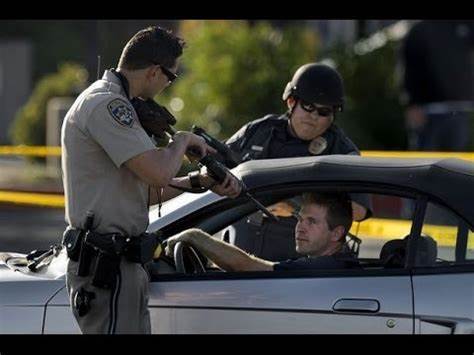
Most people support the police state until they become a victim of it.
Libertarian
boosted
Americans say tyranny is wonderful because the US has always been a police state, but what if the USA used to have freedom and lost it?
Even if the US never had freedom, does that mean liberty is bad?
Did the USA have curfews, NSA wiretapping, checkpoints, forfeiture, the end to the right to silence, free speech bans, torture, kill lists, no fly lists, searches without warrants, private prisons, mandatory minimums, 3 strikes laws, DNA databases, CISPA, SOPA, NDAA, IMBRA, FBAR, FATCA, TSA groping, secret FISA courts, redlight cameras, license plate readers, and Jade Helm in 1980?
Did Americans have gun bans, business licenses, Social Security numbers, sales, income, or property taxes in 1890?
Were drugs, alcohol, smoking, gambling, and prostitution illegal in 1880?
Libertarian
boosted
Americans say tyranny is wonderful because the US has always been a police state, but what if the USA used to have freedom and lost it?
Even if the US never had freedom, does that mean liberty is bad?
Did the USA have curfews, NSA wiretapping, checkpoints, forfeiture, the end to the right to silence, free speech bans, torture, kill lists, no fly lists, searches without warrants, private prisons, mandatory minimums, 3 strikes laws, DNA databases, CISPA, SOPA, NDAA, IMBRA, FBAR, FATCA, TSA groping, secret FISA courts, redlight cameras, license plate readers, and Jade Helm in 1980?
Did Americans have gun bans, business licenses, Social Security numbers, sales, income, or property taxes in 1890?
Were drugs, alcohol, smoking, gambling, and prostitution illegal in 1880?
Libertarian
boosted

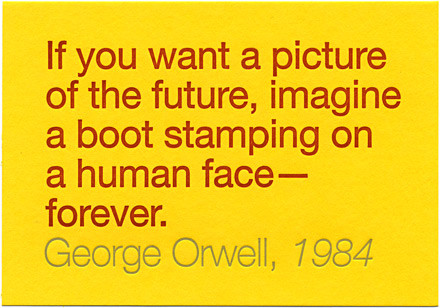
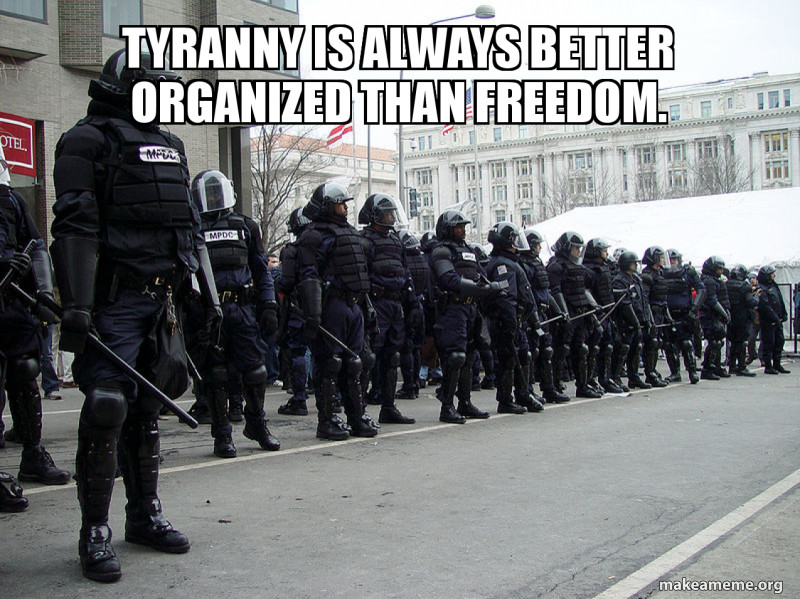
@dcjogger In this example tyranny has uniforms. In France tyranny can't source them fast enough.
Brian Kolfage supported President Donald Trumpâs proposal for a wall on the the U.S.-Mexico border. He was frustrated that Congress still refused to fund the wall (as I write this, weâre in the early hours of âgovernment shutdownâ theatrics over that very argument).
Unlike most Americans, Kolfage did something above and beyond voting and complaining to assuage his dissatisfaction: He started a campaign to raise $1 billion in voluntary funding for the wall, using âcrowdfundingâ site GoFundMe. As of Dec. 23, the campaign had raised more than $16 million.
Personally, I consider the border wall one of the dumbest and most evil ideas since disco, but I applaud Kolfageâs initiative. I think heâs on the right track when it comes to funding government generally.
I see two big problems with this particular campaign.
One problem is technical: Apart from a few discrete areas like gifts to pay down the national debt, the executive branch can only spend money appropriated by Congress for specific purposes. A group of us canât just decide we want a war with Pitcairn Island, write the president a check and expect him send forth a carrier strike group or launch some Tomahawks. Or at least itâs not supposed to work that way (it does for Raytheon and Lockheed Martin).
A second problem is moral: Much of the land on which the border wall would be built is owned by people (that is, itâs not âgovernment propertyâ). That land would have to be bought, and some owners donât want to sell. Which means it would have to be stolen through the process of âeminent domain.â On that end, this effort is like crowdfunding a bank robbery spree.
But I still like the general principle. It reminds me of an old antiwar saying along the lines of how beautiful it would be if the Air Force had to hold a bake sale every time it wanted to buy a new bomber.
If instead of collecting taxes, Congress simply approved project goals and appropriated âas much money as is voluntarily donated towardâ those goals, it would constitute a giant step toward a free society.
Instead of an Internal Revenue Service, the federal government could contract with GoFundMe to set up and operate GoFund.gov.
It will never happen because too many people are too intent on taking other peopleâs money for their pet projects. But itâs a beautiful dream, isnât it?
The headline on Hans Baderâs piece at the Foundation for Economic Education is true as far as it goes: âLifting the Ban on Kidney Sales Would Save 30,000 American Lives Annually.â Bader draws on an earlier essay by Ilya Somin at The Volokh Conspiracy, who in turn riffs on findings published in the Journal of the American Society of Nephrology.
The TL;DR: âMany Americans die every year because they need kidney transplants, in large part due to federal laws banning organ sales. ... [A]n average of over 30,000 Americans have died each year, because the ban prevented them from getting transplants in time.â
My preferred version of the headline: âThe U.S. government, as a matter of policy, kills 30,000 Americans annually.â
Thatâs 2,500 Americans every month.
And that body count consists only of Americans who die while awaiting kidney transplants.
It doesnât include those who die waiting for hearts, livers or lungs that never arrive because patients â or their insurers â are forbidden to pay live donors, or the survivors of those who die with intact, transplantable organs, for those kidneys, livers and lungs. Adding those deaths would almost certainly push the number above 2,977 every month.
Whatâs special about 2,977? Itâs the number of people killed by terrorist attackers (excluding the attackers themselves) on Sept. 11, 2001.
As you may remember, Americans got pretty exercised about 9/11. Heck, we still DO get pretty exercised about it (for a recent example, note the reaction to Rep. Ilhan Omarâs âsome people did some thingsâ comment).
But every month, month in and month out, year after year, the government kills that many or more with its policies. The public response? Crickets.
The federal ban on paying donors or their survivors for organs is premised in a weird claim that paying donors or survivors for organs would be âunethical.â
Itâs âethicalâ to pay the surgeons. And the nurses. And the anesthesiologists. And the providers of anti-rejection drugs. And, of course, the âmedical ethicistsâ whose opinions underlie the ban.
Only the people who physically provide the indispensable elements of organ transplants, the organs, get empty envelopes come transplant payday.
Whereâs the outrage? The U.S. has been at war for 18 years straight now, with 9/11 as the excuse. But 9/11 every month barely raises eyebrows. The politicians and the âethicistsâ theyâve listened to remain at large. And, yes, they are well-paid.
Scary stories about homeless people with drug problems selling kidneys for crack or being denied transplants for lack of money are just that: Scary stories.
If the purchase of organs was made legal, insurers (presumably including Medicare and Medicaid) would leap at the opportunity to save the money now wasted on expensive care for patients slowly dying as hope fades. A market price would emerge and people with good organs would respond to the incentive â probably mostly in the form of prospective post-mortem donors looking to ease their familiesâ losses.
Of course, there would be a place for ethical considerations in that process. Hopefully better considerations than the currently prevailing ones.

As I look at America today, I am not afraid to say that I am afraid.
The U.S. military plans to take over America by 2030.
No, this is not another conspiracy theory. Although it easily could be.
Nor is it a Hollywood political thriller in the vein of John Frankenheimerâs 1964 political thriller Seven Days in May about a military coup dâetat.
Although it certainly has all the makings of a good thriller.
No, this is the real deal, coming at us straight from the horseâs mouth.
According to âMegacities: Urban Future, the Emerging Complexity,â a Pentagon training video created by the Army for U.S. Special Operations Command, the U.S. military plans to use armed forces to solve future domestic political and social problems.
What theyâre really talking about is martial law, packaged as a well-meaning and overriding concern for the nationâs security.
The chilling five-minute training video, obtained by The Intercept through a FOIA request and made available online, paints an ominous picture of the futureâa future the military is preparing forâbedeviled by âcriminal networks,â âsubstandard infrastructure,â âreligious and ethnic tensions,â âimpoverishment, slums,â âopen landfills, over-burdened sewers,â a âgrowing mass of unemployed,â and an urban landscape in which the prosperous economic elite must be protected from the impoverishment of the have nots.
And then comes the kicker.
Three-and-a-half minutes into the Pentagonâs dystopian vision of âa world of Robert Kaplan-esque urban hellscapes â brutal and anarchic supercities filled with gangs of youth-gone-wild, a restive underclass, criminal syndicates, and bands of malicious hackers,â the ominous voice of the narrator speaks of a need to âdrain the swamps.â
Drain the swamps.
Surely, weâve heard that phrase before?
Ah yes.
Emblazoned on t-shirts and signs, shouted at rallies, and used as a rallying cry among Trump supporters, âdrain the swampâ became one of Donald Trumpâs most-used campaign slogans, along with âbuild the wallâ and âlock her up.â
Funny how quickly the tides can shift and the tables can turn.
Whereas Trump promised to drain the politically corrupt swamps of Washington DC of lobbyists and special interest groups, the U.S. military is plotting to drain the swamps of futuristic urban American cities of ânoncombatants and engage the remaining adversaries in high intensity conflict within.â
And who are these noncombatants, a military term that refers to civilians who are not engaged in fighting?
They are, according to the Pentagon, âadversaries.â
They are âthreats.â
They are the âenemy.â
They are people who donât support the government, people who live in fast-growing urban communities, people who may be less well-off economically than the government and corporate elite, people who engage in protests, people who are unemployed, people who engage in crime (in keeping with the governmentâs fast-growing, overly broad definition of what constitutes a crime).
In other words, in the eyes of the U.S. military, noncombatants are American citizens a.k.a. domestic extremists a.k.a. enemy combatants who must be identified, targeted, detained, contained and, if necessary, eliminated.
Welcome to Battlefield America.
In the future imagined by the Pentagon, any walls and prisons that are built will be used to protect the societal eliteâthe havesâfrom the have-nots.
We are the have-nots.
Suddenly it all begins to make sense.
The events of recent years: the invasive surveillance, the extremism reports, the civil unrest, the protests, the shootings, the bombings, the military exercises and active shooter drills, the color-coded alerts and threat assessments, the fusion centers, the transformation of local police into extensions of the military, the distribution of military equipment and weapons to local police forces, the government databases containing the names of dissidents and potential troublemakers.
This is how you prepare a populace to accept a police state willingly, even gratefully.
You donât scare them by making dramatic changes. Rather, you acclimate them slowly to their prison walls. Persuade the citizenry that their prison walls are merely intended to keep them safe and danger out.
Desensitize them to violence, acclimate them to a military presence in their communities and persuade them that there is nothing they can do to alter the seemingly hopeless trajectory of the nation.
Before long, no one will even notice the floundering economy, the blowback arising from military occupations abroad, the police shootings, the nationâs deteriorating infrastructure and all of the other mounting concerns.
Itâs happening already.
The sight of police clad in body armor and gas masks, wielding semiautomatic rifles and escorting an armored vehicle through a crowded street, a scene likened to âa military patrol through a hostile city,â no longer causes alarm among the general populace.
Few seem to care about the governmentâs endless wars abroad that leave communities shattered, families devastated and our national security at greater risk of blowback. Indeed, there were no protests in the streets after U.S. military forces raided a compound in Yemen, killing âat least eight women and seven children, ages 3 to 13.â
Their tactics are working.
Weâve allowed ourselves to be acclimated to the occasional lockdown of government buildings, Jade Helm military drills in small towns so that special operations forces can get ârealistic military trainingâ in âhostileâ territory, and Live Active Shooter Drill training exercises, carried out at schools, in shopping malls, and on public transit, which can and do fool law enforcement officials, students, teachers and bystanders into thinking itâs a real crisis.
Still, you canât say we werenât warned.
Back in 2008, an Army War College report revealed that âwidespread civil violence inside the United States would force the defense establishment to reorient priorities in extremis to defend basic domestic order and human security.â The 44-page report went on to warn that potential causes for such civil unrest could include another terrorist attack, âunforeseen economic collapse, loss of functioning political and legal order, purposeful domestic resistance or insurgency, pervasive public health emergencies, and catastrophic natural and human disasters.â
In 2009, reports by the Department of Homeland Security surfaced that labelled right-wing and left-wing activists and military veterans as extremists (a.k.a. terrorists) and called on the government to subject such targeted individuals to full-fledged pre-crime surveillance. Almost a decade later, after spending billions to fight terrorism, the DHS concluded that the greater threat is not ISIS but domestic right-wing extremism.
Meanwhile, the government has been amassing an arsenal of military weapons for use domestically and equipping and training their âtroopsâ for war. Even government agencies with largely administrative functions such as the Food and Drug Administration, Department of Veterans Affairs, and the Smithsonian have been acquiring body armor, riot helmets and shields, cannon launchers and police firearms and ammunition. In fact, there are now at least 120,000 armed federal agents carrying such weapons who possess the power to arrest.
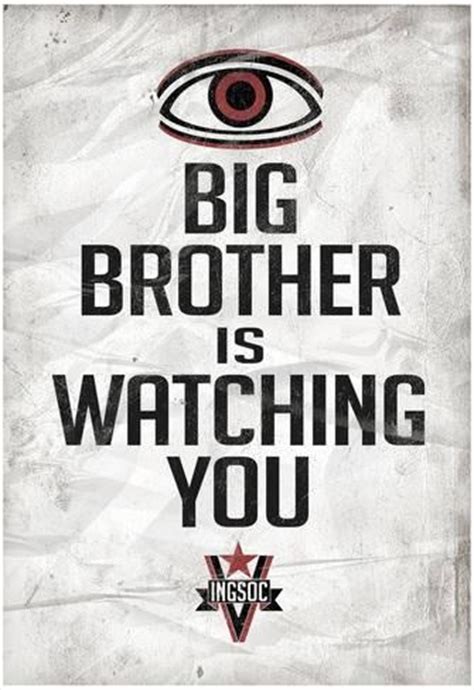
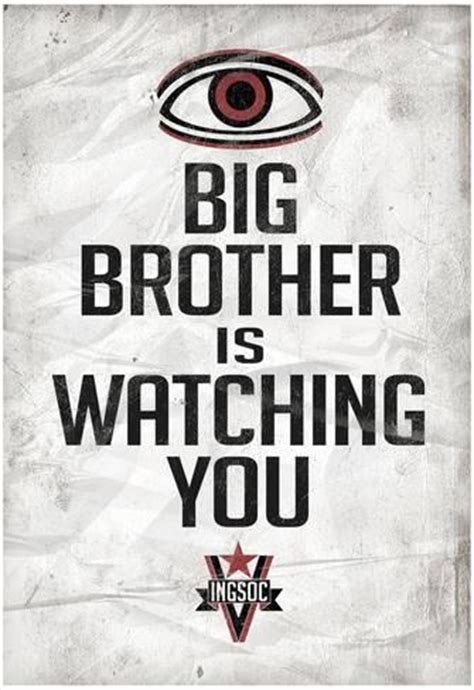
Rounding out this profit-driven campaign to turn American citizens into enemy combatants (and America into a battlefield) is a technology sector that has been colluding with the government to create a Big Brother that is all-knowing, all-seeing and inescapable. Itâs not just the drones, fusion centers, license plate readers, stingray devices and the NSA that you have to worry about. Youâre also being tracked by the black boxes in your cars, your cell phone, smart devices in your home, grocery loyalty cards, social media accounts, credit cards, streaming services such as Netflix, Amazon, and e-book reader accounts.
All of this has taken place right under our noses, funded with our taxpayer dollars and carried out in broad daylight without so much as a general outcry from the citizenry.
Itâs astounding how convenient weâve made it for the government to lock down the nation.
So what exactly is the government preparing for?
Mind you, by âgovernment,â Iâm not referring to the highly partisan, two-party bureaucracy of the Republicans and Democrats.
Iâm referring to âgovernmentâ with a capital âG,â the entrenched Deep State that is unaffected by elections, unaltered by populist movements, and has set itself beyond the reach of the law.
Iâm referring to the corporatized, militarized, entrenched bureaucracy that is fully operational and staffed by unelected officials who are, in essence, running the country and calling the shots in Washington DC, no matter who sits in the White House.
This is the hidden face of a government that has no respect for the freedom of its citizenry.
What is the government preparing for? You tell me.
Better yet, take a look at the Pentagonâs training video.
Itâs only five minutes long, but it says a lot about the governmentâs mindset, the way its views the citizenry, and the so-called âproblemsâ that the military must be prepared to address in the near future. Even more troubling, however, is what this military video doesnât say about the Constitution, about the rights of the citizenry, and about the dangers of using the military to address political and social problems.
The future is here.
Weâre already witnessing a breakdown of society on virtually every front.
By waging endless wars abroad, by bringing the instruments of war home, by transforming police into extensions of the military, by turning a free society into a suspect society, by treating American citizens like enemy combatants, by discouraging and criminalizing a free exchange of ideas, by making violence its calling card through SWAT team raids and militarized police, by fomenting division and strife among the citizenry, by acclimating the citizenry to the sights and sounds of war, and by generally making peaceful revolution all but impossible, the government has engineered an environment in which domestic violence has become almost inevitable.
Be warned: in the future envisioned by the military, we will not be viewed as Republicans or Democrats. Rather, âwe the peopleâ will be enemies of the state.
For years, the government has been warning against the dangers of domestic terrorism, erecting surveillance systems to monitor its own citizens, creating classification systems to label any viewpoints that challenge the status quo as extremist, and training law enforcement agencies to equate anyone possessing anti-government views as a domestic terrorist. What the government failed to explain was that the domestic terrorists would be of the governmentâs own making, whether intentional or not.
âWe the peopleâ have become enemy #1.
- Libertarian
- https://neinchan.com/pol/
Joined May 2019