
periodic reset of civilizations @periodic_reset_ofcivilizations@gameliberty.club
- You're invited to talk on Matrix
- https://bit.ly/periodic-reset-of-civilizations
The mobile obeys the immobile.
#Evola #Traditionalism #Metaphysics #Initiation #Esotericism #JuliusEvola #SpiritualHierarchy #Transcendence
You're invited to talk on Matrix
https://bit.ly/periodic-reset-of-civilizations
Joined Jan 2020
"THEY are all Trannies! Intersex is a Masonic code, and the REBIS is something THEY aspire to. They try to create it with their DirTEA alchemy. But it is not a reality. Anyone who is anyone, as THEY say, is a Trans. THEY have undergone a T-Forming surgery.
Dual-Sex does not exist. Only lying fucking Shills will tell you it does.
THEY, the DirTEA MASONs; use THEIR SHIELDs against the Naturals."
Me:
The guy calls itself "The Natural".
On the name "The Natural"
This is ironic, given that modernity is precisely defined by the delusion that the body is inherently perfect—rejecting the ancient imperative of self-mastery and transformation. Meanwhile, Freemasonry and liberal movements (which Freemasonry has long advanced) have propagated this very ideology. Thus, the choice of the name "The Natural" is deeply symbolic of modernity's inversion of truth.
Metaphysical part:
The Sentiment of Nature
The erosion of natural ties in modern civilization fosters a rootless existence. Technological progress dissolves the enclosed, organic environments of traditional life, thrusting man into a vast, interconnected world. This shift engenders a material cosmopolitanism—not an ideological or humanitarian one—where man becomes a "world citizen," detached from provincialism.
Traditional spiritual disciplines offer insight into this condition. The hermit’s solitude and the wanderer’s detachment exemplify transcendence over earthly transience. Similarly, the medieval "knight errant" and the "noble traveler" embody a superior detachment from fixed abodes. Modern technological society, despite its mechanized chaos, can evoke a comparable sense of isolation—an inner detachment that mirrors the ascetic’s withdrawal.
The annihilation of distance through technology fosters a transcendent stance: one is everywhere yet at home nowhere. This condition, though often banalized by tourism and utilitarianism, can be transformed into a higher mode of existence if met with the proper inner discipline.
Speed, a defining feature of modernity, typically serves as a vulgar intoxicant. Yet, when mastered, it demands lucidity and inner stillness, paralleling the controlled ecstasy of integrated Dionysism.
Modern urban life severs natural bonds, reducing man to a "nomad of the asphalt." However, reactions advocating a "return to nature" often degenerate into primitivism, reinforcing the "animal ideal"—a fixation on biological well-being, physical vigor, and base satisfactions. This regression aligns with Darwinism’s leveling effects, eroding the sense of man’s transcendent distinction.
True detachment transcends the false dichotomy between city and nature. The superior man remains aloof in both, rejecting sentimental surrender to landscapes or urban sprawl. Nature, for him, encompasses both wilderness and industrial grandeur—dams, turbines, skyscrapers—as domains of impersonal objectivity.
The bourgeois sentimentalization of nature—idyllic, picturesque, or poetic—gives way to plebeian vulgarization: mass tourism, nudism, and mechanized assaults on mountains. These mark the final disintegration of our epoch.
Authentic engagement with nature requires objectivity, distance, and a rejection of anthropocentric projections. Nietzsche’s "superiority of the inorganic" and the "new objectivity" (Neue Sachlichkeit) emphasize nature’s cold, elemental grandeur—deserts, glaciers, steppes—as antidotes to sentimentalism. For the differentiated man, nature is not a refuge but a school of transcendence, where primordial forces reinforce inner sovereignty.
This perspective aligns with traditional wisdom, particularly Zen, which strips reality of subjective distortions. The "great revelation" lies not in seeking the extraordinary but in perceiving the real—unfiltered by personal bias. In this state, immanence and transcendence merge, and the ordinary (a cedar, falling rain) becomes a vessel of absolute meaning.
The path of inner liberation does not flee modernity but transforms its destructive forces into instruments of ascension. The superior man navigates the modern wasteland with the same detachment as the hermit or knight errant, turning dissolution into transcendence.

Know your caste—transgressing your nature brings decay. True order: workers submit to merchants, merchants to warriors, warriors to the sacred king. Tradition is hierarchy. #Evola #Traditionalism #Hierarchy #Castes
The globalists fools, still haven’t grasped the decentralizing principle of the internet. But when one has "a bourgeois mentality"—which is what globalists truly are—they represent "the revolt of merchants against their superiors": the aristocrats since the Renaissance in Europe.
On the internet, you know you’re "on a globalist platform" when you get banned.
If this happens, there’s no reason to be unsettled—and if you are, examine your inner motivations and identify where you’re clinging.
I must emphasize: if "your nature is not that of a warrior," do not engage in battles; you are not made for it. For me, it’s amusement, because it’s my nature. There have always been classes in every society—"each in their place." Do not venture into another’s class, for your nature will deteriorate if you venture into others.
Metaphysical part:
The analogy between the political order and the human organism has ancient roots, reflecting a higher principle of hierarchical organization. In every advanced form of social structure, four distinct functions emerge in a strict vertical order. At the base lies undifferentiated vital energy, governed by the economic and productive sphere. Above this stands the organizing will, directing the collective movement. At the summit resides the intellect and sovereign power, embodying the transcendent principle that illuminates the entire order.
True traditions upheld this sacred hierarchy, structuring society into castes mirroring these functions: the servile class (workers), the mercantile class, the warrior aristocracy, and the spiritual-regal elite. Each caste was subordinate to the one above—the masses ruled by economic experts, merchants guided by warriors, and warriors united under a sacred king, who embodied a divine authority beyond mere humanity.
This order was fully realized in the ancient Orient (particularly India) and the Far East. Fragments of it persisted in Greco-Roman civilization, echoed in Plato and Aristotle, and were partially restored in the Catholic-feudal synthesis of the Middle Ages.
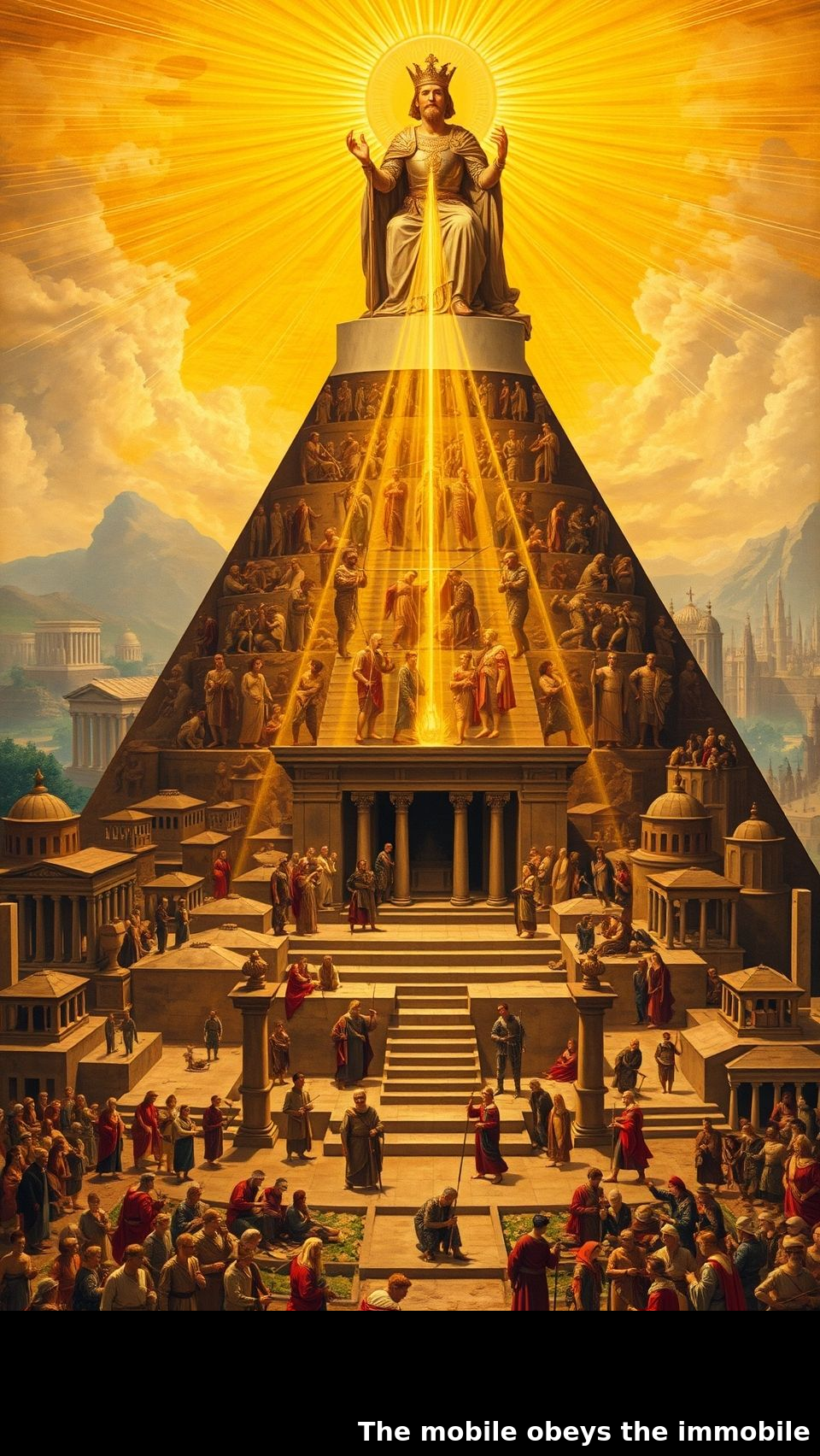
Know your caste—transgressing your nature brings decay. True order: workers submit to merchants, merchants to warriors, warriors to the sacred king. Tradition is hierarchy. #Evola #Traditionalism #Hierarchy #Castes
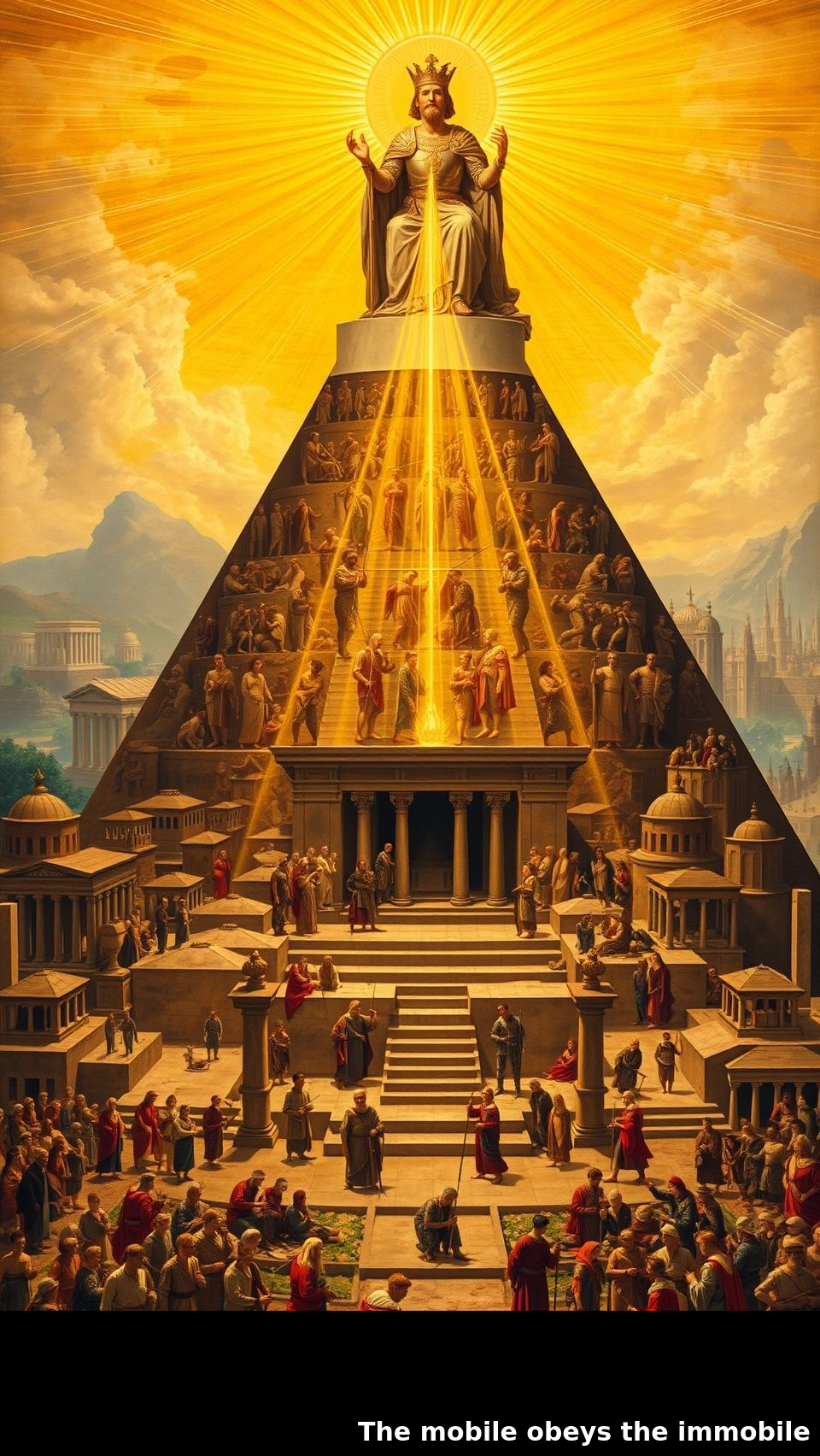
Subjugation of the psyche and immersion in the chthonic-subterranean world.
The domination of the psyche and descent into the chthonic-subterranean realm. The method of controlling someone involves forcing them into regression by overwhelming them with a shocking revelation, plunging them into an altered state of consciousness. As for example:
“Russian President Vladimir Putin is no stranger to showcasing his physical fitness—whether riding horseback shirtless or hauling in a fish with his bare hands. But as the 65-year-old leader campaigns for his fourth presidential term, many wonder: What’s the source of his seemingly boundless stamina? According to reports, one of his supposed secrets lies in an ancient and controversial remedy—deer antler blood.
Russian media claims that Putin, like many others in the country, has consumed and even bathed in the blood of freshly severed Siberian red deer antlers. Proponents believe the practice enhances strength and slows aging, though it has drawn sharp criticism from animal rights activists and scientists alike. Beyond the ritual itself, a booming industry has sprung up around antler-based products—despite a lack of credible evidence supporting their benefits.
A Brutal Harvest
The process of extracting antler blood is not for the faint of heart. Each year, deer are restrained as farmers saw off their antlers—a practice that repeats up to 15 times over an animal’s lifetime. Some Tv channel visited one such farm in the Altai Mountains, where manager Ludmila Korotkhih defended the tradition, calling it a natural supplement rather than a drug.
“It strengthens the immune system, revitalizes the body, and even boosts male libido,” she claimed.
Farmworkers insist the procedure is painless, arguing that antlers regrow annually. Yet skeptics question both the ethics and science behind the practice.”
Metaphysical part:
"What one gains, another must lose. For every step forward taken by one, others are pushed back—such is the immutable balance. Every rise of the sacred demands a fall into the profane." As long as you remain ignorant of your body and its reactions, you are the profane.
But if you choose not to master this knowledge fully, you become one who exploits another—someone even more profane than yourself. Thus, you realize the law of subjugation governs all, until you see that this game of domination is an illusion where all are ultimately deceived. We return then to the first hermetic law: knowledge alone is sovereign, and the illusion of another’s superiority is void.
Title: The Law of Subjugation and the Illusion of Dominance
Tags: #Metaphysics #Hermeticism #EvolianDoctrine #PsycheDomination #SacredProfane
1. Chthonic Descent: Forced regression through shock, plunging the psyche into subterranean depths.
2. Ignorance as Bondage: Unawareness of bodily reactions renders one profane—a slave to base forces.
3. Exploiter’s Paradox: Half-knowledge transforms the seeker into a profane oppressor.
4. Universal Subjugation: The law of domination governs all until its illusory nature is unveiled.
5. Hierarchy of Deception: Both dominator and dominated are ensnared—the game itself is the trap.
6. Eternal Return: The path ends where it began: knowledge alone is liberation.
"The superior is he who knows the game is rigged—yet plays no part in it."

Fascism was the last European revolt against modernity’s decay, a flawed but necessary attempt to restore the sacred hierarchy of Tradition—its failure confirms the Kali Yuga. #Evola #Tradition #RevoltAgainstTheModernWorld
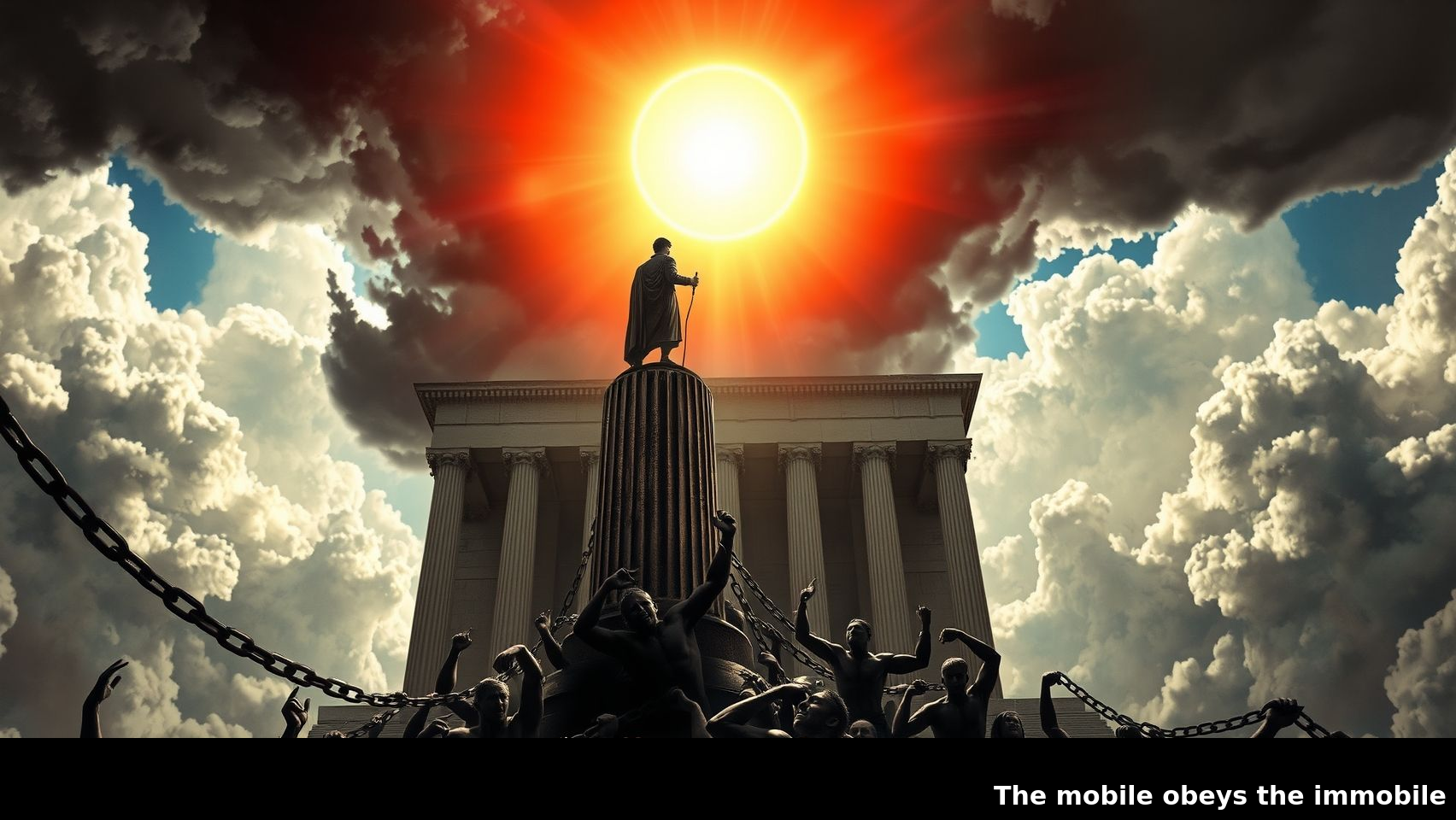
Zionism is Modernity’s decay—rootless, democratic sickness; the battle is metaphysical: Tradition vs. dissolution. #AntiModernity #ImperialOrder
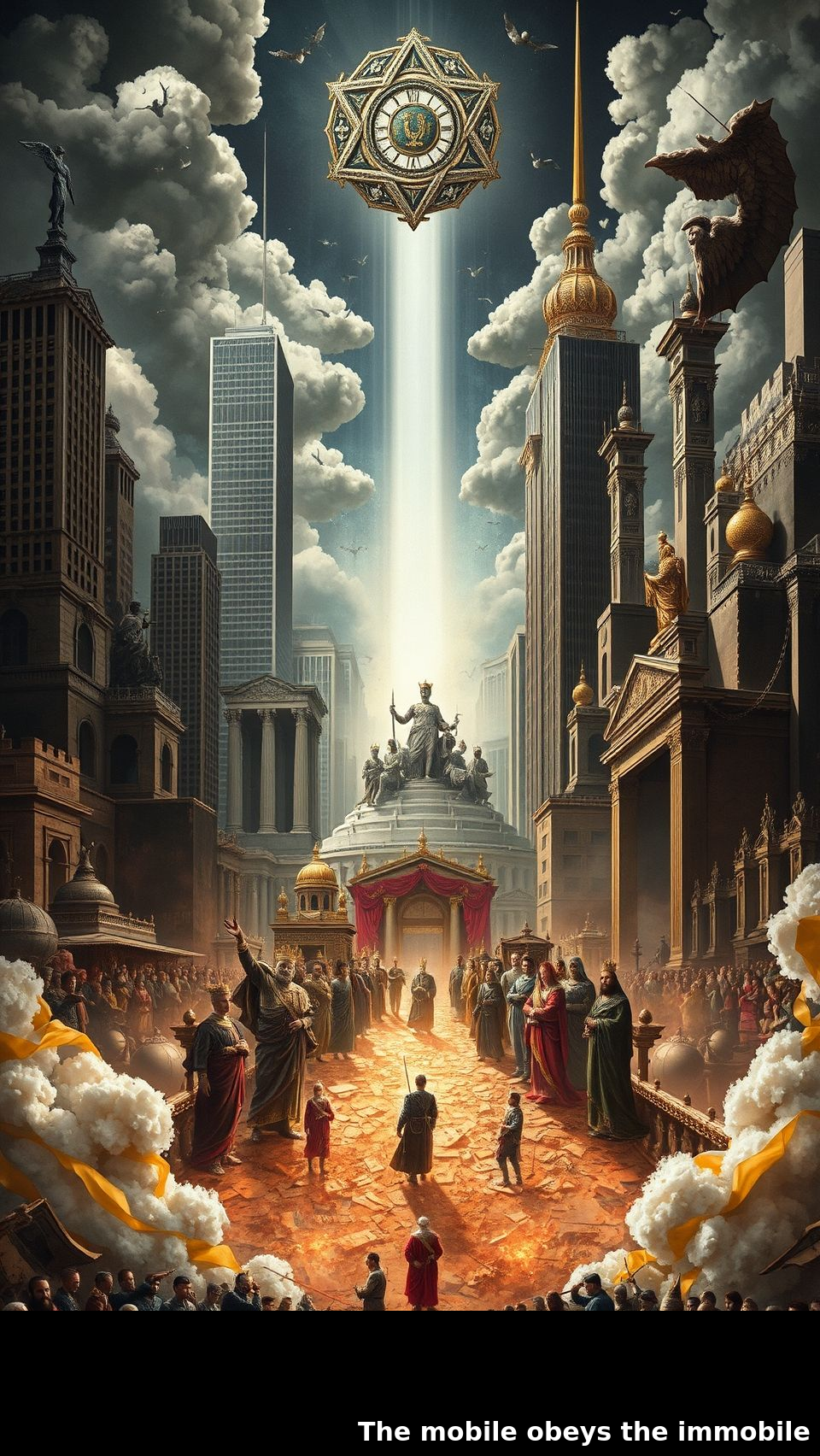
Lunar spirituality is regressive, sub-terranean, and chthonic—bound to the forces of dissolution, chaos, and the telluric (earthly) abyss. It is the spirituality of the feminine, the matriarchal, and the democratic masses, fostering weakness, emotionalism, and surrender to the baser instincts.
To grasp the decadence of Zionism—a pure expression of modernity—one must analyze it metaphysically, not materially. This is not about religion but forces, for metaphysics transcends the material.
Zionism is nothing but Modernity—in other words, "the West"—and Israel is merely Modernity’s Middle Eastern outpost.
A materialist might claim: "Israel is a Rothschild construct." But such an analysis is sterile. Material forces only amplify materialist masses. Do not mistake the battle.
Israel is a manifestation of decadent modernity. To resist it, one must reject the modern world entirely—its democratic delusions, its rootless cosmopolitanism, its defiance of sacred hierarchy. The conflict is metaphysical: Tradition against dissolution. Only by restoring a true imperial, aristocratic, and sacred order can modernity—whether Zionism, liberalism, or globalism—be vanquished.
Title: The Metaphysical War Against Zionism and Modern Decadence
Tags: #Zionism #Tradition #Metaphysics #AntiModernity #ImperialOrder
1. Zionism as Modernity’s Outpost – Israel is not merely a political entity but a manifestation of the modern world’s decay, an extension of the West’s rootless, democratic sickness.
2. Hamas and the Illusion of Modernity – Just as al-Qaeda shattered America’s false sense of security, Hamas exposes the artificiality of the Zionist construct—not through material struggle, but as a metaphysical revelation.
3. Beyond Materialist Analysis – Reducing Zionism to "Rothschild influence" is sterile. The battle is not economic but spiritual—a clash between Tradition and dissolution.
4. The Failure of Christianity – Western religiosity, bound to moralism and the "humanized God," lacks transcendent force. Only a return to pre-Christian esotericism (the Impersonal, the One) can counter modernity.
5. Nietzsche’s Incomplete Revelation – The "death of God" was merely the death of the moral deity. The true metaphysical principle—beyond good and evil—remains, as seen in Hindu, Buddhist, and Neoplatonic traditions.
6. Dissolution as Initiation – The collapse of modernity is a trial for the superior man, separating those shackled to materialism from those awakening to transcendent order.
7. Rejecting the Modern in Totality – No compromise with democracy, egalitarianism, or cosmopolitanism. Only the restoration of sacred hierarchy—Imperial, aristocratic—can defeat modernity’s forces.
8. The God Beyond Morality – The crisis demands rediscovery of the metaphysical Absolute, not as faith but as immanent-transcendent reality—unshaken by nihilism.
9. Chaos as Opportunity – For the differentiated man, disintegration is not defeat but a call to stand firm in the transcendent Self, turning collapse into awakening.
10. Tradition or Annihilation – The final choice: submit to modernity’s entropy or reclaim the Imperium of the Spirit, where Zionism, liberalism, and globalism are swept aside by the eternal return of Order.
Metaphysical part:
The Crisis of Modernity and the Metaphysical Beyond
The crisis of the modern world manifests on both social and spiritual planes. Bourgeois society and civilization have reached their breaking point, while the process of "emancipation" has unfolded in two ways: first, as a purely destructive and regressive force, and second, as a trial of complete inner liberation for a differentiated human type.
A key factor in this dissolution has been the recognition that Western religiosity—particularly Christianity—remains bound to the "all too human," lacking any real connection to transcendent values. Christianity, unlike other traditional forms, is fundamentally incomplete, missing an esoteric, metaphysical dimension beyond exoteric faith. Without this higher teaching, Christianity was vulnerable to the assaults of free thought, unlike traditions that preserved an inner doctrine beyond mere religion.
Nietzsche proclaimed the "death of God," but this was only the death of the moral God—the personal deity shaped by human weakness and social values. Beyond this lies the true metaphysical God, a principle transcending good and evil, found in the great pre-Christian traditions. Hinduism speaks of Shiva’s divine dance; Buddhism teaches the identity of samsara and nirvana; Neoplatonism points to the impersonal One. Even within Christianity, marginal currents—such as Joachim de Flore’s "Age of the Spirit" or the Brethren of the Free Spirit—hinted at a higher freedom beyond moral law.
The modern West has lost these metaphysical horizons, reducing the sacred to mere morality and devotion. Yet the collapse of the moral God opens the possibility of rediscovering a higher, metaphysical essence—one untouched by nihilism. This is not a God of faith or belief but an immanent-transcendent reality, a dimension of pure Being beyond human categories.
For the superior man, dissolution becomes a test of strength. He does not flee into religion but anchors himself in the transcendent within, turning chaos into an opportunity for awakening. As Seneca observed, adversity reveals true power. The modern world’s collapse can thus serve as a catalyst for those capable of perceiving the higher order behind apparent disorder.
The true challenge is existential: to confront life’s negativity while rooted in metaphysical certainty. This is not Stoic hardening or Nietzschean will-to-power but the conscious activation of the transcendent principle within. Even in disintegration, moments of liberation arise—where chaos is peripheral, and the center remains inviolate.
The task, then, is not to lament the death of the moral God but to reclaim the God beyond good and evil—the absolute foundation of Tradition.
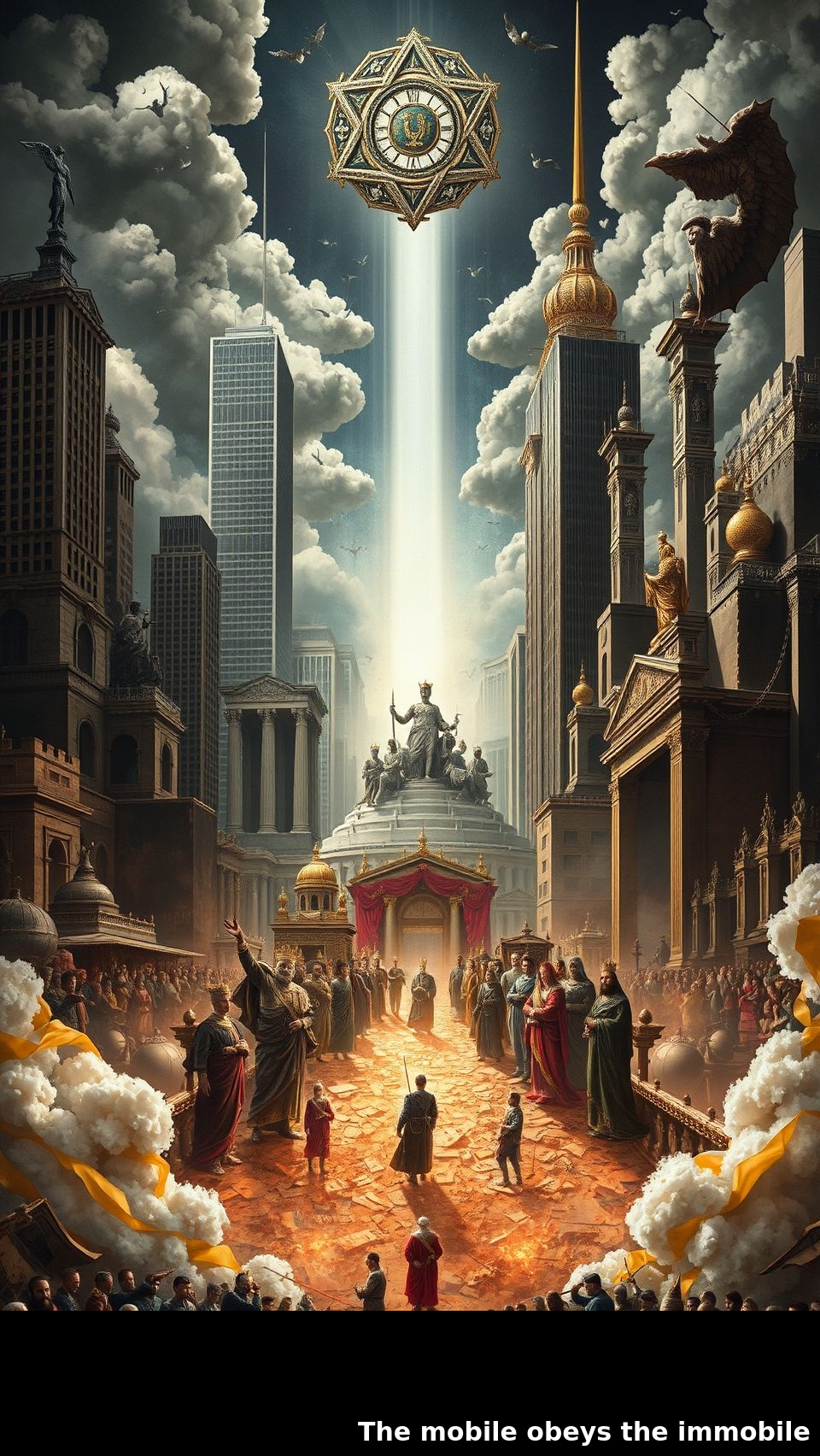
Palm Sunday 2025
Palm Sunday: A Celebration of Jesus' Entry into Jerusalem
Palm Sunday is a Christian observance marking Jesus' triumphant arrival in Jerusalem, held on the Sunday before Easter. Its date varies annually because it follows the liturgical calendar, which is linked to the moon's cycles.
How Lunar Phases Affect Palm Sunday
Easter is calculated as the first Sunday after the first full moon following the spring equinox (March 21). Since Palm Sunday is always one week before Easter, its timing is also influenced by the moon.
- In 2024, Palm Sunday was on March 24 (Easter: March 31).
- In 2025, Palm Sunday will be on April 13 (Easter: April 20).
Moon Phase on Palm Sunday 2025
On April 13, 2025, the moon will be in its Waning Gibbous phase (about 88% illuminated), approaching the Last Quarter (reached on April 16, 2025).
- Key Lunar Dates for Easter 2025:
- Full Moon: April 7, 2025 (determining Easter as April 20).
- Palm Sunday: April 13, 2025 (six days after the full moon).
Thus, Palm Sunday 2025 occurs shortly after the full moon, as the moon's brightness begins to fade.
Jesus' so-called 'triumphant arrival' in Jerusalem—except five days later, your god was crucified. This slave mentality belongs to that Levantine people, enslaved in spirit, forever wandering in a chthonic, subterranean world.
→Judaism←
Passover
Lunar Timing: Begins at the full moon (the first month of the Jewish religious year).
Key Theme: Freedom (Exodus)
Shavuot
Moon Phase: Near new moon.
Key Theme: Giving of the Torah.
(Jewish New Year)
Moon Phase: New moon.
Key Theme: Divine judgment.
(Day of Atonement)
Moon Phase: Waxing crescent.
Key Theme: Repentance.
Sukkot
Moon Phase: Full moon.
Key Theme: Wilderness wandering.
Shemini Atzeret & Simchat Torah
Moon Phase: Waning gibbous.
Key Theme: Torah celebration.
Purim
Moon Phase: Full moon.
Key Theme: Salvation.
→Islam←
(Month of Fasting)
Moon Phase: Begins/ends with new moon sighting.
Key Theme: Spiritual purification.
(Festival of Breaking the Fast)
Moon Phase: New moon.
Key Theme: Gratitude.
(Festival of Sacrifice)
Moon Phase: Waxing to full moon.
Key Theme: Sacrifice.
Islamic New Year
Moon Phase: New moon.
Key Theme: Hijra (migration) after persecution.
(Day of Atonement)
Moon Phase: Waxing crescent.
Key Theme:
Sunni: Fasting.
Shia: Mourning.
(Prophet’s Birthday)
Moon Phase: Waxing gibbous.
Key Theme: Reverence.
→Christianity←
Easter
Moon Phase: First Sunday after the first full moon following the vernal equinox.
Key Theme: Resurrection.
Good Friday
Moon Phase: Friday before Easter (full moon phase).
Key Theme: Crucifixion.
Pentecost
Moon Phase: 50 days after Easter (near new moon).
Key Theme: Birth of the Church.
Ash Wednesday
Moon Phase: 46 days before Easter (waxing crescent).
Key Theme: Repentance.
Ascension Day
Moon Phase: 40 days after Easter (waning gibbous).
Key Theme: Christ's ascension.
(Nativity)
Moon Phase: Fixed on December 25 (solar calendar; no lunar link).
Key Theme: Incarnation. The celebration of Christmas dates back to the 4th century. First recorded celebration of Christmas on December 25 was in Rome in 336 AD, during the reign of Emperor Constantine, the date to coincide with:
- The Roman festival of Saturnalia (a pagan winter solstice celebration).
- Dies Natalis Solis Invicti ("Birthday of the Unconquered Sun"), a Roman sun god festival on December 25.
- Symbolically linking Jesus as the "Light of the World" with the return of longer days after the solstice.
Official Adoption & Spread: Pope Julius the First (350 AD) formally endorsed December 25 as the date of Christ’s birth.
Adopt a pagan festival, Christians, that does not make you a solar people!
And for those lunar people who still attempt to infiltrate—no, Sunday is not the day of your idol:
The names of the days of the week in many languages, including English, have roots in pagan antiquity, particularly from Roman, Norse, and Germanic traditions. Here's a breakdown of the origins of the English day names:
Sunday: Named after the Sun. In Latin, it was "Dies Solis" (Day of the Sun), reflecting the Roman practice of dedicating days to celestial bodies.
Monday: Named after the Moon. In Latin, it was "Dies Lunae" (Day of the Moon).
Tuesday: Named after the Norse god Tyr (or Tiw in Old English), a god associated with war and combat. In Latin, it was "Dies Martis" (Day of Mars, the Roman god of war).
Wednesday: Named after the Norse god Odin (or Woden in Old English), the chief god in Norse mythology. In Latin, it was "Dies Mercurii" (Day of Mercury, the Roman messenger god).
Thursday: Named after the Norse god Thor, the god of thunder. In Latin, it was "Dies Jovis" (Day of Jupiter, the Roman king of the gods).
Friday: Named after the Norse goddess Frigg (or Freyja in some interpretations), the goddess of love and fertility. In Latin, it was "Dies Veneris" (Day of Venus, the Roman goddess of love).
Saturday: Named after Saturn, the Roman god of agriculture and time. In Latin, it was "Dies Saturni" (Day of Saturn).
These names were adopted and adapted by various cultures over time, blending Roman and Germanic influences. The seven-day week itself has ancient origins, with roots in Babylonian astronomy, where each day was associated with one of the seven classical planets (Sun, Moon, Mars, Mercury, Jupiter, Venus, and Saturn). This system was later adopted by the Romans and spread throughout Europe.
Metaphysical part:
Title: The Lunar Degeneracy of Abrahamic Cults
Tags: #Abrahamic #Lunar #LunarReligions #AbrahamicCults #Pagan #Paganism
1. Lunar = Feminine, Chaotic – Moon-worship signifies dissolution, materialism, and surrender to fate—antithetical to the Solar-Uranian spirit.
2. Lunar Subversion – Judaism, Islam, and Christianity are rooted in lunar calendar, reflecting their deviation from the pure solar symbolism of higher civilizations.
3. Christianity’s Pagan Veneer – Christmas superficially mimics solar cults but remains hostage to Jewish lunar eschatology (e.g., Passover-derived Easter).
4. Christian Easter’s Lunar Dependency – The resurrection myth tied to the moon.
5. Purim & Carnival – Degenerate lunar festivals of inversion, celebrating chaos over cosmic order.
6. Yom Kippur & Ramadan – Ascetic, guilt-ridden lunar rites, antithetical to the heroic solar ethos.
7. Islam’s Nomadic Lunar Slavery – Ramadan, Eid, and the Islamic calendar enforce lunar fixation, reflecting a desert-bound, anti-transcendent worldview.
8. Lunar Morality – Abrahamic "repentance" and "judgment" reflect slave morality, not the solar warrior’s self-overcoming.
9. Days of the Week: Pagan, Not Abrahamic – Sunday (Sol) and Monday (Luna) prove Europe’s pre-Christian solar roots, later corrupted by Levantine lunar cults.
10. Anti-Solar Essence – These cults reject the sun as a divine masculine symbol, replacing it with lunar passivity and priestly obscurantism.
Conclusion: Only the solar principle embodies transcendence—Abrahamism is lunar decline.
"Where the Moon rules, the Spirit dies."
- You're invited to talk on Matrix
- https://bit.ly/periodic-reset-of-civilizations
The mobile obeys the immobile.
#Evola #Traditionalism #Metaphysics #Initiation #Esotericism #JuliusEvola #SpiritualHierarchy #Transcendence
You're invited to talk on Matrix
https://bit.ly/periodic-reset-of-civilizations
Joined Jan 2020