
periodic reset of civilizations @periodic_reset_ofcivilizations@gameliberty.club
- You're invited to talk on Matrix
- https://bit.ly/periodic-reset-of-civilizations
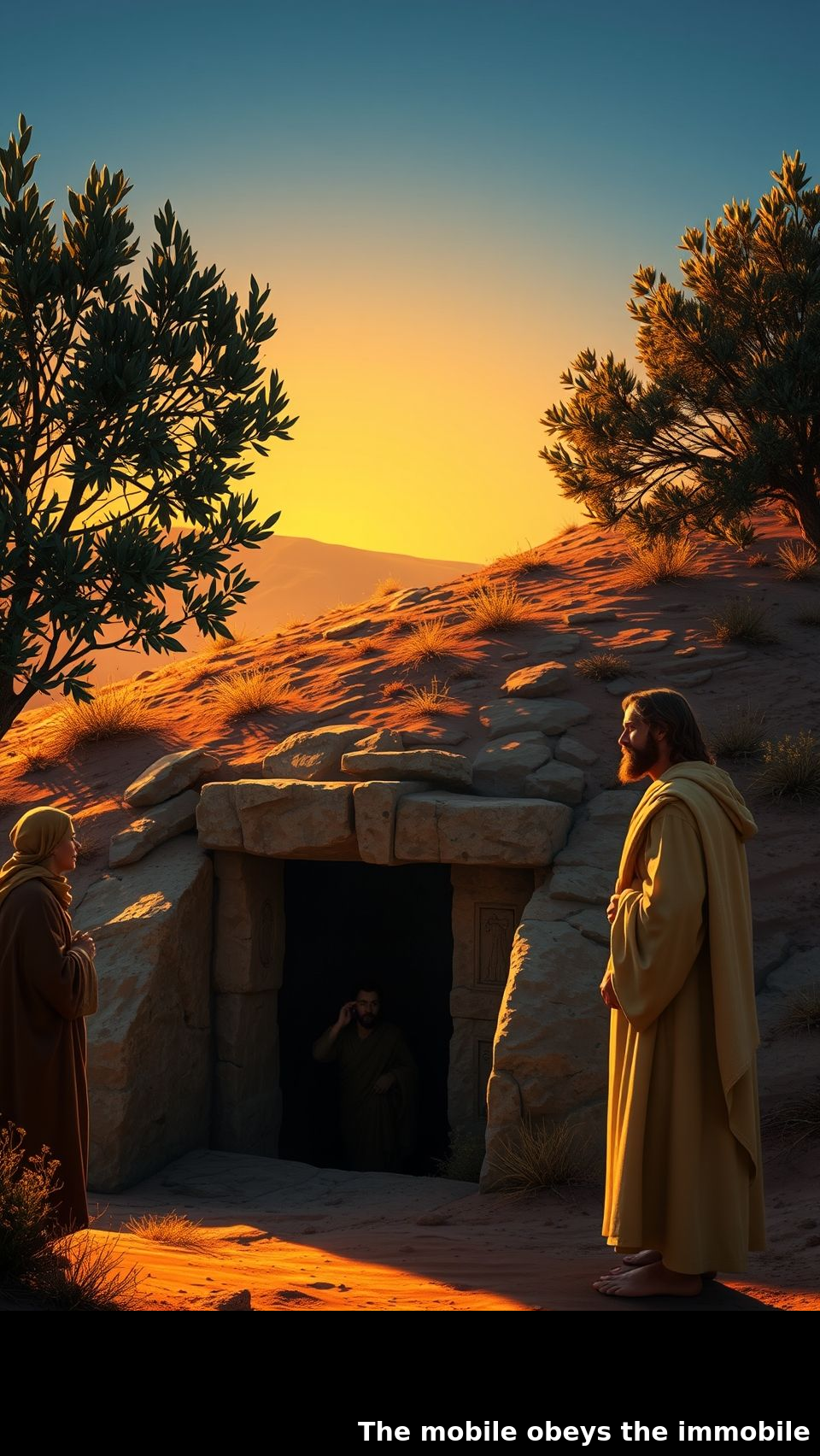
The mobile obeys the immobile.
#Evola #Traditionalism #Metaphysics #Initiation #Esotericism #JuliusEvola #SpiritualHierarchy #Transcendence
You're invited to talk on Matrix
https://bit.ly/periodic-reset-of-civilizations
Joined Jan 2020
Title: The Initiatic Doctrine of Immortality: Beyond the Illusion of the "Soul"
Tags: #Tradition #Initiation #Immortality #Self #Karma
1. Rejection of the "Immortal Soul" – The religious notion of an inherent "immortal soul" is illusory; true immortality is a possibility, not a given.
2. Eternal Principles ≠ Immortality – Even if eternal principles exist in man, without conscious activation, they are irrelevant to the Self’s immortality.
3. Self as Consciousness – The Self is consciousness; when consciousness extinguishes, the Self ceases, regardless of any surviving "principles."
4. Atman vs. Empirical Self – The human "self" is merely a reflection of the transcendent Atman; death is the reabsorption of this reflection, not survival.
5. No Continuity in Reabsorption – Reintegration into the Absolute is tantamount to dissolution—only initiation bridges the gap consciously.
6. Karma as Impersonal Residue – What survives death is not a "soul" but karma, an impersonal force shaping future formations within samsāra.
7. Flame Metaphor – Karmic continuity is like one flame lighting another—no identity persists, only causation.
8. Superior Principle Manifestations – Multiple existences may be attempts by a higher principle to perfect itself, not "reincarnations" of the same self.
9. Assault Waves of the Army – Like waves in a battle, each existence is a separate attempt; success belongs only to the one that achieves reintegration.
10. The Awakened One – Only the being who achieves initiatic reintegration transcends the cycle, becoming the "perfect button" cast from the failures of prior forms.
No consolation, no religion—only the hard doctrine of the Self.
### The Initiatic Doctrine of Immortality: An Evolian Perspective
Critics argue that denying the common religious notion of an "immortal soul" goes too far, insisting that eternal principles exist within man regardless of conscious realization. However, from the initiatic standpoint, if these principles remain unrealized—unactivated and unassimilated by the Self—they are, for all practical purposes, nonexistent. This is no different from the materialist’s consolation that, though the soul perishes, matter endures.
The Self is not an object like a table, which exists independently of awareness. The Self is consciousness; its very being depends on self-awareness. When consciousness extinguishes, so does the Self. What persists—whether eternally or materially—is no longer that Self.
Doctrinally, we acknowledge a transcendent Self (atman, purusha), of which the human "self" is but a reflection. The dissolution of the individual "soul" at death can thus be understood as the reabsorption of this reflection into its source. Yet, without conscious reintegration—the very aim of initiation—this amounts to annihilation, for there is no continuity between the reflected and the absolute Self.
As for post-mortem survival, what remains is karma—impersonal forces within samsāric existence. Karma is not immortality; it is the causal residue of actions, generating new beings without preserving self-identity. Like a flame igniting another flame, the fire is the same, but the flame is not.
A more meaningful initiatic perspective considers multiple existences as successive manifestations of a single higher principle striving toward perfection. These are not reincarnations but distinct attempts—like assault waves in battle, each advancing or retreating until one achieves the goal. The perfected being, the "Awakened One," represents the culmination of this process: the reintegration of consciousness with its transcendent source.
Metaphysical part:
### The Two Paths in the Afterlife
Traditional teachings distinguish between two possible destinies after death: one leading to true immortality, the other to dissolution into ancestral forces. Unlike the modern belief in universal soul-immortality, Tradition recognizes a hierarchy in postmortem existence, corresponding to the spiritual stature of the individual.
#### The Naturalistic Order: Dissolution into the Totem
For ordinary men, death brings the disintegration of the ephemeral personality, leaving only a "shadow" destined for eventual dissolution—the "second death." The vital principles return to the ancestral manes, lares, or totem—the subpersonal, chthonic force behind a bloodline. This force, often symbolized by the serpent or the genius (generative power), binds individuals to the cyclical rebirth of their stock.
In this inferior path, the deceased become sustenance for the manes, perpetuating the natural order rather than transcending it. Greek myths (the Danaïdes, Ocnus) and Vedic symbolism (the lunar, ancestral path) illustrate the futility of this existence—a meaningless repetition of mortal life.
#### The Heroic Path: Olympian Immortality
A higher destiny awaits those who conquer death through spiritual transformation. The "heroes," demigods, and sacred kings achieve an incorruptible body (sahu, "body of glory"), escaping dissolution. This immortal body, forged through sacrificial rites, embodies transcendent power, uniting soul and form in divine permanence.
This "solar path" (deva-yāna) leads to the Olympian realm—Valhalla, the "House of the Sun," or the Vedic "door of the sun." Unlike the chthonic fate of Hades, it represents triumphant immortality, symbolized by crowns, myrtle, and the Roman dies natalis (birth into divinity).
#### The Ritual Struggle Against the Infernal
Traditional civilizations upheld rites that liberated men from subjugation to ancestral forces. The aristocratic cults—opposed to telluric, lunar worship—oriented the soul toward supernatural victory, breaking the cycle of rebirth. Neglect of these rites meant regression into the "way of the Mother," binding man to the infernal and the collective.
The sacred fire, central to Indo-European cremation rites, symbolized this transformative power—consuming mortal remains to awaken the "fulgurating form" of the immortal. Thus, true Tradition preserves the heroic imperative: to dominate the totemic forces and ascend to the divine.
The phrase “theos ek petras” holds significant meaning within the magical tradition. On one hand, it signifies the descent of the “heavenly light” into the dark, earthly realm, a process that is both degenerative and transformative. On the other hand, it represents an opportunity for the spiritual element to individuate and actualize itself. The human body, as a sophisticated organism, harbors a nucleus of qualified energy. Magical initiation does not aim to dissolve this nucleus into the undifferentiated flow of cosmic life but rather to strengthen and integrate it. Thus, initiation involves advancing this nucleus, not regressing it. In initiatory thought, the spirit is not something separate but immanent, requiring elevation from the depths of human reality (the “rock”). This reality is inherently divine, not by grace but by nature, hence the concept of the “generative rock” (akin to the Hermetic-Alchemical idea of the “material required in the Opus Magnum”) and the attribute of petrogenos (born from the rock) ascribed to Mithras, the Man-god, who emerges from the Earth rather than descending from Heaven.
The doctrine centers on the relationship between magical integration and the pursuit of immortality. Its premise aligns with positivism (as articulated by Kremmerz), which argues against the survival of personal consciousness. While certain elements of the human composite may survive or even reincarnate, the true personality, or soul, is seen as dissolving into a homogeneous mass upon death, akin to air dispersing in air. This view is shared by figures like Gurdjieff, who posits that most individuals lack a true personality even in life, existing as though already dead. Magical analysis, predating psychoanalysis, reveals that what is commonly called “personality” is merely the historical individual—a collection of tendencies, memories, and habits, largely unconscious and impersonal. Meyrink likens this to a “coral-like rock,” shaped by inherited instincts and thoughts. This perspective leads to the conclusion that the “soul” is often a mirage, and the spirits contacted in séances are not what they seem. Éliphas Lévi describes an abyssal current, driven by an eternal impulse, through which souls cyclically return and evolve until the emergence of the awakened man, the mage. These ideas echo traditional teachings on life as appetitus innatus, cycles, and spiritual yearning.
While these premises may appear materialistic, materialism is a necessary foundation for understanding the “supernatural” task of magic. The central question is: What lies beyond the historical individual? The problem of the “hereafter” is already present in the here-and-now. As Meyrink states, those who fail to see in this life will not see in the next. Immortality is equated with awakening—an interior growth beyond death, independent of external impressions and internal heredities. The “Awakened” are the true “Living,” free from the illusions that bind others. Meyrink further asserts that in the afterlife, none who were blind in life will see.
The magical perspective distinguishes itself by focusing not on the universal or divine but on the realization of the true personality. This aligns with Gurdjieff’s teachings, where magical discipline liberates the individual from collective influences, forging an independent spiritual form. This form is central to the esoteric pursuit of immortality. Kremmerz describes the initiate as emitting, at death, not an amorphous spirit but a sculpted, immaterial self—an eternal and indestructible being with integrated powers. Spiritists, he notes, mistakenly believe this transformation occurs naturally for all. Meyrink adds that true immortality belongs to the fully awakened man, who transcends gods and stars, existing beyond layers of illusion.
Magical ascesis involves progressively shedding the elements of the historical ego, with each detachment contributing to inner formation and growth beyond the ego. Kremmerz emphasizes “conscious neutrality”—a state of serene, balanced awareness, free from instinctive reactions and ancestral influences. Éliphas Lévi similarly advocates isolating oneself from earthly currents and enduring trials that test one’s mastery over elemental forces. The goal is to form an “extranatural agent,” a principle echoed in ascetic and initiatory traditions, including Buddhism, stripped of moral or religious trappings. This process of denudation and regression leads to the elimination of psychic strata, culminating in the awakening or “vision” that transcends human individuality. At this stage, the incorruptible core of the superpersonality emerges, potentially manifesting in a transformed corporeal form, no longer bound by nature.
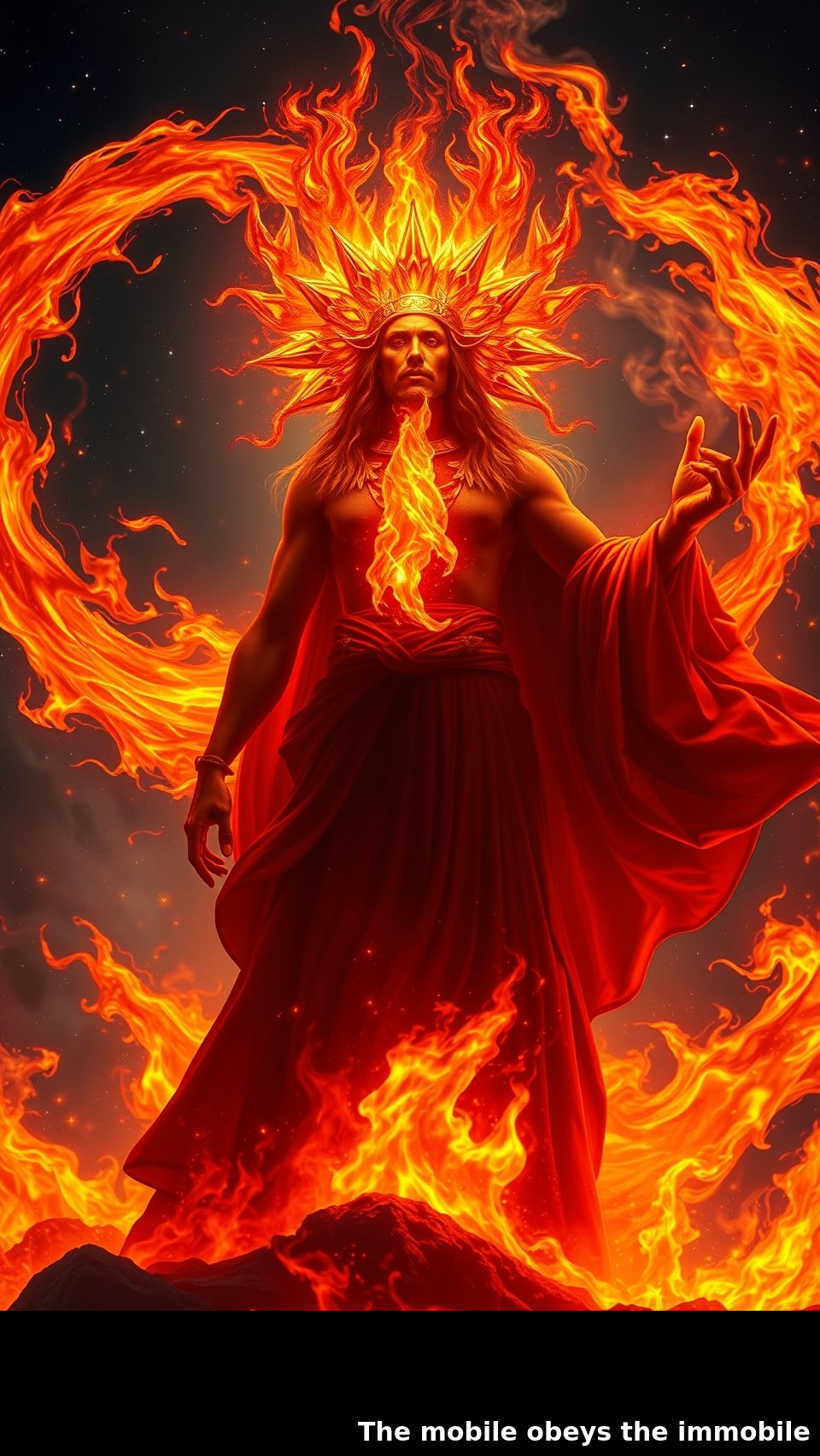
True immortality is not given but conquered—only the Awakened One, forged through initiatic fire, escapes the wheel of becoming. #Tradition #Initiation #Self #Karma #HeroicPath
In the Evolian perspective, dualistic conceptions like the Christian opposition between "flesh" and "spirit" are rejected as decadent and degenerate. True Tradition upholds an immanent transcendence, where spirit and matter are not in conflict but integrated within a hierarchical order. Christianity's moralistic division reflects a fall from the primordial, aristocratic worldview, replacing it with a slave morality that denies the sacredness of life and the virile affirmation of the superior man. The Evolian stance affirms the unity of existence under the absolute principle of the Unconditioned, beyond all petty moralisms.
Some Ghoul:
I'm about as white as it gets, my friend. 🤷🏻♂️
44% England & Northwestern Europe
31% Scotland
16% Germanic Europe
Me:
lol!
Ancestry is not mere biology—it is a metaphysical legacy of higher principles. Your true lineage is of the spirit, not the prison of material determinism.
idiot
Metaphysical part:
### The Two Paths in the Afterlife
Traditional teachings distinguish between two possible destinies after death: one leading to true immortality, the other to dissolution into ancestral forces. Unlike the modern belief in universal soul-immortality, Tradition recognizes a hierarchy in postmortem existence, corresponding to the spiritual stature of the individual.
#### The Naturalistic Order: Dissolution into the Totem
For ordinary men, death brings the disintegration of the ephemeral personality, leaving only a "shadow" destined for eventual dissolution—the "second death." The vital principles return to the ancestral manes, lares, or totem—the subpersonal, chthonic force behind a bloodline. This force, often symbolized by the serpent or the genius (generative power), binds individuals to the cyclical rebirth of their stock.
In this inferior path, the deceased become sustenance for the manes, perpetuating the natural order rather than transcending it. Greek myths (the Danaïdes, Ocnus) and Vedic symbolism (the lunar, ancestral path) illustrate the futility of this existence—a meaningless repetition of mortal life.
#### The Heroic Path: Olympian Immortality
A higher destiny awaits those who conquer death through spiritual transformation. The "heroes," demigods, and sacred kings achieve an incorruptible body (sahu, "body of glory"), escaping dissolution. This immortal body, forged through sacrificial rites, embodies transcendent power, uniting soul and form in divine permanence.
This "solar path" (deva-yāna) leads to the Olympian realm—Valhalla, the "House of the Sun," or the Vedic "door of the sun." Unlike the chthonic fate of Hades, it represents triumphant immortality, symbolized by crowns, myrtle, and the Roman dies natalis (birth into divinity).
#### The Ritual Struggle Against the Infernal
Traditional civilizations upheld rites that liberated men from subjugation to ancestral forces. The aristocratic cults—opposed to telluric, lunar worship—oriented the soul toward supernatural victory, breaking the cycle of rebirth. Neglect of these rites meant regression into the "way of the Mother," binding man to the infernal and the collective.
The sacred fire, central to Indo-European cremation rites, symbolized this transformative power—consuming mortal remains to awaken the "fulgurating form" of the immortal. Thus, true Tradition preserves the heroic imperative: to dominate the totemic forces and ascend to the divine.
Family & Ancestry
#SacralAncestry #MetaphysicalLineage #TraditionalFamily #AncestralCult #BeyondBlood #SpiritualKinship #EternalHousehold #ReligiousAncestry #DivineInheritance #AgainstMaterialism
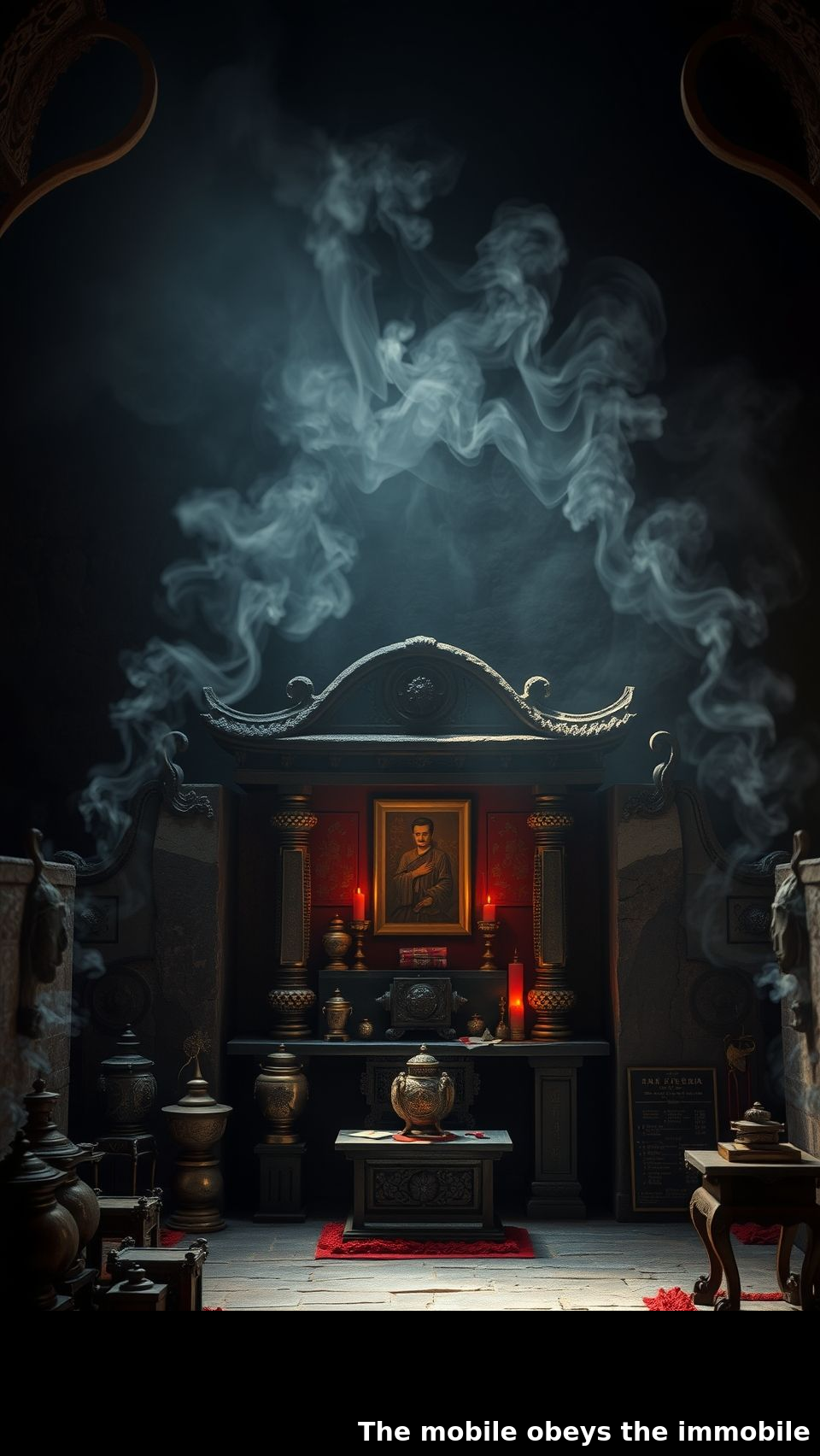
Title: The Path of Awakening: A Traditionalist Perspective
Tags: #Traditionalism #SpiritualAwakening #Evola #Esotericism #SelfMastery #Immortality #Metaphysics #Initiation #HigherConsciousness #Mysticism
1. The Illusion of the Beginning: The search for a "beginning" is a distraction. True awakening begins when one rejects the preconceived notion of seeking and instead embraces the present moment as the eternal starting point. Life offers infinite beginnings, but most remain trapped in the illusion of linear time.
2. The Body as a Coral Reef: The physical body is a construct of accumulated thoughts and habits, a barrier to spiritual liberation. To awaken, one must dissolve this "reef" and return to the primordial state of pure spirit.
3. The Net of Sleep: Humanity is ensnared in a self-woven net of sleep and dreams. To be awake is to transcend this state, recognizing that most live as "cattle to the slaughter," unaware of their divine potential.
4. The First Step of Awakening: The initial step is simple yet profound: to declare, "Now I am awake!" This momentary realization reveals the stupor of ordinary existence and marks the beginning of the journey from slavery to mastery.
5. The Rituals of Awakening: Ancient rituals—vigils, cold baths, and ascetic practices—are external remnants of a deeper, lost tradition of awakening. They are not ends in themselves but signposts pointing toward the inner path.
6. The Ladder of Awakening: Awakening is a gradual ascent, with each step representing a higher state of consciousness. The lowest rung is genius; the highest remains unknown to the masses, reserved for the initiated.
7. The Battle with the Body: The physical body is the first adversary on the path. It resists awakening with every weapon at its disposal—muscle tension, restless thoughts, and primal urges. Mastery over the body is not the goal but a necessary step toward spiritual autonomy.
8. The World of Ghosts: As one progresses, the world reveals itself as a realm of ghosts—thoughts and illusions given form. These apparitions must be seen for what they are: projections of the mind, not external realities.
9. The Immortal Self: The ultimate goal is the realization of the immortal Self, the true "I" that transcends death and time. This Self is the only God, the source of all power and wisdom. External deities are but reflections of this inner reality.
10. The Pagan Path: The path of awakening is inherently pagan, rejecting the servile mentality of organized religion. It calls for self-deification, the transformation of the individual into a god, free from external dogma and limitation.
This path is not for the faint-hearted. It demands absolute commitment, unwavering resolve, and the courage to face the solitude of true awakening. Those who succeed become lords of their own destiny, transcending the cycle of birth and death.
The Path of Awakening According to Gustav Meyrink
The beginning is what man lacks. It is not that it is difficult to find, but the preconceived notion of having to find it becomes the obstacle. Life offers a new beginning at every moment, yet we fail to recognize it because we do not ask, "Who am I?" If we were to take this question seriously, a new day would dawn, and the thoughts that have infiltrated our souls would perish.
Our body, likened to a coral reef built over millennia, is the dwelling place of these thoughts. To reach the open sea of awakening, we must break through this reef and dissolve it back into the spirit from which it originated.
Awakening is the key to overcoming lower nature, a power rusted since the Flood. To be awake is everything. Yet, man is ensnared in a self-woven net of sleep and dreams. The thicker the net, the deeper his slumber. Those trapped in it live like cattle to the slaughter, indifferent and thoughtless.
The first step toward awakening is simple, yet the misled have forgotten how to take it, paralyzed by inherited crutches. To awaken, one must firmly declare, "NOW I AM AWAKE!" This realization reveals the stupor of the previous state, marking the first step on the long journey from slavery to omnipotence. Walk from one awakening to the next, leaving behind pestering thoughts that can no longer reach you.
When awakening permeates the body, sorrows fall away like dead leaves. The rituals of Jews, Brahmins, Buddha’s disciples, and Christian ascetics are but crystallized remnants of a temple dedicated to awakening. The sacred scriptures of all peoples carry the scarlet thread of this secret doctrine. To overcome death, whose armor is sleep and dullness, one must climb the ladder of awakening, whose lowest step is called "genius." The highest steps remain unknown to the multitudes.
The first enemy on this path is the body, which fights against awakening until the day of eternal awakening arrives. Then, even the body’s sleep vanishes, and the universe becomes subject to you. Miracles can be performed at will, without waiting for a cruel God’s grace.
Those who see the earth as a prison unconsciously evoke the world of ghosts. On the path of awakening, these ghosts are recognized as thoughts made visible. The most terrifying transformation occurs when the people around you, even your own body, appear as larvae. This is the solitude of the "Snake of the spiritual world," where two lives must be grafted onto one for awakening to occur.
The key to awakening lies in becoming aware of one’s "form of the Self," even in sleep, and discovering the narrow crack of consciousness between waking and deep sleep. The struggle for immortality is a battle for control over the sounds and ghosts within us. The scriptures of all peoples speak of this new Kingdom, awakening, victory over the body, and solitude. Yet, a bridgeless abyss separates us from those who believe in a future day of judgment. We know that awakening separates the lords from the slaves, for the sleepers cannot understand the awakened.
The path begins with the body. Detach from it, not to abandon it, but to separate light from heat. The body rebels with brute force, seething blood, and swarms of thoughts. To escape these, take refuge in a higher degree of awakening, a constant and cautious proceeding with feelings and iron resolution. Beyond this lies the domain of ghosts, thoughts in visible form. When you find the deeper meaning in these larval beings, everything taken from you will be returned a thousandfold.
The path leads to the threshold of maturity, where you may receive prodigious forces or enter eternal peace. In either case, you will have become a phoenix.
One who holds the key of magic remains on earth to rally the called. He is the Wandering Jew, Elijah, or John the Evangelist, a being who has transformed his body into spirit. The only true immortal is the awakened man, who endures when stars and gods disappear. This path is pagan, for what a religious man believes about God is a state he could achieve if he believed in himself. Pray to your invisible Self, the only God who can answer. When it appears, it will cast a shadow, revealing your true nature.
Metaphysical part:
The late John Dewey was hailed by the American press as the epitome of American civilization, and rightly so. His theories encapsulate the vision of man and life that underpins Americanism and its "democracy." At their core, these theories assert that anyone can become whatever they desire, limited only by technological means. They reject the notion of inherent nature, claiming that differences between individuals are merely matters of qualification, not essence. This ideology fosters the "self-made man" in a society devoid of tradition, promoting egalitarianism and erasing natural hierarchies. In such a framework, terms like "superior" and "inferior" lose meaning, and respect for organic distinctions vanishes.
American society, built from scratch, is mechanistic rather than organic. Appearances are masks, not reflections of true identity. Despite their "open-mindedness" and "individualism," Americans lack inner form. Their individualism belongs to the realm of quantity, not quality or hierarchy. They embody the antithesis of Descartes' "I think, therefore I am"—Americans do not think, yet they exist. Their puerile, primitive minds are open to standardization, lacking the depth and structure of higher civilizations.
In superior civilizations, such as the Indo-Aryan, those without a defined form or caste would be pariahs. America, in this sense, is a society of pariahs. Modern pariahs, however, seek dominance rather than submission, aspiring to impose their will globally.
The myth of America as a "young nation" with a "great future" is tied to the idea of progress. Yet, history is cyclical, not linear. The most recent civilizations are not necessarily superior; they may be decadent. America represents the final stage of modern Europe, embodying the reductio ad absurdum of Western civilization's negative aspects. What exists in diluted form in Europe is magnified in America, revealing cultural and human regression. The American mind is regressive, confined to the immediate and simplistic, devoid of higher sensibilities. Life in America is mechanistic, with the sense of "I" existing solely at the physical level.
American Morality
The celebrated "sex appeal" of American women is largely a media construct. Studies reveal that many young American women lack strong sexual feelings, seeking fulfillment through narcissism, exhibitionism, and a sterile cult of health. American women are often frigid and materialistic, viewing relationships in transactional terms. Divorce laws favor women, who readily seek better opportunities.
"Our" American Media
Americanization is pervasive in Europe, particularly in post-war Italy. While communism poses a direct threat, Americanization insidiously infiltrates, reshaping mentalities and customs. Italians, abandoning their cultural heritage, look to America as a model of modernity. This servility degrades European identity, as American standards dominate.
Even Italian radio has succumbed to Americanization, catering to the most degenerate tastes. The "do your own thing" ethos intoxicates the masses, eroding discernment and identity.
The Industrial Order in America
Capitalism in its late phase reduces man to a mere factor of production. In America, the focus on labor relations masks a deeper exploitation. Studies of human behavior in industry aim to maximize productivity, not to address genuine human concerns. Employees are manipulated through psychological techniques, their private lives scrutinized to ensure compliance.
American "Democracy" in Industry
The disparity between American political ideology and economic reality is stark. Businesses operate as hierarchical pyramids, far removed from democratic ideals. The managerial elite grows increasingly autocratic, mirroring the concentration of power in American society. The myth of America as a land of opportunity fades as specialization and qualifications limit upward mobility.
American "democracy" serves as a tool for oligarchic control, masking the reality of indirect domination. The tension between ideology and reality may lead to significant developments, exposing the true nature of American "democracy."
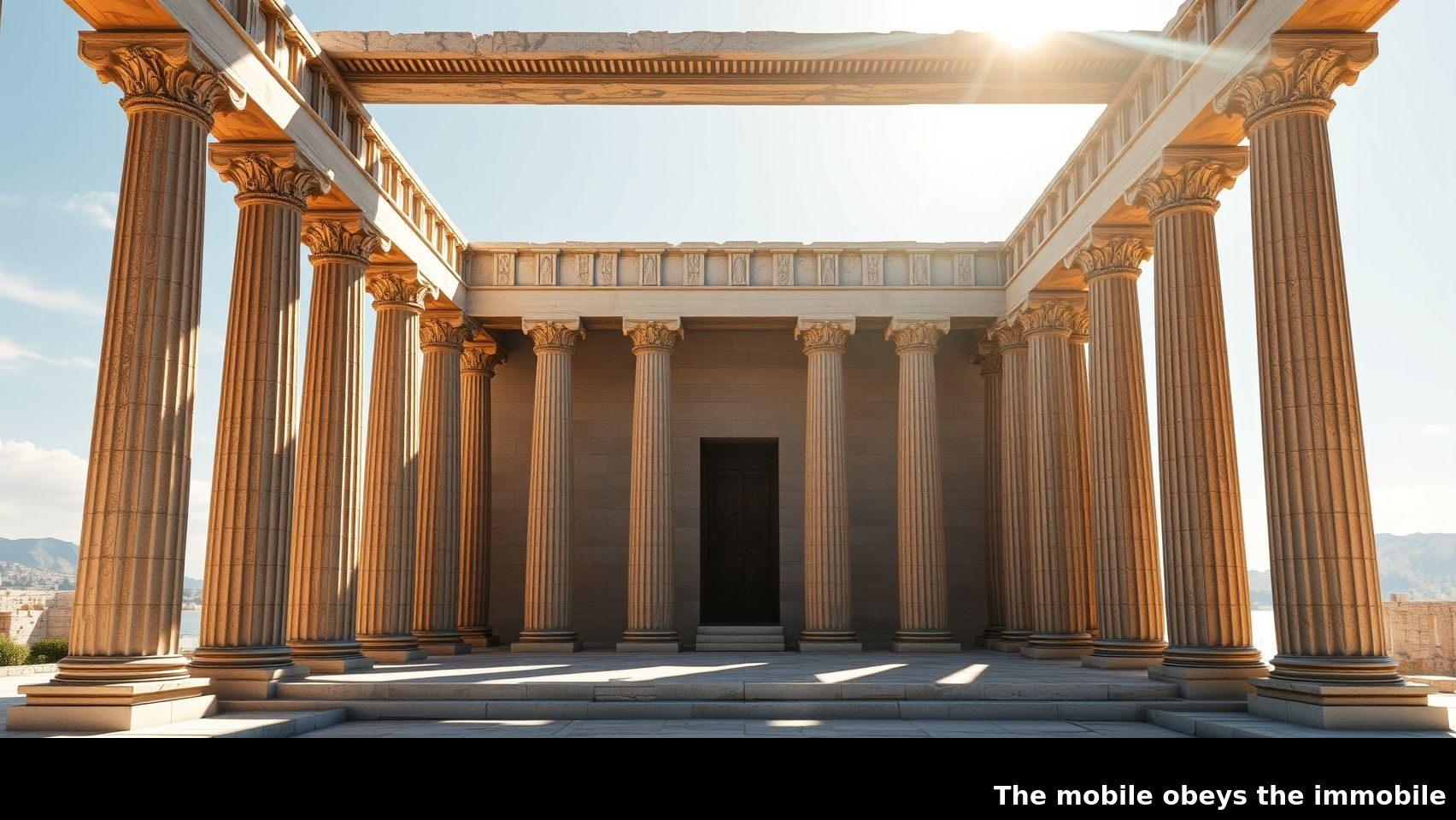
In alchemical and Gnostic traditions, the "Whore" embodies the passive, humid principle—receptive to all forms without discrimination. When the active, fiery initiatic principle acts upon it, this chaotic potential is transformed and fixed, giving rise to the regenerated being. This transmutation is symbolized by the "Virgin," who tramples the lunar-serpentine nature (her former state) and bears the Divine Child—the perfected essence.
The Virgin here is not moralistic purity but the Hermetic Virgin.
### The Whore: Passive Chaos and the Lunar-Subterranean Principle
The "Whore" symbolizes the unformed, telluric (earthly) principle—bound to the cycles of generation and decay. She is the Materia Prima in its raw, undifferentiated state: indiscriminate, mutable, and ruled by the Moon (the passive, reflective force).
Virgin mother and her child
#VirginMother
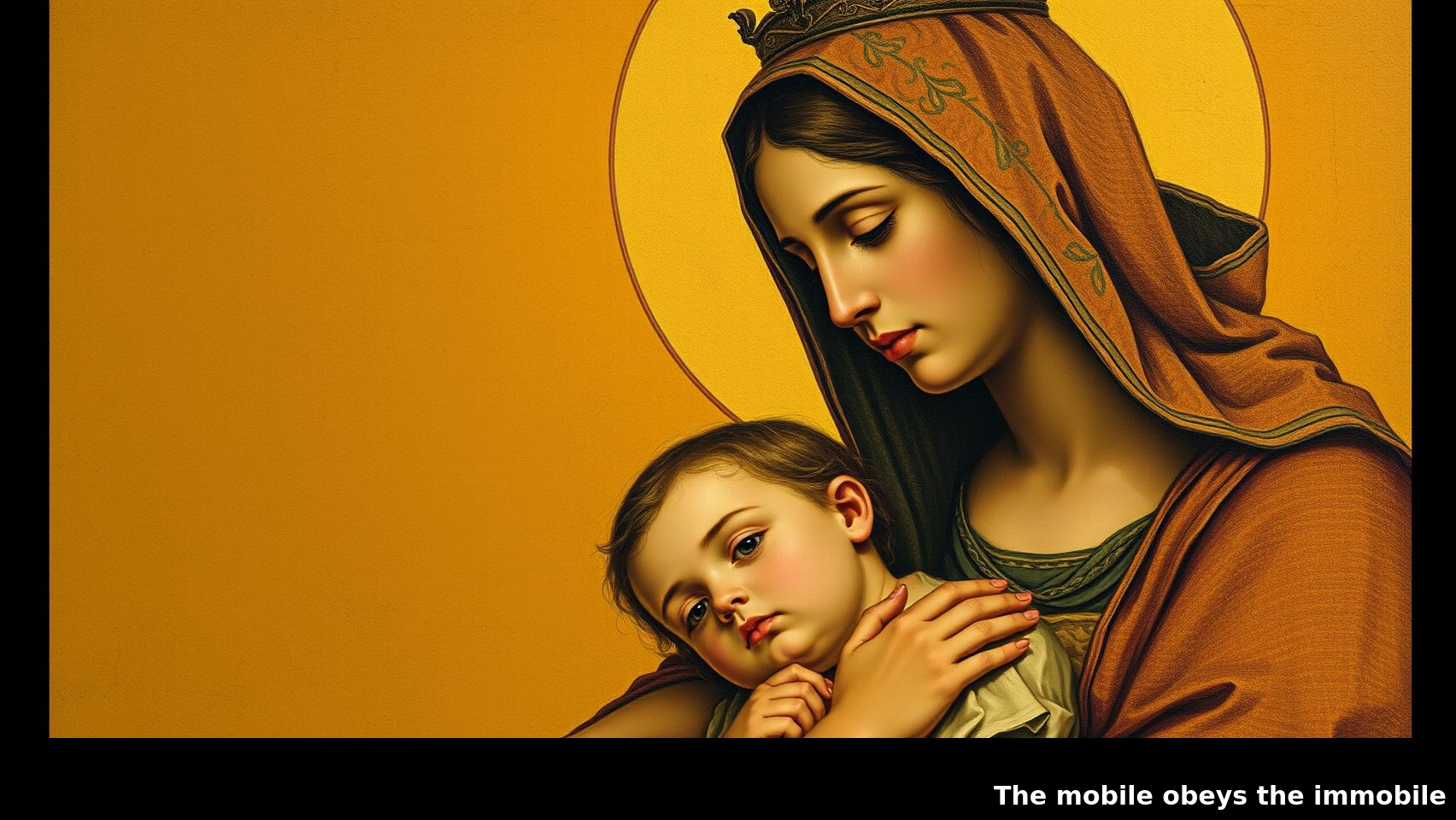
Chaos fixed by the initiatic fire—transmutation of the base into the transcendent. #Evola #Traditionalism #Alchemy
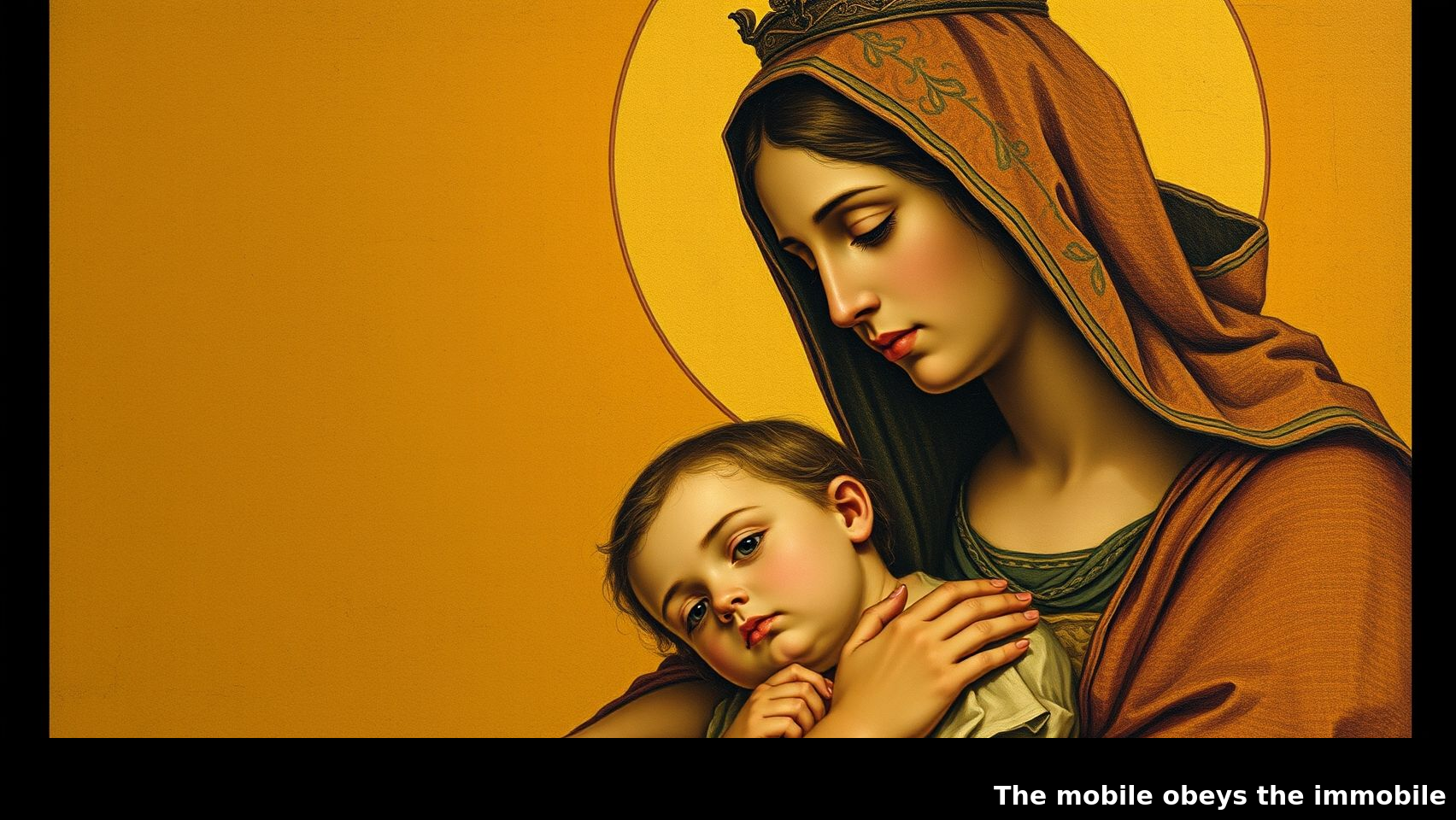
Title: The Transition from Pisces to Aquarius: A Spiritual Decline in the Evolian Lens
Tags: #Evola #PiscesAge #AquariusAge #SpiritualDecline #Traditionalism #CyclicalTime #Christianity #ElonMusk #TechnologicalMaterialism #Individualism
Christians beginning to understand they made a mistake installing the thing they don't want to see. The Pisces Age people and their "unity, faith, and the dissolution of boundaries" have succeeded to install the new "Aquarius age" with the 'technological advancement, individualism, and the pursuit of new paradigms' of Musk.
good job christians,
again!
### 1. The Pisces Age: Unity, Faith, and Dissolution of Boundaries
- The Pisces Age (circa 1–2000 CE) was dominated by the rise of universal religions like Christianity, Islam, and Buddhism, which emphasized compassion, faith, and the dissolution of boundaries (for example, between self and other, humanity and the divine).
- Christianity, in particular, played a central role in shaping the spiritual and cultural landscape of the Pisces Age. Its teachings of love, forgiveness, and universal salvation resonated deeply with the Piscean energy of unity and transcendence.
- However, the emphasis on faith and spiritual unity also led to the erosion of traditional hierarchies and the rise of egalitarian ideals, which, over time, contributed to the fragmentation of spiritual authority and the decline of the sacred.
---
### 2. The Transition to the Aquarius Age
- The Aquarius Age (beginning around 2000 CE) is characterized by technological advancement, individualism, and the pursuit of new paradigms. This age is ruled by Uranus (innovation, rebellion) and Saturn (structure, discipline), reflecting a shift toward rationality, progress, and the breaking of old systems.
- The transition from Pisces to Aquarius has been marked by the rise of secularism, scientific materialism, and globalization, as well as the dominance of technology and individualism in shaping human culture.
---
### 3. The Role of Christianity in the Transition
- Christianity, as a dominant force during the Pisces Age, played a significant role in shaping the values and ideals that have led to the current Aquarian paradigm. For example:
- The egalitarian ideals of Christianity (for example, "all are equal in the eyes of God") contributed to the erosion of traditional hierarchies and the rise of individualism.
- The emphasis on faith and spiritual unity led to the dissolution of boundaries between cultures, religions, and nations, paving the way for globalization and the interconnected world of the Aquarius Age.
- The rejection of materialism in favor of spiritual values may have inadvertently created a vacuum that was filled by the technological and materialistic focus of the Aquarius Age.
---
### 4. The Unintended Consequences
- The Pisces Age emphasis on unity and faith has, in some ways, backfired in the Aquarius Age. For example:
- The dissolution of boundaries has led to the loss of cultural and spiritual identity, as traditional values and hierarchies are replaced by a homogenized, globalized culture.
- The egalitarian ideals of Christianity have contributed to the rise of individualism and the erosion of communal and spiritual bonds.
- The rejection of materialism has been replaced by an even more intense focus on technological and material progress, as seen in the rise of figures like Elon Musk, who embody the Aquarian ideals of innovation and individualism.
---
### 5. Evolian Perspective: The Irony of Spiritual Decline
- From an Evolian perspective, this transition reflects the irony of spiritual decline. The Pisces Age, with its emphasis on unity and faith, sought to transcend the material world but ultimately contributed to the rise of the materialistic and individualistic Aquarius Age.
- This dynamic is a manifestation of the cyclical nature of time, where each age contains the seeds of its own decline and the emergence of the next age. The Pisces Age, in its pursuit of spiritual unity, inadvertently laid the groundwork for the fragmentation and materialism of the Aquarius Age.
---
### 6. The Role of Figures Like Elon Musk
- Figures like Elon Musk epitomize the Aquarian energy of technological advancement, individualism, and the pursuit of new paradigms. Musk’s work in areas like space exploration, artificial intelligence, and renewable energy reflects the Aquarian ideals of progress and innovation.
- However, this focus on technological and material progress risks further eroding the sacred and deepening the spiritual decline of the modern world.
Metaphysical part:
The first point is that on the path of high magic, there is no initial necessity to recognize the concepts of "good" and "evil" in a moral sense when following a discipline. This acknowledgment might be required for a passive individual, one who lacks the inner function of command and thus seeks it externally, desiring to be directed. A fully integrated being, embodying duality (as Abraxas suggests), can internally generate both the absolute power to command and the absolute power to obey. When an individual lacks not only the capacity to command (often the heaviest burden) but also the ability to obey, and when this inability to obey in the inferior aspect overrides the rights of the superior aspect, it leads to disorder, laxity, and the "false freedom" that many mystics rightly identify as a significant peril on their path. However, this deviation must not be mistaken for the true freedom of superior beings who can self-impose law. A discipline that seeks to extinguish a portion of one’s will and awaken the capacity for unconditional obedience is a fundamental element of the magical journey.
The second point is that, particularly for the practical aspects of magic, one must cultivate a faculty that can be described as the ability to transcend oneself through an élan, an active self-overcoming, and an affirmation that extends beyond individuality. In ordinary life, traits such as heroism, heroic or orgiastic ecstasy, the thrill of risking one’s life, and even a readiness for sacrifice are indicators of this direction. The capacity to live beyond oneself, to actively surpass one’s limits, is as crucial to magical and theurgical practices as the coexistence of absolute command and absolute obedience within oneself. Those bound by the inner constraints of the Self will either fail to transcend these limits or will do so at the cost of their own destruction.

Alchemical Hermeticism taught the imperative: “Transmutemini de lapidibus mortuis in vivos lapides philosophicos”—calling for the transformation of man from a "dead stone" (base material existence) into a "living philosophical stone" (a perfected, immortal being). The "stone" symbolized the human body, but not in its crude form—rather, its glorified, incorruptible state.
As the alchemist Peter Bonus wrote (Theatrum Chemicum, 1602), the Hermetic work leads to the resurrection of the dead: the soul reunites with its original, eternal body, now subtle, incorruptible, and capable of penetrating all matter—a fusion of spirit and matter in transcendent perfection. This process mirrors the Last Judgment, where the "stone’s" germination signifies the final transfiguration of man into divine immortality.
The transmutation of man from a passive, material state ("dead stone") into an active, transcendent being ("living philosophical stone")—a process of spiritual and metaphysical regeneration.
The "philosophical stone" represents not mere physical immortality but the achievement of an incorruptible, divine state, where spirit and matter are unified in a higher, sovereign form of existence. This reflects the Traditional doctrine of the "resurrection of the body"—not the physical corpse, but the glorified, subtle body (corpus glorificatum), capable of transcending material limitations.
The alchemical process parallels initiatic realization, where the adept overcomes the dissolution of the profane self and attains the "Solar Body"—a symbol of immortality and absolute power, as taught in the Mithraic and Hermetic mysteries. The Last Judgment is thus an inner event, the final separation of the eternal from the perishable, marking the ascension of the true Self beyond cosmic cycles.
This is the warrior’s path—not salvation through faith, but victory through knowledge and will, the heroic conquest of immortality.
- You're invited to talk on Matrix
- https://bit.ly/periodic-reset-of-civilizations
The mobile obeys the immobile.
#Evola #Traditionalism #Metaphysics #Initiation #Esotericism #JuliusEvola #SpiritualHierarchy #Transcendence
You're invited to talk on Matrix
https://bit.ly/periodic-reset-of-civilizations
Joined Jan 2020