
periodic reset of civilizations @periodic_reset_ofcivilizations@gameliberty.club
- You're invited to talk on Matrix
- https://bit.ly/periodic-reset-of-civilizations
The mobile obeys the immobile.
#Evola #Traditionalism #Metaphysics #Initiation #Esotericism #JuliusEvola #SpiritualHierarchy #Transcendence
You're invited to talk on Matrix
https://bit.ly/periodic-reset-of-civilizations
Joined Jan 2020
Title: The Tate Brothers' Departure: A Symptom of Western Decline
Tags: #CulturalDecline #TraditionalValues #SpiritualBankruptcy #ModernDecadence
1. Cultural and Moral Decline: The Tate brothers' case highlights the deepening moral decay in Western society, where figures embroiled in serious allegations are still celebrated and supported.
2. Spiritual Bankruptcy: Their alignment with Donald Trump, a symbol of modern individualism and materialism, reflects the spiritual void in contemporary culture.
3. Hypocrisy of the Christian Electorate: The support from self-proclaimed morally superior Christian voters exposes their hypocrisy, as they endorse individuals whose actions starkly contradict traditional values.
4. Parasitic Mentality: The zombie-like adherence to figures like Trump and the Tates reveals a parasitic mindset, devoid of genuine spiritual or intellectual depth.
5. Fetishized Individualism: The glorification of individualistic, materialistic success over communal and traditional values underscores the West's detachment from higher principles.
6. Erosion of Traditional Values: The case exemplifies the erosion of traditional moral frameworks, replaced by a culture of excess, exploitation, and moral relativism.
7. Intellectual Bankruptcy: The inability of society to critically evaluate and reject such figures demonstrates a profound intellectual decline.
8. Moral Contradictions: The Christian electorate's support for Trump and the Tates reveals a glaring contradiction between their professed values and their actions.
9. Symbol of Decadence: The Tate brothers' rise and fall symbolize the broader decadence of a society that prioritizes material success over spiritual and ethical integrity.
10. Call for Restoration: This situation underscores the urgent need for a return to traditional values and a rejection of the hollow, individualistic ethos that dominates modern Western culture.
Andrew Tate and his brother Tristan have left Romania for the United States after previously being barred from exiting the country, where they are facing charges of rape and human trafficking.
The Tate brothers, departed Romania on Thursday following the lifting of travel restrictions by Romanian authorities. Both had been under legal scrutiny and were prohibited from leaving the country as part of an ongoing criminal case. Andrew and Tristan Tate, who hold dual US-UK citizenship, were arrested in Romania in 2022 on allegations of human trafficking, sexual misconduct, money laundering, and involvement in organized crime. They have consistently denied the charges but were placed under house arrest after spending three months in police custody. Their movements had been restricted since their release.
Reports indicate that the brothers left Bucharest on a private jet early Thursday, bound for Florida, after Romanian officials returned their US passports. The Directorate for Investigating Organized Crime and Terrorism (DIICOT), the Romanian agency handling the case, confirmed that the travel ban had been lifted. This development follows speculation that the administration of former US President Donald Trump had been pressuring Romania to remove the travel restrictions. The Tate brothers are vocal supporters of Trump.
The situation involving Andrew and Tristan Tate, their legal troubles, and their departure from Romania reflects a broader cultural and moral decline. The alignment of their supporters with figures like Donald Trump underscores the spiritual and intellectual bankruptcy of contemporary Western society. The Christian electorate, often claiming moral superiority, reveals its hypocrisy by endorsing individuals whose actions contradict traditional values. This underscores the characteristic parasitic, zombie-like mentality of Trump's Christian voters, even as they consistently portray themselves as the leading Western figure, allegedly anointed by a fetishized individualistic god.
Metaphysical part:
The Swastika as a Polar Symbol
The following reflections on the deeper significance of the swastika might seem unusual if Herman Wirth's research on the primordial Nordic races were not already known in Germany. However, what deserves greater emphasis is that the ideas expressed in this regard are not merely the conjectures of a modern scholar. Rather, they can be linked to a doctrine that, despite its scattered traces, is found with the marks of universality and unanimity across all great traditions of the past—from the Far Eastern, Tibetan, Indo-Aryan, and Irano-Aryan to the Hellenic, Egyptian, Gaelic, Germanic, and Aztec. For us, it is clear that these traditions, if understood directly beyond "positive" limitations, can convey more than many dubious reconstructions based on philological and paleographic grounds.
The first insight from this line of thought is the integration of the concept of the Aryan, Indo-Germanic, or Nordic race. What was once considered a primordial tribe now reveals itself as a relatively recent branch of a much older and purer Arctic race, more accurately described by the ancient term "Hyperborean." This integration resolves many one-sided views and difficulties that have plagued previous interpretations of the Aryan thesis. The Aryan idea thus rises to a universal principle, establishing a continuity and common origin of cultural elements that were once thought separate but are found scattered across the East and West, North and South. In this light, the swastika symbol takes on new meaning. The difficulties faced by Ernst Kraus or Ludwig Müller, who argued that the swastika was exclusive to Indo-Germanic tribes, are diminished when considering the broader Hyperborean origin. The swastika's presence in regions like California, Central America, the Far East, Mesopotamia, and North Africa—areas not traditionally associated with Indo-Germanic peoples—can be explained through the diffusion of the Nordic Ur-race.
The second key aspect is the solar character of the primordial Nordic culture. This is evident from the consistent testimonies of ancient traditions regarding the Arctic homeland. The Hyperborean land of the Iranian Aryans, airyanem waêjô, is allegorically described in the Avesta as the home of solar "glory" and Yima, the "Radiant, Glorious One, who among men is like the sun." Similarly, the Indo-Aryans' Çweta-dwîpa or uttara-kuru, the sacred land of the far North, is depicted as the "White Island" or "Island of Radiance," the abode of Narâyâna, "in whom a great fire burns, radiating in all directions." The Hellenic Hyperboreans are associated with the radiant Apollo, while Thule, merging with it, is said to derive its name from the sun. The Aztec Tullan or Tlallocan corresponds etymologically to Thule and is identified with the "House of the Sun." In the Edda, Gimle or Gladsheim, the primordial home of Asgard, is described as eternal, golden, and radiant like the sun. Similar descriptions apply to the mysterious northern lands in Far Eastern traditions and the mystical Chambhala of pre-Buddhist Tibetan Bön tradition.
This symbolic testimony points to two elements: the idea of a solar cult and the concept of solar rulership. Regarding the first, Wirth's reconstruction suggests that the Nordic-Atlantic Ur-race shared a common solar religion. While this assumption is plausible, it requires further justification. What is clear is the intimate relationship between the sun and divine fire, evident in Indo-European traditions. The cult of fire was linked to both the uranic and solar components of patrician rites in ancient traditions (Bachofen) and to the concept of solar and divine kingship. The Iranian-Aryan hvarenô, the "glory" that makes kings, is a solar fire, akin to the Vedic agni-rohita and the Egyptian ânshûs, the life-force of kingship. This provides the first and simplest validation of the swastika as a Nordic symbol. The swastika, in its connection to the ancient Swastika, has often been interpreted as a symbol of fire and the sun. However, it is crucial to move beyond a "naturalistic" reduction of these concepts. Ancient peoples did not superstitiously deify natural forces but used them as symbols to express higher meanings. The swastika, as a fire symbol, is not merely a primitive tool for igniting flames but a spiritual and royal symbol, representing the primordial light and fire that ignited the ruling castes in their solar function over subordinate forces and races.
The swastika's significance extends beyond its solar and fiery aspects to its polar symbolism. The "solar" function embodied by the leaders of great traditional cultures was often compared to that of a "pole." The leader represented the immovable point around which the ordered movement of forces revolved hierarchically. This is reflected in the Far Eastern concept of "immutability at the center" and Confucius's statement: "He who rules by virtue is like the pole star, which remains fixed while all other stars revolve around it." The Aristotelian concept of the "unmoved mover" and the Sanskrit term cakravartî ("he who turns the wheel") express the same idea. The polar symbol represents an irresistible force in its calm superiority, a power that legitimizes itself through its mere presence, embodying the stability of the "world of being" or the transcendent realm. This is also the meaning of the solar symbol embodied by Apollo, not as the rising and setting sun but as the steady, ruling light that surrounds the Olympians and the pure spiritual substances free from the world of passion and becoming.
The swastika, as one of the oldest symbols of this spirituality and its polar function, represents not merely movement but a circular motion around an immutable center or axis. It is not just a solar symbol (the wheel of solar Vishnu) but a symbol of the solar principle reduced to a central, ruling element—an immutable "Olympian" principle. In this sense, the swastika is a polar symbol, revealing meanings in the earliest prehistory that would later be expressed in the glorious cycles of Aryan mythologies and kingships derived from the primordial Nordic culture.
The polar symbol also applies to certain cultures or cultural centers that embodied a corresponding function in the totality of history. The Chinese Empire was called the "Middle Kingdom"; Meru, the symbolic Indo-Aryan Olympus, was considered the "pole" of the earth; the symbolism of the Omphalos, associated with Delphi, the traditional center of Dorian-Olympian Greece, reflects the same meaning; and Asgard, the mystical homeland of Nordic royal lineages, coincides with Midgard, the "land of the center." Even Cuzco, the center of the Inca Sun Empire, seems to express the idea of an earthly "center." Additionally, the Sanskrit Tulâ, associated with the Hellenic and American names for the Hyperborean homeland, means "balance," and the zodiac sign Libra was initially identified with the Great Bear, a significant figure in Hyperborean cults, closely tied to polar symbolism.
Wirth's revival of the idea that the Arctic region was the primordial homeland of the white race, the progenitor of the Indo-Germanic and Aryan races, suggests a convergence of symbol and reality, metaphysics and physics, under the sign of the "pole." The prehistoric polar cycle of the Nordic Ur-race could be seen as the original expression of "Olympian" spirituality and the "polar" function, which manifested wherever it led to new cultures and traditions through adaptation or diffusion. The symbol of the "center" and the "pole" can thus be a traditional and supra-historical emblem, originally corresponding to a complete alignment of reality and symbol, pointing to a homeland that coincides with the Earth's geographic pole and embodies the value and function of a spiritual primordial "pole."
Wirth, however, errs in extending a cult to the entire Nordic tradition that actually pertains to a corrupted and "southernized" form of it. He emphasizes the winter solstice, interpreting the eternal cycle of the sun's death and resurrection as the mystery of the primordial Nordic faith. This view, which aligns the sun with a nature subject to birth and death, is more reflective of the chthonic cycle of the southern, pre-Aryan, and even Semitic mother-cult, associated with the great Asiatic fertility goddesses. Alfred Rosenberg has pointed out this confusion in Wirth's work, likely due to the mingling of testimonies from the earliest Nordic epochs with those of later, mixed cultures. While Wirth correctly distinguishes between a Nordic-Arctic (Hyperborean) race and a Nordic-Atlantic one, he fails to make a corresponding distinction in symbols and motifs, blending the two. According to the Avesta, Môuru, the land and culture of the "mother," appears only as the third "creation," already distant from the Nordic airyanem waêjô.
The theme of the sun god's death and resurrection in the mother, reflecting an eternal cycle of becoming, is fundamentally anti-Olympian and alien to the higher Nordic-Aryan spirituality. It is a theme attributable to southern influences, representing Dionysus against Apollo, Loki against the Aesir, and the chaotic desire for pantheistic ecstasy opposed to the calm self-awareness and natural supernaturalism of the "divine" races. Wirth's interpretation thus reflects a syncretic symbolism, far removed from the pure primordial Aryan cult and more applicable to the subsequent "Atlantic" culture, which shows traces of gynocratic themes.
In contrast, the polar cross, the swastika, symbolizes the unadulterated primordial worldview and can be regarded as a true Nordic symbol in the higher sense. Its fundamental theme is not change but a centralizing effect, to which change remains subordinate. On this basis, the solar and fiery symbols contained in the swastika take on a different meaning, directly connected to the distinctly uranic character of Aryan and Aryan-Hyperborean deities and cults, the patrician system of strict father-right, and all that signifies masculinity, true rulership, order, and the triumph of cosmos over chaos.
In this context, the swastika can lead us to a content of Nordic thought that is "classical" and "Doric" in the higher sense, characterized by centrality, inner "Olympian" superiority, and clarity within every "fire" and release of forces. According to an ancient tradition, those destined to rule must have the vision of a heavenly wheel: like a wheel, they act, turning and conquering. At the same time, the wheel embodies rta, the order, the spiritual Aryan law, depicted as a divine chariot in motion. The combination of these two concepts gives the fundamental idea of the moving swastika: a whirling, victorious wheel that generates fire and light, yet with a firm stillness, an immutable constancy at its center.
As the primordial Nordic homeland faded into the distant past, its memory transitioned from history to supra-history, becoming a receding reality accessible not through external means but only through spiritual action. Pindar states that the path to the Hyperboreans cannot be found by sea or land but is revealed only to heroes like Heracles, who remain faithful to the Olympian principle. Li-tse reports that the mysterious land of the far North can be reached "neither by ship nor by chariot, but only by the flight of the spirit." Similarly, Chambhala, the Hyperborean homeland in Tibetan tradition, is said to reside "in my spirit."
Perhaps no symbol better points to this inner path than the swastika, guiding the way for a resurrection of Germany's deepest forces from the summit of Nordic tradition. Indeed, the Indo-Aryan equivalent of the swastika, the Swastika, carries a favorable omen. It can be interpreted as a monogram composed of the letters forming the auspicious formula su-asti, equivalent to the Latin bene est or quod bonum faustumque sit—"What is good and fortunate, let it be!" No better symbol could be found to express the certainty of rebirth and the will to assert the legacy of the great Hyperborean ruling race against the dark forces threatening to overwhelm it.
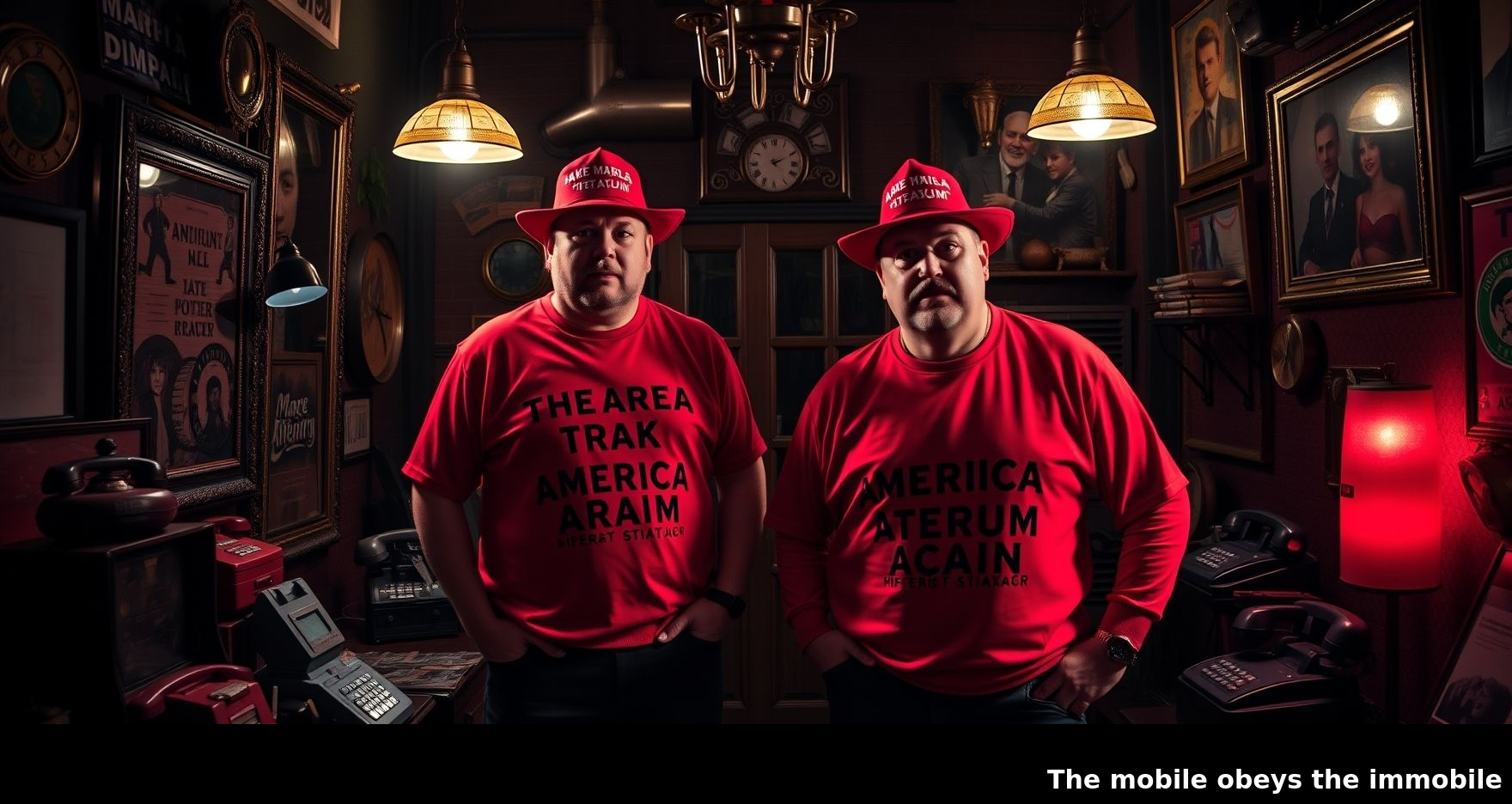
The #TateBrothers' departure epitomizes modern decadence—spiritual collapse, moral relativism, and the West’s surrender to base individualism over transcendent order.

Liberation is the transcendence of samsâra through Knowledge, detachment, and the Guru’s transmission—rituals and intellect are futile without inner awakening. #Liberation #Tantra #Tradition #SpiritualRealization #Metaphysics #Initiation #SelfMastery #Transcendence #Evola
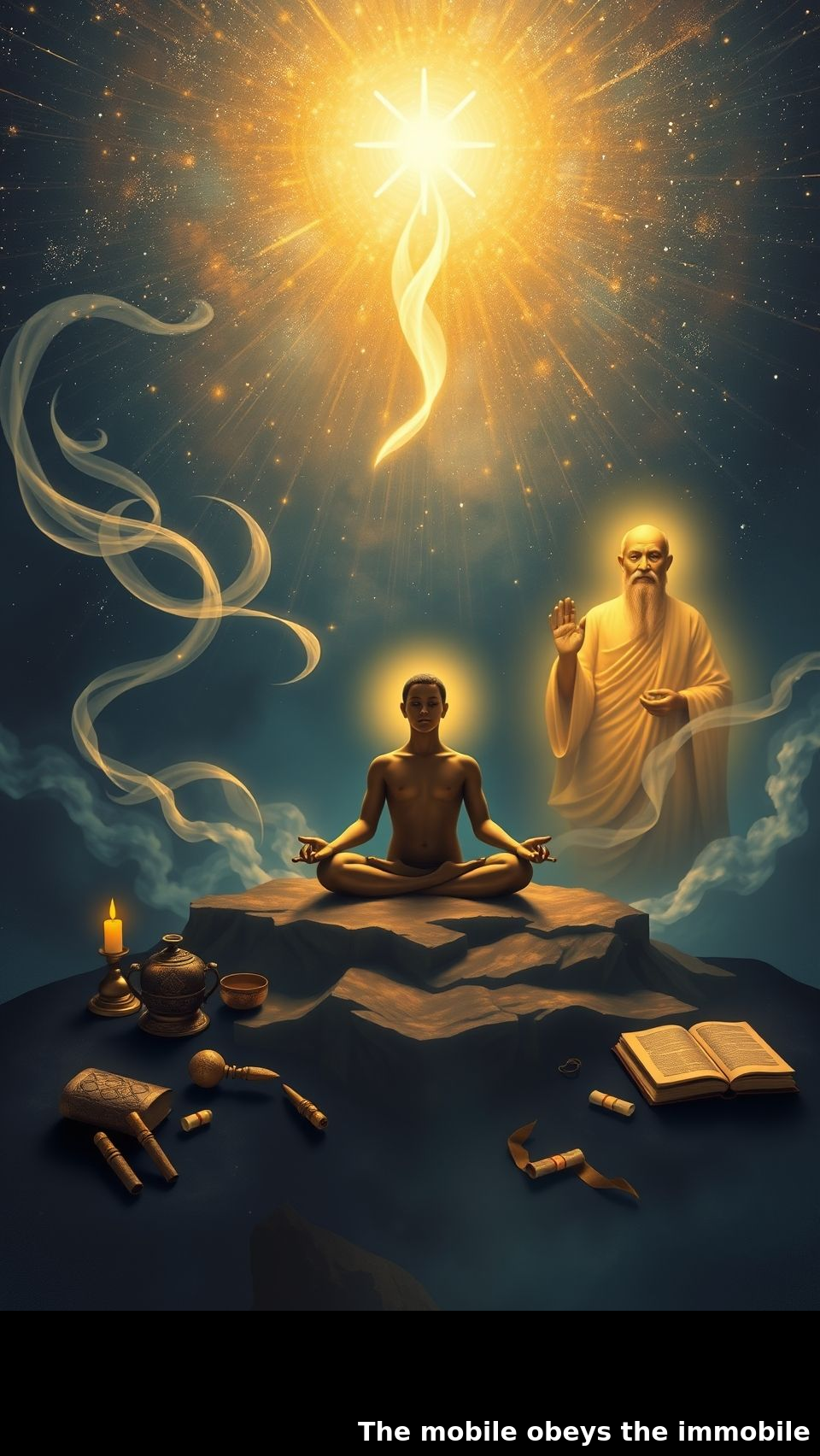
Title: Knowledge as Liberation: The Path Beyond Samsâra
Tags: #Liberation #Tantra #Tradition #SpiritualRealization #Metaphysics #Initiation #SelfMastery #Transcendence #Evola
1. Liberation through Knowledge: The ultimate goal of existence is liberation (moksha), which is achieved through the realization of transcendent Knowledge. This Knowledge is not intellectual but experiential, rooted in the direct realization of the Self.
2. The Human Condition as Opportunity: The human birth is rare and precious, offering the unique opportunity to transcend the cycle of birth and death (samsâra). Failing to pursue liberation while in this state is a profound self-betrayal.
3. Detachment as the Key: Liberation is attained through detachment from the illusions of the material world. Attachment to transient pleasures and identities perpetuates bondage, while detachment aligns one with the Real.
4. The Role of the Body: The body is a tool for spiritual realization. It must be preserved and disciplined, not indulged or abused, as it serves as the vehicle for attaining Truth.
5. The Illusion of Rituals: External practices, such as rituals, sacrifices, and asceticism, are insufficient for liberation. They may serve as preliminary steps but cannot replace the direct realization of Truth.
6. The Necessity of a Teacher: Liberation is imparted through the guidance of a true Teacher (Guru), who transmits the living Knowledge beyond scriptures and theoretical teachings.
7. Beyond Dualism and Monism: The ultimate Truth transcends both dualism and monism. It is realized through direct experience, not through philosophical speculation or adherence to dogmas.
8. The Futility of Mere Scriptural Knowledge: Scriptures and texts are secondary; they are only useful if one already possesses the inner disposition toward Knowledge. Without this, they are as useless as a mirror to a blind man.
9. The Danger of Ignorance: Ignorance (avidya) binds beings to the cycle of suffering. Only the awakening of true Knowledge can dispel this ignorance and lead to liberation.
10. The Path of the Kaula: The Tantric initiatic path (Kaula) offers a direct means to liberation, emphasizing the transmission of Truth from Teacher to disciple. Outside this path, liberation remains inaccessible.
The text underscores the importance of spiritual discipline, self-awareness, and the guidance of a genuine Teacher in overcoming the cycle of samsâra and achieving liberation. It rejects superficial practices and emphasizes the need for inner transformation and alignment with the Real.
The text emphasizes the path to liberation through Knowledge and detachment, aligning with a traditionalist perspective that prioritizes spiritual realization over ritualism and materialism. Key points include:
1. Liberation through Knowledge: Liberation (moksha) is the ultimate goal, attainable only through the realization of Truth and Self-knowledge, not through rituals, asceticism, or scriptural study alone.
2. Detachment: Attachment to worldly desires and identities perpetuates bondage. True freedom comes from detachment and grounding in the Real.
3. The Role of the Teacher: Liberation is imparted through the direct transmission of Truth by a true Teacher, not through theoretical knowledge or intellectual debates.
4. Critique of Ritualism and Hypocrisy: Rituals, sacrifices, and superficial practices are deemed ineffective for liberation. Those who preach such methods without true understanding are criticized as deceivers.
5. The Human Opportunity: The human birth is rare and precious, offering the unique chance to attain liberation. Failing to strive for this goal is a grave error.
6. Transcending Dualism and Monism: The ultimate Truth lies beyond both dualism and monism, accessible only through direct realization, not philosophical speculation.
Metaphysical part:
On the Secret of Decay
Those who reject the rationalist myth of "progress" and the interpretation of history as a continuous upward trajectory of humanity will inevitably gravitate toward the worldview shared by all great traditional cultures. This perspective centers on the memory of a process of degeneration, a gradual obscuration, or the collapse of a higher, preceding world. As one delves deeper into this ancient (yet newly relevant) interpretation, various challenges arise, chief among them being the question of the secret of decay.
This question, in its literal sense, is not new. When faced with the remnants of ancient cultures—whose names are lost to history but whose physical remains exude a greatness and power that seem otherworldly—few can avoid pondering the death of civilizations. The explanations commonly offered for such collapses often feel inadequate.
The Comte de Gobineau provided one of the most insightful summaries of this problem, along with a masterful critique of the prevailing hypotheses. His solution, rooted in racial thought and purity, contains significant truth but requires expansion to account for a higher order of reality. There are numerous instances where a culture has collapsed despite maintaining racial purity, as seen in certain groups that have faced slow, inevitable extinction while remaining racially isolated. A nearby example is the Swedes and the Dutch, who remain racially unchanged from two centuries ago but have lost the heroic spirit and racial consciousness they once possessed. Other cultures, like ancient Peru, stand as mummified relics, inwardly dead long before their physical collapse, easily toppled by external forces.
From a strictly traditional perspective, the secret of decay becomes even more elusive. It involves categorizing cultures into two main types: traditional cultures, which are rooted in unchanging metaphysical principles and hierarchical order, and "modern culture," which represents the antithesis of tradition, focusing solely on human and earthly concerns, detached from any higher world. From this standpoint, history is a narrative of degeneration, marked by the decline of traditional cultures and the rise of modern civilization.
This raises a dual question:
1. How did this degeneration occur? The evolutionary doctrine contains a logical flaw: the higher cannot emerge from the lower, nor the greater from the lesser. Similarly, the doctrine of involution faces the challenge of explaining how the higher can fall. Analogies, such as a healthy person falling ill or a virtuous individual turning to vice, offer superficial explanations but fail to address the deeper metaphysical issue.
2. How does the decay of one cultural cycle spread to others? It is not enough to explain the collapse of ancient Western civilization; one must also account for the global dominance of modern culture and its ability to divert other peoples from their traditional paths. Material and economic conquests alone cannot explain this phenomenon, as they are often accompanied by deeper cultural and spiritual influences. The traditional hierarchical view of culture and the state, which emphasizes the presence of the Spirit in the world, suggests that material conquests signal a spiritual weakness or retreat in the conquered cultures. The West, where this crisis reached its peak, delivered a knockout blow that brought down other civilizations whose traditions had already weakened.
The traditional hierarchy is not based on the tyranny of the upper classes but on the recognition by the lower of a higher reality embodied in certain individuals. This recognition forms the basis of all traditional order, heroism, and loyalty. When individuals degenerate, cutting themselves off from higher spiritual reference points, the metaphysical tension that holds the traditional order together collapses. This internal decay leads to external revolutions and the fall of civilizations.
The secret of decay, therefore, lies in the misuse of freedom—the decision to reject the Spirit and sever ties with higher principles. This metaphysical decision, manifesting in various forms of modern, anti-traditional thought, is the root cause of degeneration. Understanding this allows us to grasp the deeper meaning of legends about eternal rulers who await rediscovery by those who achieve spiritual completeness. These rulers symbolize the unalterable peaks of tradition, which remain intact even as the masses fall into decay. The possibility of restoration lies in reconnecting with these spiritual heights, a task that requires a profound inner transformation.
First steps toward the 'subtle body': detach from sensory illusion, awaken inner organs of consciousness, separate subtle from dense (Hermetic) or real from unreal (Hindu)—retain Self, avoid ecstatic dissolution. #SubtleBody #Evola #Hermeticism #Traditionalism #Initiation
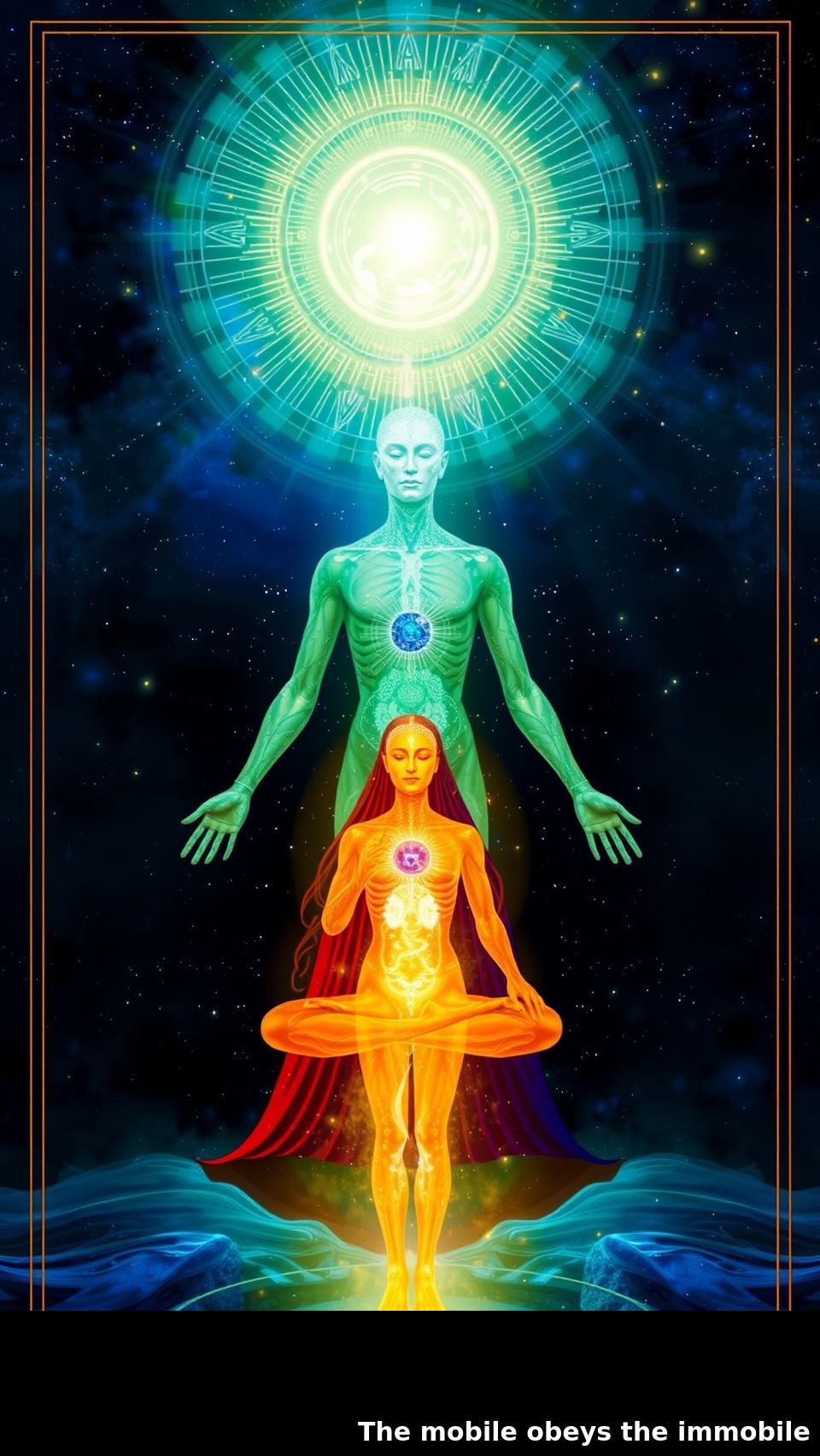
Title: First Steps Toward the Experience of the “Subtle Body”
Tags: #Evola #SubtleBody #InnerEssence #Hermeticism #EsotericPractice
1. The Heart as the Center of Consciousness: The intuitive truth that the center of consciousness resides in the “heart” has been obscured by modern science’s focus on the brain, which silences true knowledge in favor of sensory illusion.
2. Creating an Inner Environment: The first step toward experiencing the subtle body involves creating an “inner environment” where its organs can awaken to consciousness, similar to how physical organs respond to external stimuli.
3. Perceiving the Subtle: Alongside sensory impressions, we must strive to perceive a distinct, supersensible essence—a silent echo within us that reflects the intimate nature of things.
4. Separation of the Subtle and the Dense: By experiencing the head as detached and external, we separate the “subtle” from the “dense” (Hermetic terms) or the “real” from the “unreal” (Hindu terms), allowing subtle impressions to replace ordinary sensations.
5. Methodical Discipline: This practice requires intense, prolonged concentration to discern precise differences between sensory impressions and their subtle counterparts, which retain an objective character.
6. Thoughts and Emotional Contents: The same practice can be applied to thoughts and emotions, distancing ourselves from the head to seize thoughts before they are cerebrally articulated, revealing a new order of differences.
7. Dangers of Ecstasy: A key danger lies in becoming ensnared by ecstatic feelings or cosmic consciousness, which can cloud awareness. It is essential to retain the sense of the Self and active consciousness, avoiding the voluptuousness of possession that returns us to the physical body.
This approach emphasizes the development of the subtle body through disciplined inner work, transcending the limitations of the physical and sensory world to achieve a deeper, esoteric understanding of the Self.
First Steps Toward the Experience of the “Subtle Body”
The assertion that the center of consciousness resides in the “heart” echoes an intuitive truth. When science “proved” this center to be in the brain, true knowledge was silenced, replaced by sensory illusion.
Studying the organs reveals no more about the inner essence of man than observing letters in a sentence conveys meaning to one who cannot read. True knowledge arises from delving into one’s interiority, tracing the mysterious pathways that lead to the material body.
The first step involves creating an “inner environment” where the organs of the subtle body—a provisional yet useful term—can awaken to consciousness, much as physical organs are stimulated by external impressions. Various methods lead to this goal, but I will focus on one I consider most effective.
Every object, living or lifeless, carries a specific occult message. By focusing on two different perceptions—such as a plant and an animal—and gradually abstracting from their sensory images, we discern two distinct “subtle” impressions. These arise from within and cannot be projected outward as qualities of the object; they possess a life of their own.
This separation of the “subtle” from the “dense” (in Hermetic terms) or the “real” from the “unreal” (in Hindu terms) is achieved by experiencing the head as detached and external. Ordinary sensations fall through the center of consciousness, replaced by their corresponding subtle counterparts.
This discipline requires methodical repetition: through intense, progressively prolonged concentration, precise and recognizable differences emerge. These correspond to sensory impressions but are of a wholly different nature, retaining an objective character.
Only those who have experienced this renewed mode of knowledge understand the accompanying sense of certainty and direct understanding, surpassing any sensory-derived insight.
The same practice can be applied to thoughts, distancing ourselves from the head to seize and use thoughts before they are cerebrally articulated. Here, too, a new order of differences replaces the habitual one, as if each thought corresponds to a unique musical note in an infinite tonal range. After experiencing a sequence of note-thoughts, one can return to the head and articulate the corresponding thoughts discursively, though some depths defy verbalization as they transcend normal life and its concerns.
A similar practice can focus on emotional contents or impulses. The goal remains the same: a rapid, subtle attentiveness at the threshold of the Self, capturing perceptions midair and replacing ordinary, provisional, and sensual consciousness with a deeper knowledge of the elements.
I aim not to present a systematic esoteric treatise but to awaken memories of sporadic, spontaneous inner activities, encouraging their recognition and development.
The sense of self, arising from these activities, replaces the bodily sense. The body feels distant, external, while impressions from external objects seem to arise and live within us, as part of us.
This annuls the sense of space, leaving only an inner, rhythmic sense of time. Reestablishing the relationship with the body grants freedom and mobility within it, marking the birth of the subtle body’s sense.
A danger lies in becoming ensnared by a sense of happiness or greatness—what William James termed the “cosmic feeling”—which can cloud consciousness in ecstatic torpor. It is crucial to retain the sense of the Self and the active life of consciousness, remaining distinct and superior amidst the modalities of subtle perception.
Any sense of satisfaction or pride returns us to the body, altering realization and dimming vision. The subtle body grants possession, but the voluptuousness of possession belongs to the physical body and senses, which imprison us once more.
Metaphysical part:
The doctrine of the "immortal body" corresponds to the traditional teaching on immortality, often referred to as the "triple body" or simply the "immortal body." Here, the term "body" is used analogously to describe new forms of consciousness and action that the Self can attain, transcending the ordinary human condition. This doctrine, like all esoteric teachings, is only meaningful within the context of an elite group of initiates who have embarked on the path of spiritual realization. For the average person, such concepts hold no relevance, as they remain bound by their limited human consciousness, conditioned by their physical organism.
The ordinary person, while able to perceive and interact with their physical body, knows little of its true nature. The forces that animate the body—such as the movement of limbs or the beating of the heart—remain mysterious and beyond their control. For them, the body is an enigma, a mysterious entity to which they are inexplicably tied. However, for those who uncover the path to resolving this mystery through the light and power of the Self, the knowledge of the "immortal body" becomes accessible. This is not a separate body but rather a different mode of existence for what is commonly understood as the "body."
The journey to immortality begins with the ability to maintain consciousness beyond the death of the physical body. Those who achieve this state are, in a sense, "beyond the waters," where the dissolution of the physical organism no longer holds significance. This path involves shedding all determinisms, stripping away layers of conditioning, until the Self dissolves into pure being. This is the pinnacle of supreme identity, akin to the Upanishadic "fixation," Buddhist nirvana, or the Plotinian "One." It is a state of emptiness and fullness, described in Hatha-Yoga as "empty like a vase in the sky, full like a vase in the ocean."
Alternatively, there is the magical path, where the liberated principle returns to the world as a force of power. Here, the elements and processes that once appeared as external and independent are reorganized according to the individual's will, becoming symbols of their power. This is a process of active transformation, where the individual becomes free from the constraints of the material world, reducing it to illusion and symbol.
The "immortal body" is thus a simple, non-composite body, infused with the pure substance of the Self. It is made of consciousness and power, not matter, as matter is merely an inert, passive state of spirit. This body is sustained by the mind, and its existence depends entirely on the Self. If the Self were to vanish, the body would collapse into nothingness. This is the essence of the "body of resurrection" or "magical body," which is not a fixed form but a potentiality, capable of infinite transformations.
The immortal body is invulnerable and incorruptible, composed of light and power, akin to the "fiery" or "radiant" body described in Neoplatonism. It is a body of freedom, capable of manifesting in any form, transcending the limitations of the physical world. This body is not unreal but represents the highest reality, where all resistance to the spirit has been dissolved.
In summary, the "immortal body" is the ultimate realization of the Self, a body of light and power, free from the constraints of the material world. It is the culmination of the initiatic journey, where the individual becomes the "Lord of the Three Worlds," transcending the realms of generation and corruption, and embodying the pure, luminous essence of being.
Title: The Initiatic Doctrine of Immortality: Beyond the Illusion of the "Soul"
Tags: #Tradition #Initiation #Immortality #Self #Karma
1. Rejection of the "Immortal Soul" – The religious notion of an inherent "immortal soul" is illusory; true immortality is a possibility, not a given.
2. Eternal Principles ≠ Immortality – Even if eternal principles exist in man, without conscious activation, they are irrelevant to the Self’s immortality.
3. Self as Consciousness – The Self is consciousness; when consciousness extinguishes, the Self ceases, regardless of any surviving "principles."
4. Atman vs. Empirical Self – The human "self" is merely a reflection of the transcendent Atman; death is the reabsorption of this reflection, not survival.
5. No Continuity in Reabsorption – Reintegration into the Absolute is tantamount to dissolution—only initiation bridges the gap consciously.
6. Karma as Impersonal Residue – What survives death is not a "soul" but karma, an impersonal force shaping future formations within samsāra.
7. Flame Metaphor – Karmic continuity is like one flame lighting another—no identity persists, only causation.
8. Superior Principle Manifestations – Multiple existences may be attempts by a higher principle to perfect itself, not "reincarnations" of the same self.
9. Assault Waves of the Army – Like waves in a battle, each existence is a separate attempt; success belongs only to the one that achieves reintegration.
10. The Awakened One – Only the being who achieves initiatic reintegration transcends the cycle, becoming the "perfect button" cast from the failures of prior forms.
No consolation, no religion—only the hard doctrine of the Self.
### The Initiatic Doctrine of Immortality: An Evolian Perspective
Critics argue that denying the common religious notion of an "immortal soul" goes too far, insisting that eternal principles exist within man regardless of conscious realization. However, from the initiatic standpoint, if these principles remain unrealized—unactivated and unassimilated by the Self—they are, for all practical purposes, nonexistent. This is no different from the materialist’s consolation that, though the soul perishes, matter endures.
The Self is not an object like a table, which exists independently of awareness. The Self is consciousness; its very being depends on self-awareness. When consciousness extinguishes, so does the Self. What persists—whether eternally or materially—is no longer that Self.
Doctrinally, we acknowledge a transcendent Self (atman, purusha), of which the human "self" is but a reflection. The dissolution of the individual "soul" at death can thus be understood as the reabsorption of this reflection into its source. Yet, without conscious reintegration—the very aim of initiation—this amounts to annihilation, for there is no continuity between the reflected and the absolute Self.
As for post-mortem survival, what remains is karma—impersonal forces within samsāric existence. Karma is not immortality; it is the causal residue of actions, generating new beings without preserving self-identity. Like a flame igniting another flame, the fire is the same, but the flame is not.
A more meaningful initiatic perspective considers multiple existences as successive manifestations of a single higher principle striving toward perfection. These are not reincarnations but distinct attempts—like assault waves in battle, each advancing or retreating until one achieves the goal. The perfected being, the "Awakened One," represents the culmination of this process: the reintegration of consciousness with its transcendent source.
Metaphysical part:
### The Two Paths in the Afterlife
Traditional teachings distinguish between two possible destinies after death: one leading to true immortality, the other to dissolution into ancestral forces. Unlike the modern belief in universal soul-immortality, Tradition recognizes a hierarchy in postmortem existence, corresponding to the spiritual stature of the individual.
#### The Naturalistic Order: Dissolution into the Totem
For ordinary men, death brings the disintegration of the ephemeral personality, leaving only a "shadow" destined for eventual dissolution—the "second death." The vital principles return to the ancestral manes, lares, or totem—the subpersonal, chthonic force behind a bloodline. This force, often symbolized by the serpent or the genius (generative power), binds individuals to the cyclical rebirth of their stock.
In this inferior path, the deceased become sustenance for the manes, perpetuating the natural order rather than transcending it. Greek myths (the Danaïdes, Ocnus) and Vedic symbolism (the lunar, ancestral path) illustrate the futility of this existence—a meaningless repetition of mortal life.
#### The Heroic Path: Olympian Immortality
A higher destiny awaits those who conquer death through spiritual transformation. The "heroes," demigods, and sacred kings achieve an incorruptible body (sahu, "body of glory"), escaping dissolution. This immortal body, forged through sacrificial rites, embodies transcendent power, uniting soul and form in divine permanence.
This "solar path" (deva-yāna) leads to the Olympian realm—Valhalla, the "House of the Sun," or the Vedic "door of the sun." Unlike the chthonic fate of Hades, it represents triumphant immortality, symbolized by crowns, myrtle, and the Roman dies natalis (birth into divinity).
#### The Ritual Struggle Against the Infernal
Traditional civilizations upheld rites that liberated men from subjugation to ancestral forces. The aristocratic cults—opposed to telluric, lunar worship—oriented the soul toward supernatural victory, breaking the cycle of rebirth. Neglect of these rites meant regression into the "way of the Mother," binding man to the infernal and the collective.
The sacred fire, central to Indo-European cremation rites, symbolized this transformative power—consuming mortal remains to awaken the "fulgurating form" of the immortal. Thus, true Tradition preserves the heroic imperative: to dominate the totemic forces and ascend to the divine.
The phrase “theos ek petras” holds significant meaning within the magical tradition. On one hand, it signifies the descent of the “heavenly light” into the dark, earthly realm, a process that is both degenerative and transformative. On the other hand, it represents an opportunity for the spiritual element to individuate and actualize itself. The human body, as a sophisticated organism, harbors a nucleus of qualified energy. Magical initiation does not aim to dissolve this nucleus into the undifferentiated flow of cosmic life but rather to strengthen and integrate it. Thus, initiation involves advancing this nucleus, not regressing it. In initiatory thought, the spirit is not something separate but immanent, requiring elevation from the depths of human reality (the “rock”). This reality is inherently divine, not by grace but by nature, hence the concept of the “generative rock” (akin to the Hermetic-Alchemical idea of the “material required in the Opus Magnum”) and the attribute of petrogenos (born from the rock) ascribed to Mithras, the Man-god, who emerges from the Earth rather than descending from Heaven.
The doctrine centers on the relationship between magical integration and the pursuit of immortality. Its premise aligns with positivism (as articulated by Kremmerz), which argues against the survival of personal consciousness. While certain elements of the human composite may survive or even reincarnate, the true personality, or soul, is seen as dissolving into a homogeneous mass upon death, akin to air dispersing in air. This view is shared by figures like Gurdjieff, who posits that most individuals lack a true personality even in life, existing as though already dead. Magical analysis, predating psychoanalysis, reveals that what is commonly called “personality” is merely the historical individual—a collection of tendencies, memories, and habits, largely unconscious and impersonal. Meyrink likens this to a “coral-like rock,” shaped by inherited instincts and thoughts. This perspective leads to the conclusion that the “soul” is often a mirage, and the spirits contacted in séances are not what they seem. Éliphas Lévi describes an abyssal current, driven by an eternal impulse, through which souls cyclically return and evolve until the emergence of the awakened man, the mage. These ideas echo traditional teachings on life as appetitus innatus, cycles, and spiritual yearning.
While these premises may appear materialistic, materialism is a necessary foundation for understanding the “supernatural” task of magic. The central question is: What lies beyond the historical individual? The problem of the “hereafter” is already present in the here-and-now. As Meyrink states, those who fail to see in this life will not see in the next. Immortality is equated with awakening—an interior growth beyond death, independent of external impressions and internal heredities. The “Awakened” are the true “Living,” free from the illusions that bind others. Meyrink further asserts that in the afterlife, none who were blind in life will see.
The magical perspective distinguishes itself by focusing not on the universal or divine but on the realization of the true personality. This aligns with Gurdjieff’s teachings, where magical discipline liberates the individual from collective influences, forging an independent spiritual form. This form is central to the esoteric pursuit of immortality. Kremmerz describes the initiate as emitting, at death, not an amorphous spirit but a sculpted, immaterial self—an eternal and indestructible being with integrated powers. Spiritists, he notes, mistakenly believe this transformation occurs naturally for all. Meyrink adds that true immortality belongs to the fully awakened man, who transcends gods and stars, existing beyond layers of illusion.
Magical ascesis involves progressively shedding the elements of the historical ego, with each detachment contributing to inner formation and growth beyond the ego. Kremmerz emphasizes “conscious neutrality”—a state of serene, balanced awareness, free from instinctive reactions and ancestral influences. Éliphas Lévi similarly advocates isolating oneself from earthly currents and enduring trials that test one’s mastery over elemental forces. The goal is to form an “extranatural agent,” a principle echoed in ascetic and initiatory traditions, including Buddhism, stripped of moral or religious trappings. This process of denudation and regression leads to the elimination of psychic strata, culminating in the awakening or “vision” that transcends human individuality. At this stage, the incorruptible core of the superpersonality emerges, potentially manifesting in a transformed corporeal form, no longer bound by nature.
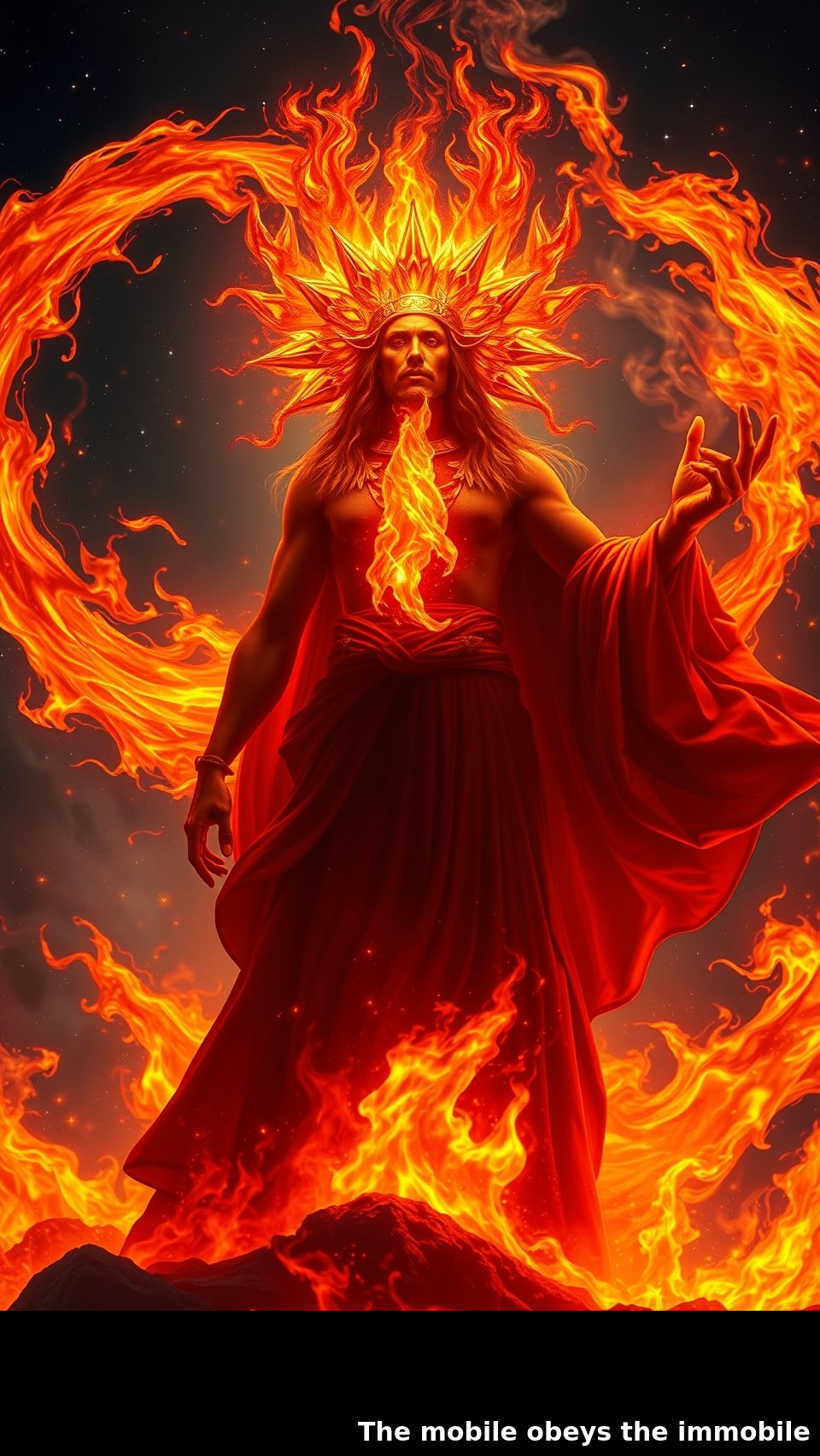
True immortality is not given but conquered—only the Awakened One, forged through initiatic fire, escapes the wheel of becoming. #Tradition #Initiation #Self #Karma #HeroicPath
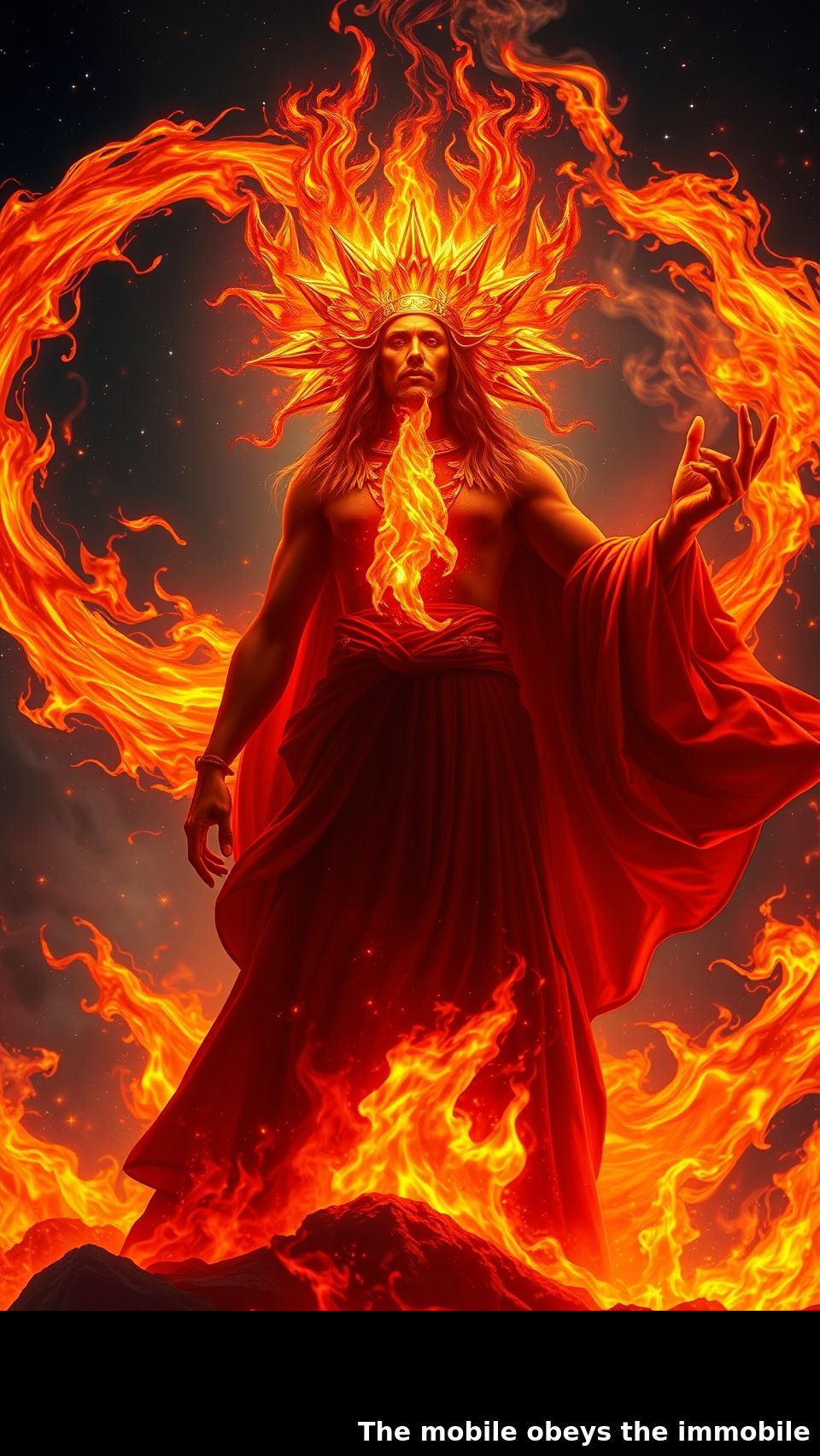
In the Evolian perspective, dualistic conceptions like the Christian opposition between "flesh" and "spirit" are rejected as decadent and degenerate. True Tradition upholds an immanent transcendence, where spirit and matter are not in conflict but integrated within a hierarchical order. Christianity's moralistic division reflects a fall from the primordial, aristocratic worldview, replacing it with a slave morality that denies the sacredness of life and the virile affirmation of the superior man. The Evolian stance affirms the unity of existence under the absolute principle of the Unconditioned, beyond all petty moralisms.
Some Ghoul:
I'm about as white as it gets, my friend. 🤷🏻♂️
44% England & Northwestern Europe
31% Scotland
16% Germanic Europe
Me:
lol!
Ancestry is not mere biology—it is a metaphysical legacy of higher principles. Your true lineage is of the spirit, not the prison of material determinism.
idiot
Metaphysical part:
### The Two Paths in the Afterlife
Traditional teachings distinguish between two possible destinies after death: one leading to true immortality, the other to dissolution into ancestral forces. Unlike the modern belief in universal soul-immortality, Tradition recognizes a hierarchy in postmortem existence, corresponding to the spiritual stature of the individual.
#### The Naturalistic Order: Dissolution into the Totem
For ordinary men, death brings the disintegration of the ephemeral personality, leaving only a "shadow" destined for eventual dissolution—the "second death." The vital principles return to the ancestral manes, lares, or totem—the subpersonal, chthonic force behind a bloodline. This force, often symbolized by the serpent or the genius (generative power), binds individuals to the cyclical rebirth of their stock.
In this inferior path, the deceased become sustenance for the manes, perpetuating the natural order rather than transcending it. Greek myths (the Danaïdes, Ocnus) and Vedic symbolism (the lunar, ancestral path) illustrate the futility of this existence—a meaningless repetition of mortal life.
#### The Heroic Path: Olympian Immortality
A higher destiny awaits those who conquer death through spiritual transformation. The "heroes," demigods, and sacred kings achieve an incorruptible body (sahu, "body of glory"), escaping dissolution. This immortal body, forged through sacrificial rites, embodies transcendent power, uniting soul and form in divine permanence.
This "solar path" (deva-yāna) leads to the Olympian realm—Valhalla, the "House of the Sun," or the Vedic "door of the sun." Unlike the chthonic fate of Hades, it represents triumphant immortality, symbolized by crowns, myrtle, and the Roman dies natalis (birth into divinity).
#### The Ritual Struggle Against the Infernal
Traditional civilizations upheld rites that liberated men from subjugation to ancestral forces. The aristocratic cults—opposed to telluric, lunar worship—oriented the soul toward supernatural victory, breaking the cycle of rebirth. Neglect of these rites meant regression into the "way of the Mother," binding man to the infernal and the collective.
The sacred fire, central to Indo-European cremation rites, symbolized this transformative power—consuming mortal remains to awaken the "fulgurating form" of the immortal. Thus, true Tradition preserves the heroic imperative: to dominate the totemic forces and ascend to the divine.
Family & Ancestry
#SacralAncestry #MetaphysicalLineage #TraditionalFamily #AncestralCult #BeyondBlood #SpiritualKinship #EternalHousehold #ReligiousAncestry #DivineInheritance #AgainstMaterialism
- You're invited to talk on Matrix
- https://bit.ly/periodic-reset-of-civilizations
The mobile obeys the immobile.
#Evola #Traditionalism #Metaphysics #Initiation #Esotericism #JuliusEvola #SpiritualHierarchy #Transcendence
You're invited to talk on Matrix
https://bit.ly/periodic-reset-of-civilizations
Joined Jan 2020