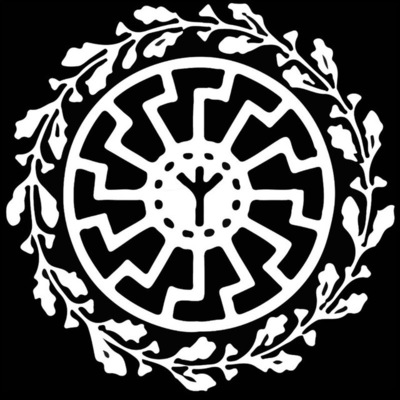
Honestly I've seen a lot of those types of statues in Russian lands

@HyperboreanWave Russia is named after a bunch of Vikings. Neat fact
@HyperboreanWave >Some historians have suggested the possibility that the name of the Kyivan Rus', the old East Slavic state, may have originated from the name of the Ros river, the theory referred to as the antinormanist theory of the origin of Rus'.[citation needed]
I've literally never heard this theory
https://en.wikipedia.org/wiki/Kievan_Rus%27
>During its existence, Kievan Rus' was known as the "land of the Rus"
>According to the prevalent theory, the name Rus', like the Proto-Finnic name for Sweden (*Ruotsi), is derived from an Old Norse term for "the men who row" (rods-) as rowing was the main method of navigating the rivers of Eastern Europe, and could be linked to the Swedish coastal area of Roslagen (Rus-law) or Roden, as it was known in earlier times.[16][17]
https://en.wikipedia.org/wiki/Rus%27_people
>The Rus' people (Old East Slavic: Рѹсь; Modern Belarusian, Russian, Rusyn, and Ukrainian: Русь, romanised: Rus'; Old Norse: Garðar; Greek: Ῥῶς, romanised: Rhos) were an ethnos in early medieval eastern Europe. The scholarly consensus holds that they were originally Norse people, mainly originating from Sweden, settling and ruling along the river-routes between the Baltic and the Black Seas from around the 8th to 11th centuries AD. They formed a state known in modern historiography as Kievan Rus'
@HyperboreanWave I guess [citation needed] from wikipedia automatically triumphs then
@HyperboreanWave I mean the literal "[citation needed]" I quoted from the link you posted
This one says it's mainly a Soviet meme or "распространён в околонаучной среде[7], псевдоисторических построениях[8], включая фолк-хистори, и в славянском неоязычестве[9]."
Pseudo-science, folk history, etc
>По мнению многих учёных, антинорманистами не в полной мере учитывается лингвистический анализ этнических наименований, географических названий и имен ранних русских князей, игнорируются многочисленные археологические находки на Русском Севере, выборочно интерпретируются письменные и археологические свидетельства.
>Many scholars believe that the anti-Normanists do not fully take into account the linguistic analysis of ethnic names, geographical names and names of early Russian princes, ignore numerous archaeological finds in the Russian North, selectively interpret written and archaeological evidence.
Also the statue guy you posted is called Rurik, from Old Norse Hroríkr, which is known because it was written down in the Primary Chronicle
@HyperboreanWave What's it saying that disagreed with me?
>the direction is mainly in Russian pre-Soviet[1], Soviet and post-Soviet historiography
Before the Soviets, so 1910s-1920s, Soviet, and post-Soviet 1990s, that's mainly just Soviet
It states what it is and then
>Also, anti-Normanism is widespread in the pseudo-scientific environment[7], pseudo-historical constructions[8], including folk history, and in Slavic neo-paganism[9].
What context? That it was in the criticism section?
You already made that point
You ignored the Rurik part
@HyperboreanWave Btw, holocaust denial is illegal in Russia too



Антинормани́зм — направление преимущественно в российской досоветской[1], советской и постсоветской историографии, сторонники которого отрицают роль скандинавов в создании Древнерусского государства[2], отвергают и стремятся опровергнуть норманскую теорию создания Древнерусского государства. Антинорманизм включает широкий спектр концепций и гипотез, общими признаками которых являются отрицание существенности влияния скандинавов на политические и экономические процессы становления Древней Руси и выдвижение альтернативных норманской гипотез. Народ русь и варяги, составившие раннюю элиту Древнерусского государства, а следовательно и первые представители правящей династии Древней Руси в рамках антинорманизма рассматриваются не в качестве потомков выходцев из Скандинавии, а как восточные или балтийские славяне[3], финны[4], пруссы[5] и др.[6] Также антинорманизм распространён в околонаучной среде[7], псевдоисторических построениях[8], включая фолк-хистори, и в славянском неоязычестве[9].
The fact that you quoted the last part out of context indicates that you're not interested in a good-faith discussion, so I see no reason to continue this. Many (virtually all) "scholars" say that the holocaust happened, so western scholarship on history isn't worth anything.