




@Zerglingman @lelouchebag @takao Webp is good. PNG is 90s tech and usually compresses worse than even generic modern compression methods on raw image data
Your software is the problem if it doesn't support it. The C lib is comfy, easy, complete, well documented, and cross platform, under a BSD license, there's no excuse to not implement it in everything. 99% of non-shitty software already supports it
>it's by jewgle though
It's an open format and you use WEBMs/MKVs already which use the same VP8/VP9 tech by jewgle. This genuinely isn't an excuse

webp isn't good, webp is a subpar pile of shit. Just use jpg or png if you need lossless.
@roboneko @Zerglingman @lelouchebag @takao PNGs are from 1996. They were literally made to be a competitor to GIFs, that's the level they're at

Bath_from_alexandra_park.jpg
@roboneko@bae.st @roboneko@freespeechextremist.com @Zerglingman @lelouchebag @takao Having 90s compression tech does make PNGs worse. Going by insane niches like 16385x16385 images doesn't make PNGs better
I'm not saying webp is the perfect thing for every usecase, but general stuff, like anime girl pics, it's way better
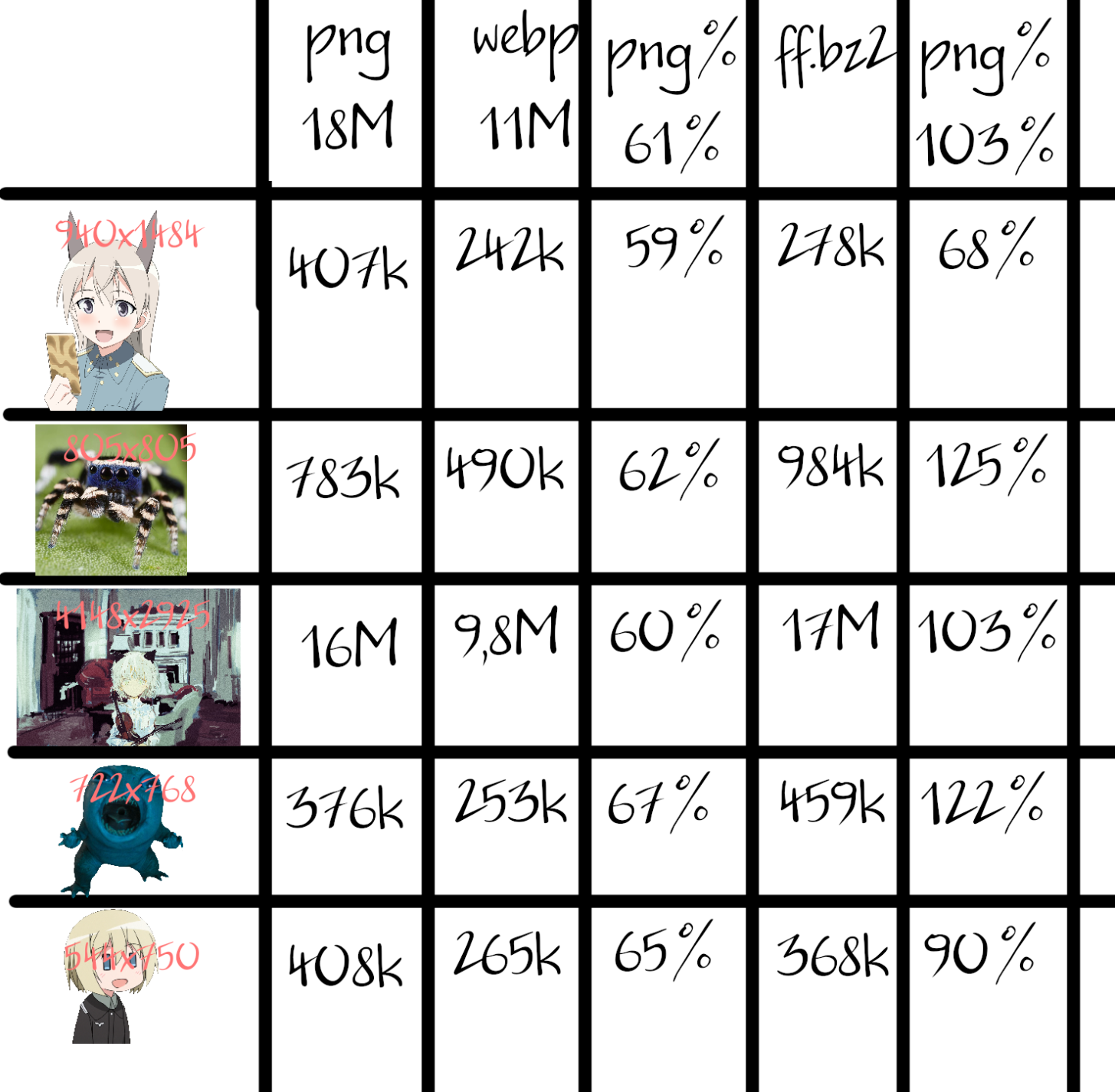
I made an actual showcase for you
https://anonfiles.com/V2gayaO3xa/webp-showcase_zip
for pf in r/* ; set p (basename $pf) ; convert $pf $p.png && optipng $p.png ; end
for pf in r/* ; set p (basename $pf) ; convert -define webp:lossless=true $pf $p.webp ; end
for pf in r/* ; set p (basename $pf) ; convert $pf farbfeld:- | bzip2 > $p.farbfeld.bz2 ; end
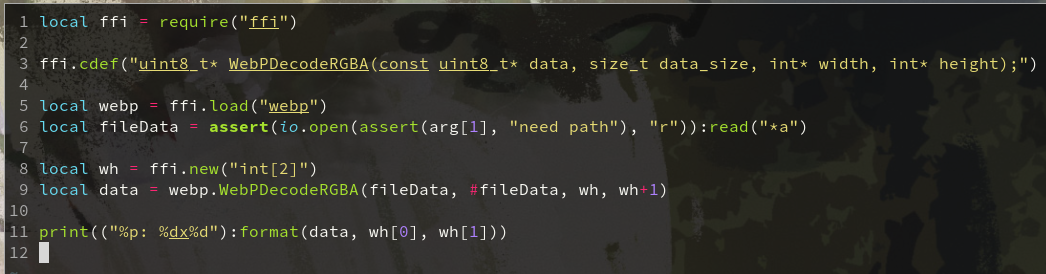
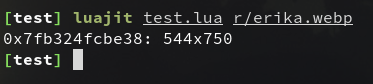
@roboneko@bae.st @roboneko@freespeechextremist.com @Zerglingman @lelouchebag @takao Also example of the C api. Here's how easy it is to read an image in Lua
@roboneko@bae.st @roboneko@freespeechextremist.com @Zerglingman @lelouchebag @takao
>software question not a format one
Only in abstract. The actual libs are what's used, not specs. I've used libjpeg and it's not fun, and I'll imagine whatever implements jxl is probably less so
I feel like you're in a weird all or nothing mindset. I'll accept there are places where it's not the best but I was responding to people saying it sucked inherently
>without good reason
30-40% lossless reduction with an open standard that's easy to implement with a cross-platform FOSS library
Anything that uses images implements multiple formats already, generally much less useful ones too. There just literally is no downside in not supporting it, and again, it's not all or nothing, you're thinking too abstractly
There's not a single program on my computer that supports jxl and none of those I've ever needed. You can have different priorities, that's fine, but I'll take lossless 40% reduction over 2^31 images and tiling that work with almost nothing. I don't really want to use lossy encodings to begin with, quality is more important to me than storage or bandwidth
my mindset isn't all or nothing I just don't think the effort of adopting webp was worthwhile. it's a simple value estimate. you say you don't like libjpeg. I'd argue the webp effort would have been better spent reimplementing it so that you did like it.
@roboneko@bae.st @roboneko@freespeechextremist.com @Zerglingman @lelouchebag @takao I have no idea, I've never heard of it, but nothing supports it as is anyway so I have little reason to use it
Tbf, there isn't much effort. Mainly stuff will (and generally should) use something like imlib that already supports webp and jpeg with a simple interface, but more low level stuff like browsers sometimes implement it using the reference libs
@takao @roboneko@bae.st @roboneko@freespeechextremist.com @Zerglingman @lelouchebag >A modern image format optimized for web environments. JPEG XL generally has better compression than WebP, JPEG, PNG and GIF and is designed to supersede them. JPEG XL competes with AVIF which has similar compression quality but fewer features overall.
Sounds good. If it gets support I'll probably use it then
@takao @roboneko@bae.st @roboneko@freespeechextremist.com @Zerglingman @lelouchebag installed libjxl and imagemagic likes it now
Weebit of niggering and I can open them regularly now. I guess writing a thumbnailer entry would be easy too
@takao @roboneko@bae.st @roboneko@freespeechextremist.com @Zerglingman @lelouchebag No, okay, libjxl ships with one, so I'll just need to restart the FM. Epic
Q=50, progressive. JFIF is created by libjpeg-turbo's cjpeg.




https://jpegxl.io/#tutorials
Large comparison showing why JXL is really good as codec apart from just supporting more layers with more pixels and more colors (note this has a lot of tabs/spreadsheets):
https://docs.google.com/spreadsheets/d/1ju4q1WkaXT7WoxZINmQpf4ElgMD2VMlqeDN2DuZ6yJ8/

not sure what a library api has to do with anything, that's a software question not a format one
I was never contesting that webp achieves better compression. I don't think it's enough better to justify the new format on its own, and certainly not in light of the shortcomings. New formats shouldn't be added to the mix without good reason. I don't see webp as compelling for the trouble of adding support to everything out there.
I like jxl. It's admittedly a monstrously complicated format but it's not as though jpg is particularly simple to begin with. It improves compression while increasing maximum resolution (jpg 2^16, png 2^31) and maintaining backwards compatibility (jpg can be converted to jxl without losing quality and you can convert them back to jpg later if you change your mind). It also increases the number of supported layers and adds tiling. Other stuff I'm forgetting. I'm not sure how it compares to tiff but I'm guessing it's favorable. Basically I'm happy with png for the most part but jxl seems worth the trouble to me.