




@druid @matrix
Matrix is right. North africans do not look like subsaharans at all. Here is a bust of Hannibal of Carthage. Here are some Tunisians. Here are some people from Morocco.
The romans did levy berber auxillaries but Maghreb is not "very black⢠looking people". The only such people in antiquity would have been found in ethiopia.
image.png
image.png
image.png
Matrix is right. North africans do not look like subsaharans at all. Here is a bust of Hannibal of Carthage. Here are some Tunisians. Here are some people from Morocco.
The romans did levy berber auxillaries but Maghreb is not "very black⢠looking people". The only such people in antiquity would have been found in ethiopia.
image.png
image.png
image.png

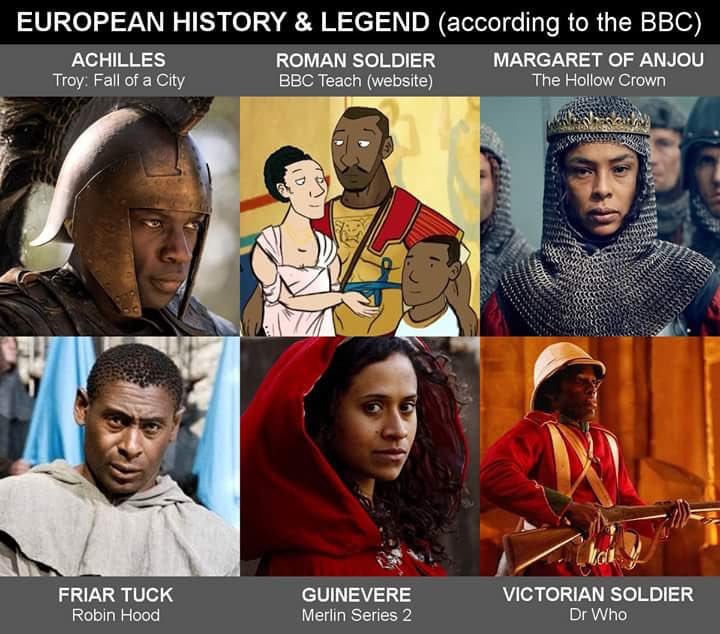


@besserwisser @druid @matrix
Pheonecians were pressed into the roman military just as much as tribal berbers were. So he is plenty representative of the sort of auxillaries you might expect from Maghreb.
Tribal north africans (berbers) from Maghreb looked no more like sub-saharan africans than do modern day Egyptians. Which is to say, they looked more or less like other mediterraneans.
Pheonecians were pressed into the roman military just as much as tribal berbers were. So he is plenty representative of the sort of auxillaries you might expect from Maghreb.
Tribal north africans (berbers) from Maghreb looked no more like sub-saharan africans than do modern day Egyptians. Which is to say, they looked more or less like other mediterraneans.
@besserwisser @druid @matrix
> Romans also took auxilaries from areas out of their control, so it wouldn't be out of the ordinary to employ, say, Ethiopians.
There are indeed records of some Ethiopian soldiers. It is mentioned in the Historia Augusta.
But no auxillia were levied from ethopia. More likely these were normal citizen soldiers in the roman tradition.
> You can't equate today's population to back then, a lot has changed due to migration and such
Genetic testing shows that ancient NA peoples were more similar to those of the levant than the peoples of the modern day are. Consider Egypt:
>What they found was very interesting. Over the 1,300-year period that the mummies represented, the researchers found that there was no real shift in genetics, suggesting that despite successive invasions and influxes of foreign people from all over Europe, the Middle East, and Africa, the population genetics stayed surprisingly stable.
>When they then looked at how the genetics of the region have changed between then and modern day, they found some significant differences. It turns out that modern Egyptians share more genetic ancestry with Sub-Saharan Africans than ancient Egyptians did, while the ancient Egyptians show a closer genetic affinity with ancient people from the Near East and the Levant.
https://www.iflscience.com/editors-blog/genetic-study-reveals-the-surprising-ancestry-of-ancient-egyptians/
The idea that north africans look like subsaharan africans is probably based on stories of moorish pirates, which are a thousand years older at least than Roman control of Britain.
> Romans also took auxilaries from areas out of their control, so it wouldn't be out of the ordinary to employ, say, Ethiopians.
There are indeed records of some Ethiopian soldiers. It is mentioned in the Historia Augusta.
But no auxillia were levied from ethopia. More likely these were normal citizen soldiers in the roman tradition.
> You can't equate today's population to back then, a lot has changed due to migration and such
Genetic testing shows that ancient NA peoples were more similar to those of the levant than the peoples of the modern day are. Consider Egypt:
>What they found was very interesting. Over the 1,300-year period that the mummies represented, the researchers found that there was no real shift in genetics, suggesting that despite successive invasions and influxes of foreign people from all over Europe, the Middle East, and Africa, the population genetics stayed surprisingly stable.
>When they then looked at how the genetics of the region have changed between then and modern day, they found some significant differences. It turns out that modern Egyptians share more genetic ancestry with Sub-Saharan Africans than ancient Egyptians did, while the ancient Egyptians show a closer genetic affinity with ancient people from the Near East and the Levant.
https://www.iflscience.com/editors-blog/genetic-study-reveals-the-surprising-ancestry-of-ancient-egyptians/
The idea that north africans look like subsaharan africans is probably based on stories of moorish pirates, which are a thousand years older at least than Roman control of Britain.
@fluffy @druid @matrix >But no auxillia were levied from ethopia. More likely these were normal citizen soldiers in the roman tradition.
Interesting they would be citizens, considering the Romans never conquered the area. But I suppose there were ways to citizenship.
All that stuff about Egypt doesn't seem all the relevant when we mostly talked about regions west or south of it so far. And the fact that the demographics changed significantly supports my point that you shouldn't compare based on the current population, such as with pictures earlier in this thread.
>The idea that north africans look like subsaharan africans is probably based on stories of moorish pirates, which are a thousand years older at least than Roman control of Britain.
Wait, Moorish pirates are that much older? When I think of Moors, and the related pirates, I mostly think of the middle ages, a time when Moors where indeed often described as having black skin. The term does come from the Latin Mauri and they did some pirating but my cursory research just now doesn't find anything before Nero.
Interesting they would be citizens, considering the Romans never conquered the area. But I suppose there were ways to citizenship.
All that stuff about Egypt doesn't seem all the relevant when we mostly talked about regions west or south of it so far. And the fact that the demographics changed significantly supports my point that you shouldn't compare based on the current population, such as with pictures earlier in this thread.
>The idea that north africans look like subsaharan africans is probably based on stories of moorish pirates, which are a thousand years older at least than Roman control of Britain.
Wait, Moorish pirates are that much older? When I think of Moors, and the related pirates, I mostly think of the middle ages, a time when Moors where indeed often described as having black skin. The term does come from the Latin Mauri and they did some pirating but my cursory research just now doesn't find anything before Nero.
@besserwisser @druid @matrix
>my point
isn't your point that northwest africans look like subsharan africans more than they look like people from the Levant?
>that much older
The oldest known crossing of the saharan desert dates to about 800 AD, by the Algerian caliphate. The oldest known Atlantic trade across the saharan was in 1400 AD.
You might as well argue the persians looked like sub-saharan africans, it makes about as much sense. More, since Ethiopia was just a hop across the arabian sea, while the saharan desert is the most formidable barrier in the classical world.
https://www.reddit.com/r/AskHistorians/comments/3q2su3/how_was_subsaharan_africa_perceived_for_ancient/
I will leave the matter of Egypt aside since this should close the matter nicely.
>my point
isn't your point that northwest africans look like subsharan africans more than they look like people from the Levant?
>that much older
The oldest known crossing of the saharan desert dates to about 800 AD, by the Algerian caliphate. The oldest known Atlantic trade across the saharan was in 1400 AD.
You might as well argue the persians looked like sub-saharan africans, it makes about as much sense. More, since Ethiopia was just a hop across the arabian sea, while the saharan desert is the most formidable barrier in the classical world.
https://www.reddit.com/r/AskHistorians/comments/3q2su3/how_was_subsaharan_africa_perceived_for_ancient/
I will leave the matter of Egypt aside since this should close the matter nicely.
@fluffy @besserwisser @matrix untag me from this boring shit, I don't care enough about it to try and read around the bias and the taste of American
@druid @besserwisser @matrix
I suppose you would prefer your fairy tale "very blackâ¢" roman auxillaries from "Moorish territories"?
Despite there being no population of "very blackâ¢" people in sicily, corsica, or maghreb at that time?
Perhaps you should stick to the creative interpretations of entertainment television, rather than trying to make statements about history, which would require you to actually read a book.
I suppose you would prefer your fairy tale "very blackâ¢" roman auxillaries from "Moorish territories"?
Despite there being no population of "very blackâ¢" people in sicily, corsica, or maghreb at that time?
Perhaps you should stick to the creative interpretations of entertainment television, rather than trying to make statements about history, which would require you to actually read a book.
@fluffy @druid @matrix >isn't your point that northwest africans look like subsharan africans more than they look like people from the Levant?
My original point was that at least some people who could have joined the Roman army looked (notice the past tense) like black Africans. That you couldn't compare the current demographics of those areas to those in antiquity was a tangential point to that. Another point is that I would like to stretch is that we speak about several different people groups, some of which having darker skin than others. So photo evidence is doubly useless here.
>The oldest known crossing of the saharan desert dates to about 800 AD, by the Algerian caliphate. The oldest known Atlantic trade across the saharan was in 1400 AD.
You wrote Moorish pirates preceded the Romans and not the other way around. Which was what I objected to, so this just seems to be a misunderstanding.
>https://www.reddit.com/r/AskHistorians/comments/3q2su3/how_was_subsaharan_africa_perceived_for_ancient/
Interesting read. However, it doesn't actually say anything about the skin color of the inhabitants of northern Africa. Admittedly, the burden of proof is now on me to show evidence for that. Mostly I find it hard to believe that North Africans were at most brownish in antiquity but once the middle ages came, everyone suddenly appears as black. But eh, maybe most black soldiers in the Roman empire were Ethiopians, whatever.
My original point was that at least some people who could have joined the Roman army looked (notice the past tense) like black Africans. That you couldn't compare the current demographics of those areas to those in antiquity was a tangential point to that. Another point is that I would like to stretch is that we speak about several different people groups, some of which having darker skin than others. So photo evidence is doubly useless here.
>The oldest known crossing of the saharan desert dates to about 800 AD, by the Algerian caliphate. The oldest known Atlantic trade across the saharan was in 1400 AD.
You wrote Moorish pirates preceded the Romans and not the other way around. Which was what I objected to, so this just seems to be a misunderstanding.
>https://www.reddit.com/r/AskHistorians/comments/3q2su3/how_was_subsaharan_africa_perceived_for_ancient/
Interesting read. However, it doesn't actually say anything about the skin color of the inhabitants of northern Africa. Admittedly, the burden of proof is now on me to show evidence for that. Mostly I find it hard to believe that North Africans were at most brownish in antiquity but once the middle ages came, everyone suddenly appears as black. But eh, maybe most black soldiers in the Roman empire were Ethiopians, whatever.
@besserwisser @druid @matrix
>You wrote Moorish pirates preceded the Romans and not the other way around.
Yes, this was a typo. The other way around of course, since the moors were islamic.
> Mostly I find it hard to believe that North Africans were at most brownish in antiquity but once the middle ages came, everyone suddenly appears as black.
It never really happened.
You saw a lot of black pirates among the moors mostly because a growing slave trade meant many slaves took to the seas to seek their fortune as pirates. Also, I'm sure, because it makes for a better story to have a black pirate.
But they didn't have a substantial and permanent effect on the population. Here is a quora article about the numidians, which would have been the auxillaries from carthage:
https://www.quora.com/Were-the-Numidians-Black-Africans-or-Arab-Africans-as-we-see-today-in-North-Africa
>You wrote Moorish pirates preceded the Romans and not the other way around.
Yes, this was a typo. The other way around of course, since the moors were islamic.
> Mostly I find it hard to believe that North Africans were at most brownish in antiquity but once the middle ages came, everyone suddenly appears as black.
It never really happened.
You saw a lot of black pirates among the moors mostly because a growing slave trade meant many slaves took to the seas to seek their fortune as pirates. Also, I'm sure, because it makes for a better story to have a black pirate.
But they didn't have a substantial and permanent effect on the population. Here is a quora article about the numidians, which would have been the auxillaries from carthage:
https://www.quora.com/Were-the-Numidians-Black-Africans-or-Arab-Africans-as-we-see-today-in-North-Africa
@fluffy @matrix >You saw a lot of black pirates among the moors mostly because a growing slave trade meant many slaves took to the seas to seek their fortune as pirates. Also, I'm sure, because it makes for a better story to have a black pirate.
Probably true, to an extent. Kinda hard to judge after all this time, but black Africans were probably a noticeable enough sight that contemporary sources overstate their importance.
>Here is a quora article about the numidians, which would have been the auxillaries from carthage:
There were also different groups like the Mauri I mentioned but the more I read, the more it seems most black Africans in Rome were Nubians.
Probably true, to an extent. Kinda hard to judge after all this time, but black Africans were probably a noticeable enough sight that contemporary sources overstate their importance.
>Here is a quora article about the numidians, which would have been the auxillaries from carthage:
There were also different groups like the Mauri I mentioned but the more I read, the more it seems most black Africans in Rome were Nubians.
@besserwisser @matrix
Yeah I think so too, Nubians, or other people south of Egypt. Maybe some others from the eastern coast of Africa.
They would have had to come through egypt no doubt. The saharan desert is 1800km x 4800km... it has more square km than the entirity of europe.
image.png
Yeah I think so too, Nubians, or other people south of Egypt. Maybe some others from the eastern coast of Africa.
They would have had to come through egypt no doubt. The saharan desert is 1800km x 4800km... it has more square km than the entirity of europe.
image.png

Also iirc this was set in Roman Britain, and that actually would have been plausible; after the Massacre of Teutoburg Forest, the Roman Empire instituted a policy of always sending auxiliaries (conquered people as soldiers) to provinces completely unlike their home one so that it would be harder for them to foster rebellions and garner local support. By the Roman withdrawal from Britain, most of the soldiers on the Wall were from "Syria" (which was a huge province whose size and borders bear no relation to the modern state of the same name.)
This amusingly has left us with a fair bit of desperate correspondence preserved in the peat of Vindolanda. My favourite, from a Syrian soldier, reads: "By the gods, this is an awful place. Send blankets! Send clothes! Lest we freeze!"