

Retards who can't even analyze basic business practices are the ones wanting a centralized economy. Guess how that will turn out.
iPhones are probably the longest lasting phones in the market, because a) Apple wants to maintain status as a luxury brand and b) huge chunk of their income comes from the Appstore and all the other services they provide thus they want their devices to stay in usable state for long as possible





@hj
5 years of software updates with the wast majority of features supported across all devices.
Obviously the locked down nature of Apple devices puts some asterisks on it, but expecteding latest software to run on ancient hardware is something only retards and FOSS autists expect.
@1iceloops123
Not without cutting features.
I do wish though that phones were more open so that I could try running Linux on something like the IPhone 2G.
@hj
@1iceloops123
Hopefully. Android and the manufacturers have been getting better at this.
@hj
Even the aforementioned iPhones or smartphones in general - companies expect you to buy shiny new phone every once in a while, and people do, even if their old phone is still more than capable of its tasks.
@hj
Yeah, precisely. Just selling phone after phone is not a sustainable business model. That's why subscription services are becoming increasingly more common because they are much more reliable and that's why Apple has a lot of them and that's why they are releasing "budget" versions of their products to get more people into them.
If you buy a phone, you are still able to use it without updating for the same stuff you were always able to even when they are no longer supported. Maybe excluding all the CDMA carrier exclusive phones from the 00s, some of which died in a few months.
I don't see how it's reasonable to want new features on old phones (and by old I don't mean 2 years), especially iPhones since those get them for a long time and have high end specs on launch. Only now are phones at the point spec wise where the performance increases are no longer noticeable for day to day use.
Yes, the locked downess of especially Apple devices is absolute bullshit and their repair practices too, but normal people don't want to install custom software on their phones.
@hj
Holy crap this post is an unreadable mess...

To your point about free markets, no one is arguing a perfectly free market is or isn't possible.
Either way, the viability of DRM is only possible through extensive government protectionism. DRM is an attempt to fix prices via a massive cartel involving government, display companies, cable manufacturers, standards committees, and processor designers.
DRM laws are not "just another regulation" like antitrust or consumer right laws. DRM laws are kickbacks for a very niche business model that hasn't been viable for over a quarter century. DRM is a bailout for an unsustainable business.
depends. some things were easy to break, other not so. Companies know that their laws are pretty much last resort and nobody is going to be actively monitoring each and every person in all countries to not be trying to hack the DRM, so they improve the technology behind it.
Just imagine that laws forbidding the DRM hacking would be removed, how would it change the situation? I don't see it going away (unless frauds at CDPR actually do something about it) even with laws removed, they'll just work three times as hard to make it even more impenetrable.
If the laws were removed, Encrypted Media Extensions in browsers could legally be defanged. Mozilla could reverse engineer any proprietary blobs or at least integrate an existing solution.
The value in investing in DRM would plummit.

@matrix yes, they last long enough. Mine is iPhone 7, near to four years old, running last iOS version 14.0.1. I’m already happy but I’m sure it can last one more year or more.


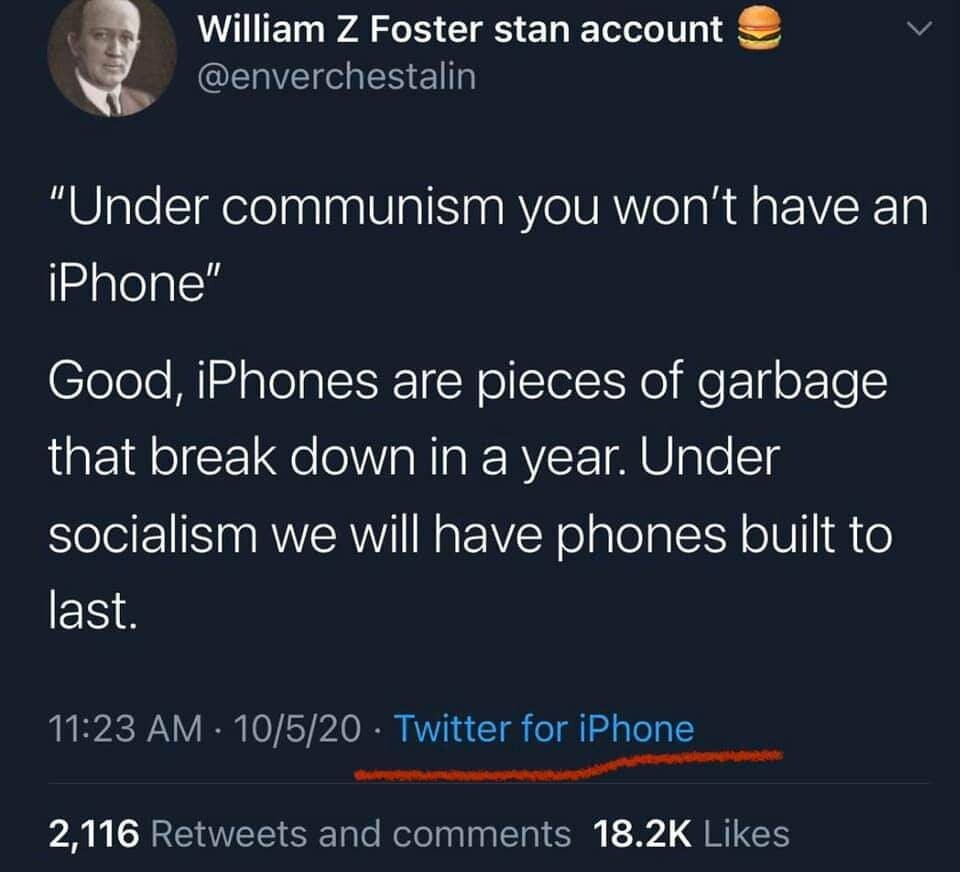
The real problem is that Apple does not allow the community to support their phones after the official support period. Theoretically most Android devices can be used indefinitely with custom roms. For example I can still use my Samsung Galaxy S2 with Lineage, a phone from 2011.
If you are even getting a phone under socialism, it's going to be a unstable brick.