



@matrix
I don't get it...
Is the problem one "=" instead of two?
@LukeAlmighty Single = means assign. That means you can assign in an if statement.


@matrix @LukeAlmighty C famously also supports that, it's been a source of numerous backdoors and most linters tend to forbid it.


@lanodan @LukeAlmighty @matrix Linters just warn you if you don't wrap it in extra ()
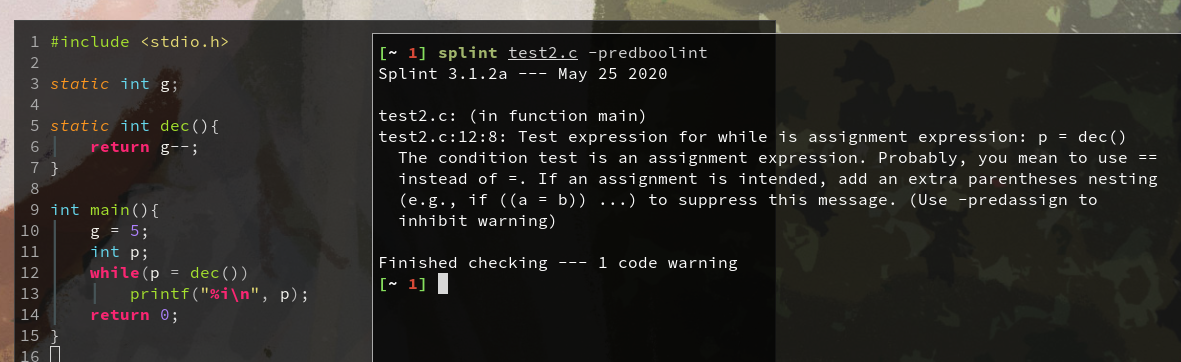
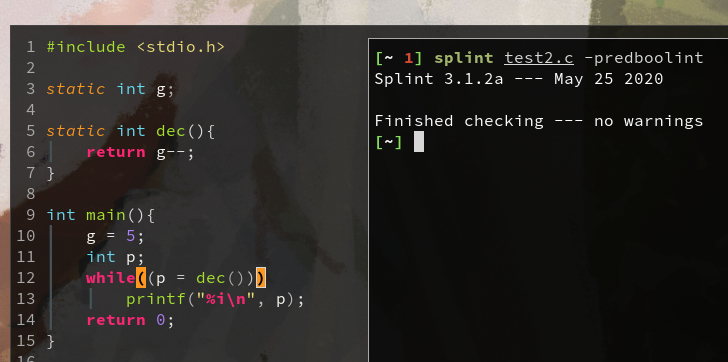
@lanodan @LukeAlmighty @matrix I'm not a kernel dev. GCC and Clang also behave in the same way with -Wall just suggesting ()
@applejack @LukeAlmighty @matrix Kernel dev isn't really a thing I do either (specially because I hate having to deal with boot time problems) but I'm still a bit familiar with it because of needing to apply some patches and few times adapt them from one version to another.

@applejack @LukeAlmighty @matrix That’s probably because assigning into a while is rather common, for example while((c = getopt(argc, argv, ":d:u")) != -1) is idiomatic in C but I wouldn’t be surprised that the linux kernel linter warns about it.