
Follow

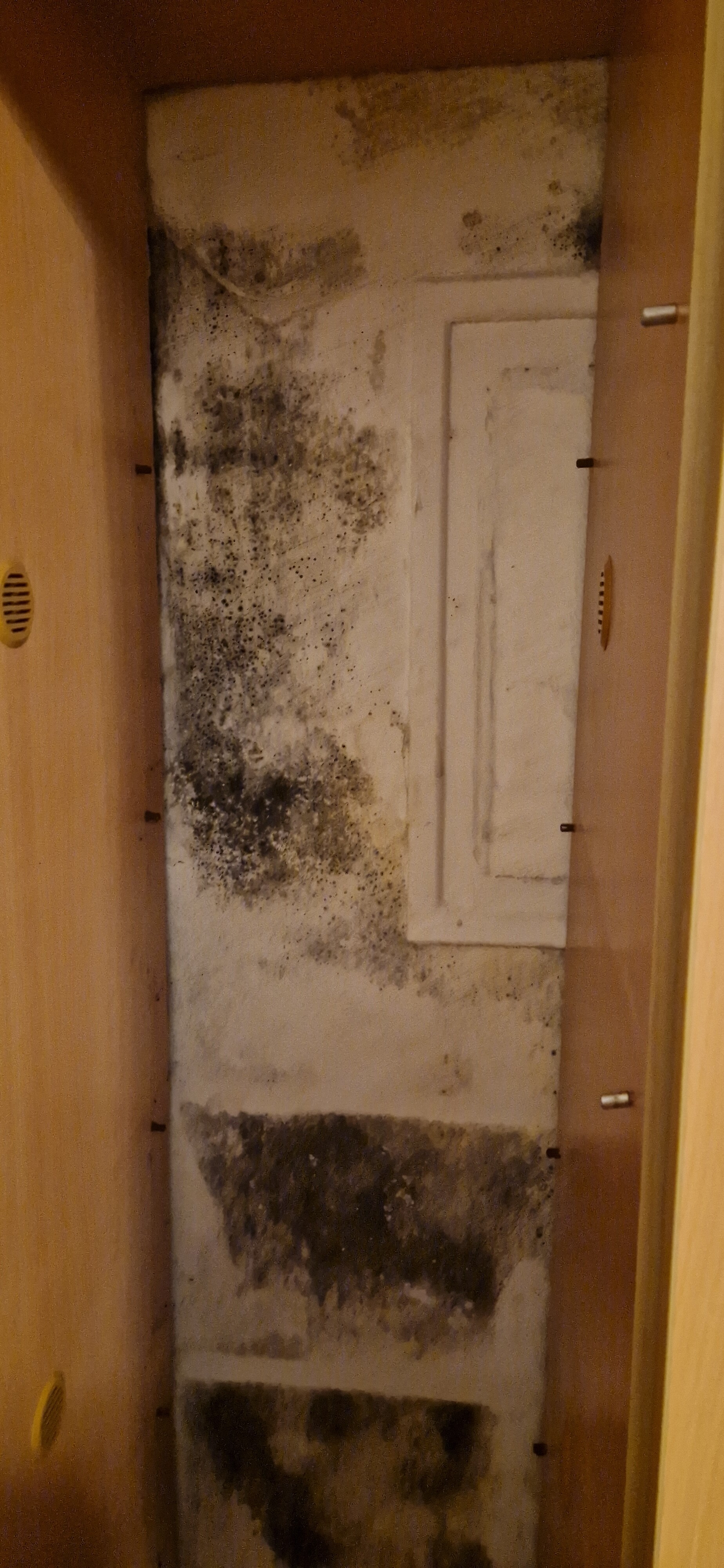
@LukeAlmighty well, as fire is obviously not the answer; try to dry air inside by using stuff like silica gel packs or charcoal, and make sure that the clothes is completely dry when you put it in and not infected with mold

@LukeAlmighty @tomie Outside wall too cold. Inside air too damp. Water beading on the wall every day probably.
Choices are get rid of water in the air, heat the entire wall up, insulate the wall or paint the wall with anti mold paint.
1. Rip the cupboard door off. Keeping it closed means the wall will never dry. Dehumidifier if free electricity
2. Heating probably out of the question
3. Buy good water tight insulation that bonds directly to plaster. No beading if warm air dont touch wall
4. Live with the water but paint the war with toxic paint. (Cheapest, ask for samples to match color, must be anti mold/moisture)
Choices are get rid of water in the air, heat the entire wall up, insulate the wall or paint the wall with anti mold paint.
1. Rip the cupboard door off. Keeping it closed means the wall will never dry. Dehumidifier if free electricity
2. Heating probably out of the question
3. Buy good water tight insulation that bonds directly to plaster. No beading if warm air dont touch wall
4. Live with the water but paint the war with toxic paint. (Cheapest, ask for samples to match color, must be anti mold/moisture)

@IAMAL_PHARIUS @LukeAlmighty @tomie second the humidifier. Get a cheap one for the room with the issue and leave it on. They don't consume a lot of electricity and work well in a closed space.
@IAMAL_PHARIUS @LukeAlmighty @tomie There may be a leaking pipe somewhere on the inside of the wall if it's made of bricks.
Clothing may be speeding mold growth due to humidity retention, but the problem ain't technically there
Clothing may be speeding mold growth due to humidity retention, but the problem ain't technically there
@tomie @LukeAlmighty Fire IS the only answer against the mold. Once it has established itself, it is always present even if dormant. It needs moisture, warmth and nutrients, if you temporarily cut one of those, the mold will grow back as soon as the conditions for it to prosper are returned.
"Mold requires four essential conditions to grow:
Moisture: This is the most critical factor. Mold needs water to germinate and grow, often from leaks, high humidity (above 60%), condensation, or damp materials.
Food (Nutrients): Mold feeds on organic matter such as wood, drywall paper, fabric, dust, skin cells, and even some synthetic materials like adhesives and paints.
Oxygen: Mold is an obligate aerobe, meaning it requires oxygen to survive and grow, which is readily available in indoor air.
Suitable Temperature: Most mold grows between 40°F and 100°F, a range commonly found in homes.
Mold spores are everywhere—in the air indoors and outdoors—so they are rarely the limiting factor. If moisture and organic material are present, mold can begin growing in as little as 24 to 48 hours after water exposure.
To prevent mold, keep indoor environments dry, control humidity (ideally below 60%), fix leaks quickly, and ensure good ventilation."
"Mold requires four essential conditions to grow:
Moisture: This is the most critical factor. Mold needs water to germinate and grow, often from leaks, high humidity (above 60%), condensation, or damp materials.
Food (Nutrients): Mold feeds on organic matter such as wood, drywall paper, fabric, dust, skin cells, and even some synthetic materials like adhesives and paints.
Oxygen: Mold is an obligate aerobe, meaning it requires oxygen to survive and grow, which is readily available in indoor air.
Suitable Temperature: Most mold grows between 40°F and 100°F, a range commonly found in homes.
Mold spores are everywhere—in the air indoors and outdoors—so they are rarely the limiting factor. If moisture and organic material are present, mold can begin growing in as little as 24 to 48 hours after water exposure.
To prevent mold, keep indoor environments dry, control humidity (ideally below 60%), fix leaks quickly, and ensure good ventilation."
@tomie
Let's not jump to any conclusions...
I like to not cross any option out too early.