
YZZAJ @Jazzy_Butts@gameliberty.club
- Status
- Ascended
The Trench
Joined Nov 2021
Ritz crackers: Bitchmade, crumble apart when you put peanut butter on them, no salt
Keebler Club Crackers: Strong, hold up to the pb application, salt, the crackers of our forefathers
YZZAJ
boosted
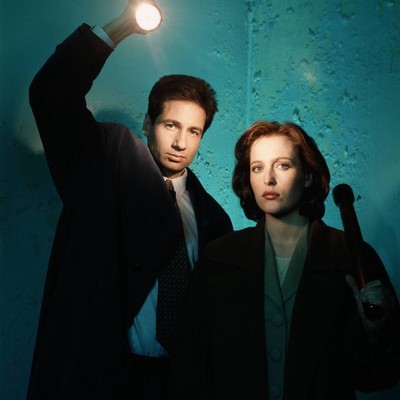
Scully argues with Mulder about magic. Mulder seeks enlightenment through witchery.
I hope a double feature isn't too much to handle, have another quality anime compared to the fucking shit they put out today.
https://youtu.be/NtlgMgConMw
Here son have some old anime
https://youtu.be/luwdWH0-ypE
Dating apps=
See beautiful girl, perfect face, so sweet, heart flutters, imagine lives together, hardships, travels, it's meant to be, this must be fate: Do not match
See land whale, ugly, hideous, horrifying, accidentally hit like: Match
I mean this boy would suck David Lynch's cock, and I can't stand anything else he's made. But Eraserhead is some good shit.
My first love was a hipster boy, he showed me a lot of cool media that I didn't realize he only liked ironically, and I came to like it genuinely. Stuff like The Smiths, and gangster rap, and weirdo movies like Eraserhead.
God damnit I am going crazy I need to do something, may write a long tl;dr post for nobody but a few to read
Whats yalls favorite 2000s tv series? I never watched Supernatural much growing up but I'm going through the series now and it's really fun, and at times surprisingly hardcore.
Me and gay femboy wife and our shared cisfemale pet
YZZAJ
boosted

Rebecca - Cyberpunk 2077 preview
FULL VERSION COOM SEQUENCE: https://ploxy.fanbox.cc/ or https://subscribestar.adult/ploxy or https://ploxy.gumroad.com/l/rsuco
will Release FULL VERSION COOM SEQUENCE in February 2023
The thing about performances is that they are performed, or pre formed, they have been planned out, that's what makes it performative, it is not spontaneous.
listening to/watching this while i eat dinner baes
https://youtu.be/hJTbkEMRfUg
He just like me fr....he just like me fr
https://youtu.be/4NaQRyc6BkI
*longing sigh*
I wish Bugs Bunny was my wife
Jazzy: Buts tits cum
Jazzy: Postulates, theories, propriety, *dabs corners of mouth with fancy napkin*
YZZAJ
boosted

@Nanashi @11112011 @laurel @p @coyote @Moon
> Inspired by the work of Italian psychiatrist Amarro Fiamberti, Freeman at some point conceived of approaching the frontal lobes through the eye sockets instead of through drilled holes in the skull. In 1945 he took an icepick[n 16] from his own kitchen and began testing the idea on grapefruit[n 17] and cadavers.
> Freeman performed the first transorbital lobotomy on a live patient in 1946. Its simplicity suggested the possibility of carrying it out in mental hospitals lacking the surgical facilities required for the earlier, more complex procedure. (Freeman suggested that, where conventional anesthesia was unavailable, electroconvulsive therapy be used to render the patient unconscious.)[137] In 1947, the Freeman and Watts partnership ended, as the latter was disgusted by Freeman's modification of the lobotomy from a surgical operation into a simple "office" procedure.[138] Between 1940 and 1944, 684 lobotomies were performed in the United States. However, because of the fervent promotion of the technique by Freeman and Watts, those numbers increased sharply towards the end of the decade. In 1949, the peak year for lobotomies in the US, 5,074 procedures were undertaken, and by 1951 over 18,608 individuals had been lobotomized in the US.[139]
> The use of the procedure increased dramatically from the early 1940s and into the 1950s; by 1951, almost 20,000 lobotomies had been performed in the United States and proportionally more in the United Kingdom.[7] More lobotomies were performed on women than on men: a 1951 study found that nearly 60% of American lobotomy patients were women, and limited data shows that 74% of lobotomies in Ontario from 1948 to 1952 were performed on female patients.
> Inspired by the work of Italian psychiatrist Amarro Fiamberti, Freeman at some point conceived of approaching the frontal lobes through the eye sockets instead of through drilled holes in the skull. In 1945 he took an icepick[n 16] from his own kitchen and began testing the idea on grapefruit[n 17] and cadavers.
> Freeman performed the first transorbital lobotomy on a live patient in 1946. Its simplicity suggested the possibility of carrying it out in mental hospitals lacking the surgical facilities required for the earlier, more complex procedure. (Freeman suggested that, where conventional anesthesia was unavailable, electroconvulsive therapy be used to render the patient unconscious.)[137] In 1947, the Freeman and Watts partnership ended, as the latter was disgusted by Freeman's modification of the lobotomy from a surgical operation into a simple "office" procedure.[138] Between 1940 and 1944, 684 lobotomies were performed in the United States. However, because of the fervent promotion of the technique by Freeman and Watts, those numbers increased sharply towards the end of the decade. In 1949, the peak year for lobotomies in the US, 5,074 procedures were undertaken, and by 1951 over 18,608 individuals had been lobotomized in the US.[139]
> The use of the procedure increased dramatically from the early 1940s and into the 1950s; by 1951, almost 20,000 lobotomies had been performed in the United States and proportionally more in the United Kingdom.[7] More lobotomies were performed on women than on men: a 1951 study found that nearly 60% of American lobotomy patients were women, and limited data shows that 74% of lobotomies in Ontario from 1948 to 1952 were performed on female patients.
YZZAJ
boosted

@rats @coyote @11112011 @Moon @Nanashi @p
>craziness and the family environment
I remember reading a lot R. D. Laing some time ago and he did a lot of work on how in most cases it was the parents and/or other members of the family who were in need of psychological therapy, rather than their children who their parents were bringing to him to be treated.
Really ties with the discussion of how our social references define our very being.
laing1.jpe
laing2.jpg
>craziness and the family environment
I remember reading a lot R. D. Laing some time ago and he did a lot of work on how in most cases it was the parents and/or other members of the family who were in need of psychological therapy, rather than their children who their parents were bringing to him to be treated.
Really ties with the discussion of how our social references define our very being.
laing1.jpe
laing2.jpg

- Status
- Ascended
The Trench
Joined Nov 2021