

xianc78 @xianc78@gameliberty.club
- Sex
- Male
- Primary OS
- Linux Mint
- Programming Languages
- C/++/#, Python, Java, JavaScript, PHP, SQL, Assembly
- Ioncom Official Site
- http://ioncom.helioho.st/
Joined Jun 2020

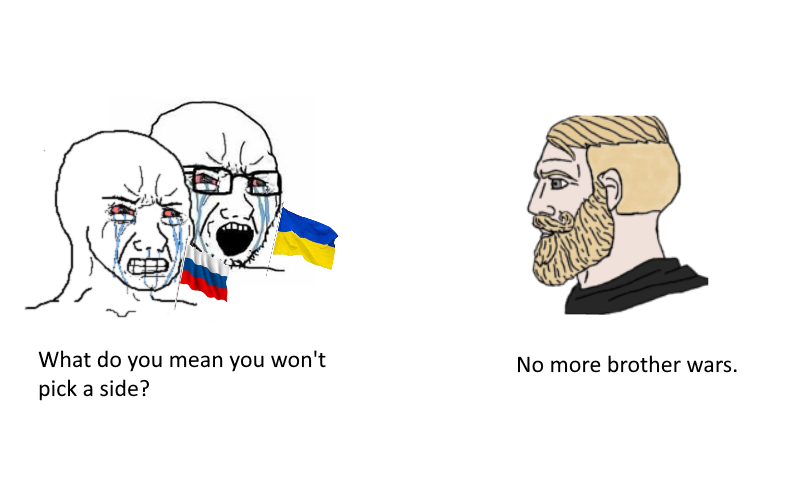
Both the NATOs and the BRICs call for a New World Order. They're both heads of the same hydra. Both sides are your enemy. Wake the fuck up!

xianc78
boosted

If Russia really wants to retaliate against sanctions they should just refuse to uphold Western copyright and let people pirate as much intellectual property as they want.
xianc78
boosted





xianc78
boosted

RT @brian_trollz
Greatful to have been given the chance to talk to a Ukrainian refugee about how Bitcoin helped him escape with his wealth intact. The perfect example of how in the worst of times Bitcoin can protect you and your family when you have no choice but to leave. https://bitcoinmagazine.com/culture/bitcoin-enables-ukrainian-refugee-escape
xianc78
boosted

@koba_ape_leader Hey now I'm just trying to educate people about the USS Liberty lol..
Meanwhile here's what CNN/Fox News types are doing:
Meanwhile here's what CNN/Fox News types are doing:

xianc78
boosted

Anyone know how to get out of #Ukraine? I hear there are no flights or trains. Perhaps private shuttle buses or something like that?
Specifically interested in getting from Kropyvnytskyi (Кропивни́цький) to the EU (or at least further west) somehow.
Asking for a family member.
Boosts appreciated.

I got a new mattress case and bed bug spray. I hope they work.
xianc78
boosted

> years of covid rules
> people finally want to stand up against vax mandates
> the trucker protest begins
> truckers vilified and harassed
> the protest continues
> the gofundme situation happens
> truckers and people involved arrested, their bank accounts frozen, their trucks towed, people brutalized by cops, kids and pets kidnapped by government
> war in ukraine begins
> radio silence on whole situation, we may never hear of it again
> people finally want to stand up against vax mandates
> the trucker protest begins
> truckers vilified and harassed
> the protest continues
> the gofundme situation happens
> truckers and people involved arrested, their bank accounts frozen, their trucks towed, people brutalized by cops, kids and pets kidnapped by government
> war in ukraine begins
> radio silence on whole situation, we may never hear of it again
xianc78
boosted


> WebKit browser with JS disabled
> DeepL no longer supports Internet Explorer
Never change webshit…
> DeepL no longer supports Internet Explorer
Never change webshit…
xianc78
boosted

xianc78
boosted

The interesting thing I'm seeing from Twitter is how RU artists are now nuking their locations from their profiles and putting generic shit to avoid being attacked by mentally ill Twitter addicts/etc.
xianc78
boosted

xianc78
boosted

xianc78
boosted

"World News 24
@DailyWorld24
Kremlin: Ukraine has rejected negotiations. The military campaign will now resume in "full force."
"Zelensky's aide Alexéi Arestóvich confirmed that Ukraine refused to negotiate with Russia since their demands are "too brazen" and are an attempt to force capitulation. Alexéi"
If true. This could indicate the Ukraine-Russia military conflict is a planned depopulation program. They are arming huge numbers of civilians who would otherwise not be in the line of fire.
"brazen" or not, negotiations give things time to cool down, and can have heart to heart
@DailyWorld24
Kremlin: Ukraine has rejected negotiations. The military campaign will now resume in "full force."
"Zelensky's aide Alexéi Arestóvich confirmed that Ukraine refused to negotiate with Russia since their demands are "too brazen" and are an attempt to force capitulation. Alexéi"
If true. This could indicate the Ukraine-Russia military conflict is a planned depopulation program. They are arming huge numbers of civilians who would otherwise not be in the line of fire.
"brazen" or not, negotiations give things time to cool down, and can have heart to heart
xianc78
boosted





If someone advertises their software's cryptography as being "quantum-proof", it should be a slight red flag.
We don't know if it's even possible to build and operate a quantum computer capable of implementing Grover's/Shor's/etc algorithms with quantum runtimes. Once we have reason to see that it might be viable, such a computer will then have to be constructed. Right now, we've only managed to build quantum computers that can flip a few qubits correctly (obviously I'm oversimplifying).
Choosing cryptographic standards in the present based on quantum computing capabilities in the future is like deciding not to have kids because you'll have fully intelligent simulated kids in the Metaverse. Be realistic. There are great reasons to pick algorithms that happen to be "quantum-proof", and great reasons to have/not-have kids. There are also bad reasons. Something being theoretically possible isn't the same as something being viable in a given timeframe.
Some orgs like IBM feel confident that they can build a 127-qubit computer in the near future. That's orders of magnitude lower than what's required to correctly implement Shor's Algorithm. And no, there's no "Moore's Law for Qubits"; Qubits aren't transistors.
I included the off-by-default option to account for Grover's Algorithm in https://sr.ht/~seirdy/MOAC because MOAC is honest about being a theoretical approach to conceptualize how much entropy is overkill when considering a naive brute-force attempt of literal cosmic proportions. Don't use quantum computing capabilities to rule out good options.
Saying it's "too early to worry about X" implies we have reason to believe that we'll eventually have to worry about X. For quantum computing, *we don't even know if we'll ever have to worry about it*. Research will reveal if quantum algorithms are viable, *then* it'll be "early". *IF* the algos turn out to be viable, we'll have to wait a while before they're implemented, and even longer before they can scale.
An extreme example that illustrates the same principle: would you choose a life insurance provider because it promises not to adjust your claims if reanimation from the dead becomes possible? Sure, researchers may have re-animated an amoeba. But let's be realistic. Make decisions based on *sufficient* evidence.
We don't know if it's even possible to build and operate a quantum computer capable of implementing Grover's/Shor's/etc algorithms with quantum runtimes. Once we have reason to see that it might be viable, such a computer will then have to be constructed. Right now, we've only managed to build quantum computers that can flip a few qubits correctly (obviously I'm oversimplifying).
Choosing cryptographic standards in the present based on quantum computing capabilities in the future is like deciding not to have kids because you'll have fully intelligent simulated kids in the Metaverse. Be realistic. There are great reasons to pick algorithms that happen to be "quantum-proof", and great reasons to have/not-have kids. There are also bad reasons. Something being theoretically possible isn't the same as something being viable in a given timeframe.
Some orgs like IBM feel confident that they can build a 127-qubit computer in the near future. That's orders of magnitude lower than what's required to correctly implement Shor's Algorithm. And no, there's no "Moore's Law for Qubits"; Qubits aren't transistors.
I included the off-by-default option to account for Grover's Algorithm in https://sr.ht/~seirdy/MOAC because MOAC is honest about being a theoretical approach to conceptualize how much entropy is overkill when considering a naive brute-force attempt of literal cosmic proportions. Don't use quantum computing capabilities to rule out good options.
Saying it's "too early to worry about X" implies we have reason to believe that we'll eventually have to worry about X. For quantum computing, *we don't even know if we'll ever have to worry about it*. Research will reveal if quantum algorithms are viable, *then* it'll be "early". *IF* the algos turn out to be viable, we'll have to wait a while before they're implemented, and even longer before they can scale.
An extreme example that illustrates the same principle: would you choose a life insurance provider because it promises not to adjust your claims if reanimation from the dead becomes possible? Sure, researchers may have re-animated an amoeba. But let's be realistic. Make decisions based on *sufficient* evidence.
xianc78
boosted
Truth is...the game's been rigged from the start.

- Sex
- Male
- Primary OS
- Linux Mint
- Programming Languages
- C/++/#, Python, Java, JavaScript, PHP, SQL, Assembly
- Ioncom Official Site
- http://ioncom.helioho.st/
Joined Jun 2020