

xianc78 @xianc78@gameliberty.club
- Sex
- Male
- Primary OS
- Linux Mint
- Programming Languages
- C/++/#, Python, Java, JavaScript, PHP, SQL, Assembly
- Ioncom Official Site
- http://ioncom.helioho.st/
Joined Jun 2020
Pinned post
The following should not be considered "AI slop":
* Text that was rough drafted by a human but was re-paraphrased by AI to sound better
* Otherwise human created images processed through AI filters (removing JPEG artifacts, noise reduction, enhanced lighting, colorization, etc)
* Basically all image to image generation if the input image was 100% human created
* Music played with one instrument (or group of instruments) then processed through a program like NeuralNote to create a MIDI file and have it played in a different instrument
* Any attempt to restore a vector image if only the rasterization is available
* Any attempt to recreate a 3D model that only has 2D images of it available
* Any attempt to restore original music whose only archive has other noises being played over it (e.g a song whose only existing presence is in a TV show but you want the original song without any of the other sounds playing over it)
* Websites and webpages that only used AI to generate HTML/CSS templates, but have everything else be human generated
* Scripts and configuration files that are not the core part of a program
* Source code that was 100% human created, but then sent through an LLM to clean up and refactor
* Source code that was 100% human created, but then sent through an LLM to be rewritten in a different language, use a different API/library/framework, or be ported to a different platform
* Programs that were 100% human written, but compiled through a vibe-coded compiler
* Images, sounds, videos, etc that were 100% human generated, but were done so using a vibe-coded program
* Video games, movies, TV shows, etc that only have a minuscule amount of AI generated assets (e.g the author had to find a certain sound effect but couldn't and doesn't have the means to generate it traditionally, so he had to use AI to make one)
* Any work whose only AI generated thing is the character/location names
* Any story whose setting was AI generated but the plot is human created
* Any story that used AI to help the author find inspiration when he/she had writer's block
* Any game whose mechanics were (partially) came up with by AI when the developers were suffering from writer's block
* Any work whose only AI generated asset is the fucking logo
* Any company, organization, etc that uses an AI generated logo and nothing more
Pinned post
IT'S FINALLY OUT!!!
My first commercial game and my first game under the Ioncom brand. It's an action, roguelite, dungeon-crawler with limited lives and permadeath.
It's currently Linux exclusive, but the source code is available and you should be able to compile it for anything that SFML runs on.
https://ioncominteractive.itch.io/refractored-depths
#gamedev #gamedevelopment #gaming #indiegames #indie #indiedev #videogames
Pinned post
I have a lot of ideas when it comes to worldbuilding. I have always been a fan of science fantasy (combining both tropes from sci-fi and fantasy), but I feel like most works haven't embraced both genres to their fullest potential. The original Phantasy Star series is probably the closest because they weren't afraid to actually call magic "magic" instead of "the force" like in Star Wars.
I plan on using these ideas for my dream game (or series), but I'm posting these worldbuilding concepts anyway just in case I never get to creating the game, and I just don't care if other people use these ideas. They most likely have already been done before (in fact I know some of these ideas have been done before). I'm using AI to generate these concepts because I suck at drawing.
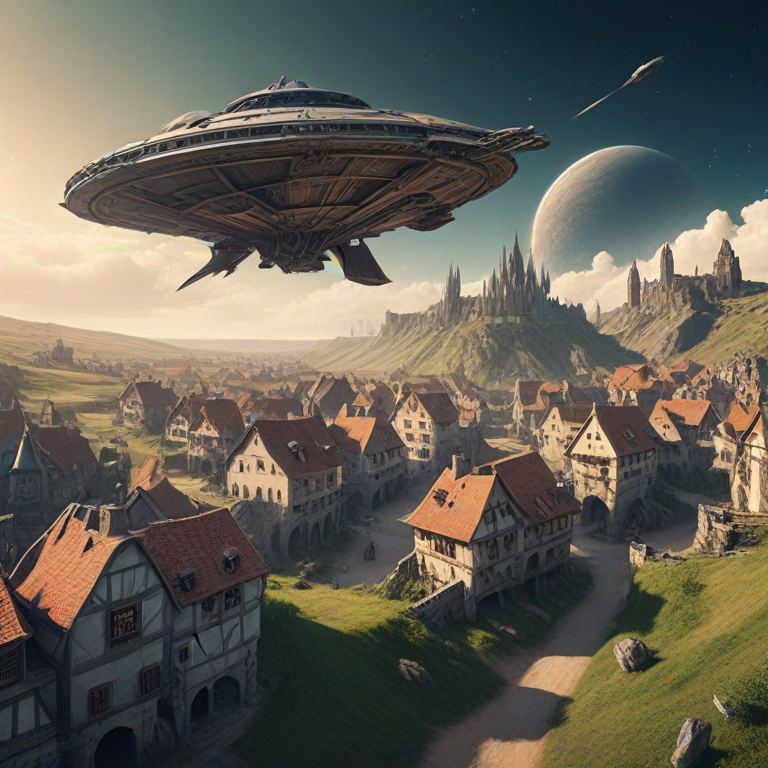
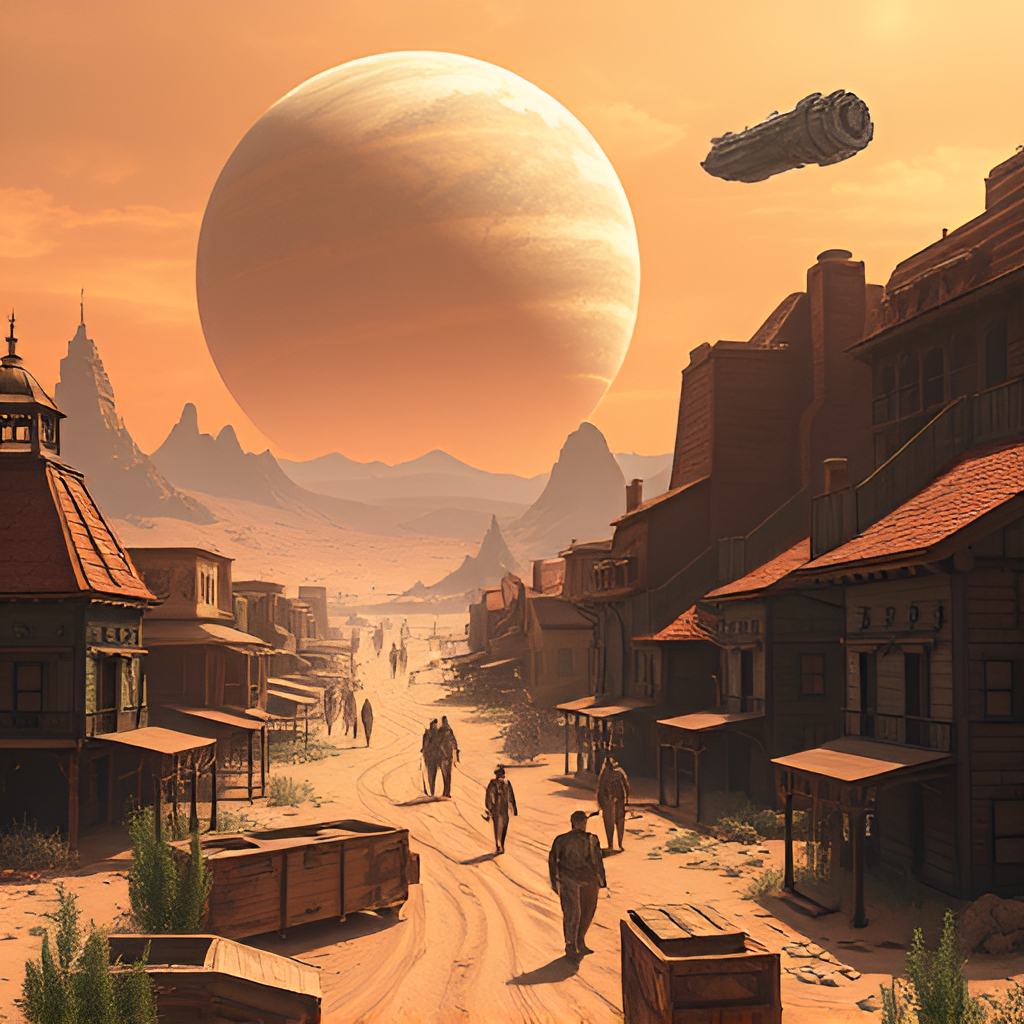
Anyway let's begin. First off, I think alien worlds should combine both ancient technology, futuristic technology, and everything in between. Technological progress isn't a linear path, so you shouldn't assume that aliens go through the same technological progression as we do. They might be flying interstellar ships, but they might also still be wielding swords and bows. So you can have spaceships flying over medieval style villages or even mudhuts. Star Wars has basically already popularized this, so this should be a no-brainer, but you can always take it a step further. For example, replace lightsabers with steel swords while still having space travel.
Pinned post
Pinned post
Fun fact: even I don't know how to pronounce my own username, so feel free to pronounce it anyway you want.
xianc78
boosted

TIL these old mp3 players have a name!
xianc78
boosted

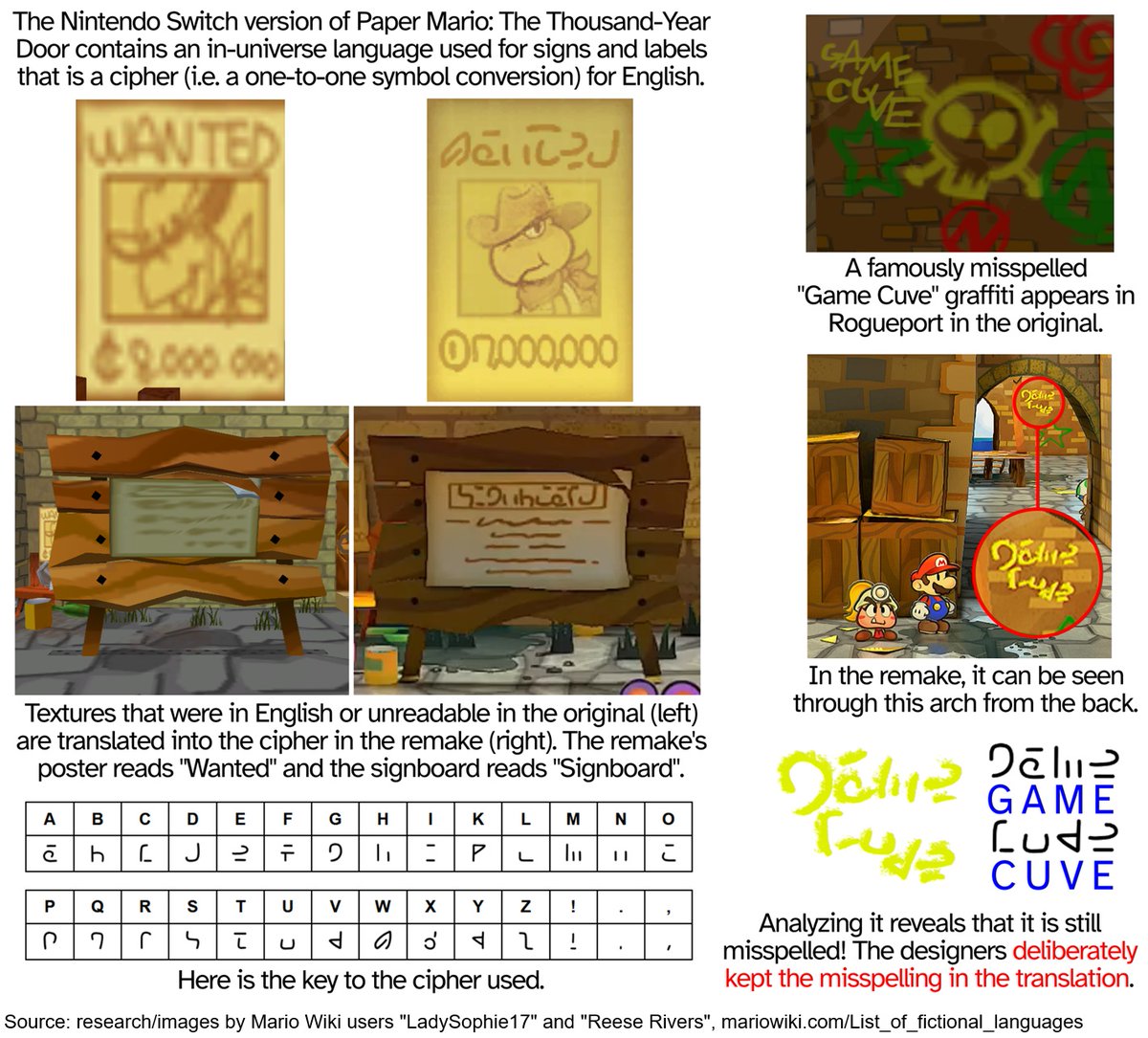
The Switch version of Paper Mario: The Thousand-Year Door includes its own fictional language that is a cipher for English. Amusingly, the misspelled "Game Cuve" graffiti from the original version is translated into the new language... but still reads "Game Cuve" when deciphered.
xianc78
boosted

Without approval from congress - it is - at minimum - a high crime for a president to unilaterally pledge military support in war to another nation.
The founders, without a doubt - would've considered it completely despicable and treasonous.
https://bird.makeup/users/jamiedupree/statuses/2111836278744383728
xianc78
boosted

"New Video Game Law Proposed: 'If You Pay For It, You Own It'"
Ha, yea, I could half-get behind something like this, but the problem is you shouldn't be able to force the company to do shit, but you should be entitled to reverse engineer it, copy it, modify it, etc. When companies behave badly you should stop doing business with them. It's really that simple most of the time.
The problem really comes down to government interference in the free market as to why we have many of the problems we do. It is copyright, patents, and similar that most significantly undermine competition in the market place & hinder folks ability to seek out a competing solution from a better behaving actor.
Governments should never grant monopolies and should look for solutions to undo what monopolies have handed unfair first mover advantages that benefited from such temporary or permanent monopolies of the past. Think electricity, telephone, internet, copyrights, patents, etc.
It's near impossible to open and compete against a pizza place that has been in business for 20 years already. They've paid off loans to get started and anything you do they'll be able to out-compete you on [probably] at least as far as price is concerned. They won't have the loans to pay off so if you set one price they'll just drop theirs to just below what you can afford until you go out of business. This a common practice of bigger corporations. Once they've run out their smaller competitors they then raise prices.
We should not be enabling this kind of behavior. It's also the case we should not be rigging our financial systems to reward larger companies over smaller ones.
It's these sorts of things that lead to less competition & it's effectively bad for everyone except those at the top.
xianc78
boosted

xianc78
boosted



xianc78
boosted

ENERGY SUPER THREAD:
1. Outdoor wood boilers, can they make power? https://pkteerium.xyz/@cjd/posts/B1WHsx8vsg8SPElL9s
2. Modeling a solar installation: https://pkteerium.xyz/@cjd/posts/B4AxzjQOsx3xR16ghk - this is really where I became aware that energy storage is a big issue...
3. You can get military vehicle decoys off Alibaba, why not store hydrogen in them? https://pkteerium.xyz/@cjd/posts/B4B9NCgLNBlSKXxWYC
4. Use excess energy for vacuum drying (and make hydrogen): https://pkteerium.xyz/@cjd/posts/B4OE1gKlTMIqkVtxyK
5. If you have an electric car and a woodgas generator at home, you effectively have a woodgas car... https://pkteerium.xyz/@cjd/posts/B4WmrIu8mLsQqfumIK
6. Introduction to EVs (for people who actually want to "own" their car): https://pkteerium.xyz/@cjd/posts/B4isEL9ViuygL262wS
7. Turning a classic car into an EV: https://pkteerium.xyz/@cjd/posts/B4squlHghPPjDgcYeu
8. My EV wishlist (this was later released, it's called the Slate Truck) https://pkteerium.xyz/@cjd/posts/B51UuwFhTHTgfR0faK
9. Nobody's really building coal or petroleum based power generation anymore, even China and India: https://pkteerium.xyz/@cjd/posts/B5vWpvh0rPYmA651bE
10. Hybrids are efficient because the engine is tuned entirely for efficiency, but would be unusable to drive without the battery: https://pkteerium.xyz/@cjd/posts/B62CIRsw1f71BL8Lse
11. Thermo-acoustic Engines! https://pkteerium.xyz/@cjd/posts/B63TiBTXYG4yCF4Zfs
12. EV adoption is a social contagion, after about 30%, adoption flies up to >90% https://pkteerium.xyz/@cjd/posts/B67MYUwGPVzscNmXcO
13. 200kw 50% efficient external combustion generator: https://pkteerium.xyz/@cjd/posts/B68NnAHJnmJbzs9D2O
14. Kite style flying wind generators https://pkteerium.xyz/@cjd/posts/B6AXlhdADPkSiSE8Ce
15. Off-grid settlement https://pkteerium.xyz/@cjd/posts/B6RYHoznfdQsVpRu8u - not directly energy-related, but my analysis on this lead to realizing energy is THE PROBLEM and that motivated a lot of further research on the topic.
16. Gasoline from air sourced CO2 capture? Chemistry is real but it doesn't look that feasible. https://pkteerium.xyz/@cjd/posts/B6nYlVPgqhW56w9nQO
17. Methanol synthesis! https://pkteerium.xyz/@cjd/posts/B78b0GqhYqk8Vo7O2S
18. Hybrid Airplanes (not as dumb as they look): https://pkteerium.xyz/@cjd/posts/B9mPndssHnkF3SP7lg
19. Turns out, EV battery fires are super rare (who knew): https://pkteerium.xyz/@cjd/posts/BATr3jThMSrANBGtaS
20. Sunday Energy Post, storing energy with hydrogen: https://pkteerium.xyz/@cjd/posts/BAqT8uoMirk4hqxHZw
21. Tangental: Nobody Understands Leyden Jars: https://pkteerium.xyz/@cjd/posts/BAySnj8t1CerbFWADY
22. Sunday Energy Post, flow batteries: https://pkteerium.xyz/@cjd/posts/BB56iMu1RKxmI8KAVs
23. Sodium metal fuel cells: https://pkteerium.xyz/@cjd/posts/BBBDmFBpvG2e9nDAga
24. Sunday Energy Post, flow batteries #2: https://pkteerium.xyz/@cjd/posts/BBJ5jdjywTPh3v6qjA
25. Ammonia is probably going to be the winner: https://pkteerium.xyz/@cjd/posts/BBKXuuhdD3FEjH8Mtc
26. Climate Change is (almost certainly) made up bullshit. https://pkteerium.xyz/@cjd/posts/BBSoz8VR5GQ5BPhyb2 - The real reason to de-carbonize is because carbon requires mining, refining and transport which is irreducibly expensive. Not because tHe WoRlD iS EnDiNg
27. Fusion Energy is a Booby Prize: https://pkteerium.xyz/@cjd/posts/BBXXaCKT0Q2KN0trNo
28. Sunday Energy Post: Making ammonia at a smaller scale: https://pkteerium.xyz/@cjd/posts/BBY8wNTZwGiNcIbLBA
More to come...
1. Outdoor wood boilers, can they make power? https://pkteerium.xyz/@cjd/posts/B1WHsx8vsg8SPElL9s
2. Modeling a solar installation: https://pkteerium.xyz/@cjd/posts/B4AxzjQOsx3xR16ghk - this is really where I became aware that energy storage is a big issue...
3. You can get military vehicle decoys off Alibaba, why not store hydrogen in them? https://pkteerium.xyz/@cjd/posts/B4B9NCgLNBlSKXxWYC
4. Use excess energy for vacuum drying (and make hydrogen): https://pkteerium.xyz/@cjd/posts/B4OE1gKlTMIqkVtxyK
5. If you have an electric car and a woodgas generator at home, you effectively have a woodgas car... https://pkteerium.xyz/@cjd/posts/B4WmrIu8mLsQqfumIK
6. Introduction to EVs (for people who actually want to "own" their car): https://pkteerium.xyz/@cjd/posts/B4isEL9ViuygL262wS
7. Turning a classic car into an EV: https://pkteerium.xyz/@cjd/posts/B4squlHghPPjDgcYeu
8. My EV wishlist (this was later released, it's called the Slate Truck) https://pkteerium.xyz/@cjd/posts/B51UuwFhTHTgfR0faK
9. Nobody's really building coal or petroleum based power generation anymore, even China and India: https://pkteerium.xyz/@cjd/posts/B5vWpvh0rPYmA651bE
10. Hybrids are efficient because the engine is tuned entirely for efficiency, but would be unusable to drive without the battery: https://pkteerium.xyz/@cjd/posts/B62CIRsw1f71BL8Lse
11. Thermo-acoustic Engines! https://pkteerium.xyz/@cjd/posts/B63TiBTXYG4yCF4Zfs
12. EV adoption is a social contagion, after about 30%, adoption flies up to >90% https://pkteerium.xyz/@cjd/posts/B67MYUwGPVzscNmXcO
13. 200kw 50% efficient external combustion generator: https://pkteerium.xyz/@cjd/posts/B68NnAHJnmJbzs9D2O
14. Kite style flying wind generators https://pkteerium.xyz/@cjd/posts/B6AXlhdADPkSiSE8Ce
15. Off-grid settlement https://pkteerium.xyz/@cjd/posts/B6RYHoznfdQsVpRu8u - not directly energy-related, but my analysis on this lead to realizing energy is THE PROBLEM and that motivated a lot of further research on the topic.
16. Gasoline from air sourced CO2 capture? Chemistry is real but it doesn't look that feasible. https://pkteerium.xyz/@cjd/posts/B6nYlVPgqhW56w9nQO
17. Methanol synthesis! https://pkteerium.xyz/@cjd/posts/B78b0GqhYqk8Vo7O2S
18. Hybrid Airplanes (not as dumb as they look): https://pkteerium.xyz/@cjd/posts/B9mPndssHnkF3SP7lg
19. Turns out, EV battery fires are super rare (who knew): https://pkteerium.xyz/@cjd/posts/BATr3jThMSrANBGtaS
20. Sunday Energy Post, storing energy with hydrogen: https://pkteerium.xyz/@cjd/posts/BAqT8uoMirk4hqxHZw
21. Tangental: Nobody Understands Leyden Jars: https://pkteerium.xyz/@cjd/posts/BAySnj8t1CerbFWADY
22. Sunday Energy Post, flow batteries: https://pkteerium.xyz/@cjd/posts/BB56iMu1RKxmI8KAVs
23. Sodium metal fuel cells: https://pkteerium.xyz/@cjd/posts/BBBDmFBpvG2e9nDAga
24. Sunday Energy Post, flow batteries #2: https://pkteerium.xyz/@cjd/posts/BBJ5jdjywTPh3v6qjA
25. Ammonia is probably going to be the winner: https://pkteerium.xyz/@cjd/posts/BBKXuuhdD3FEjH8Mtc
26. Climate Change is (almost certainly) made up bullshit. https://pkteerium.xyz/@cjd/posts/BBSoz8VR5GQ5BPhyb2 - The real reason to de-carbonize is because carbon requires mining, refining and transport which is irreducibly expensive. Not because tHe WoRlD iS EnDiNg
27. Fusion Energy is a Booby Prize: https://pkteerium.xyz/@cjd/posts/BBXXaCKT0Q2KN0trNo
28. Sunday Energy Post: Making ammonia at a smaller scale: https://pkteerium.xyz/@cjd/posts/BBY8wNTZwGiNcIbLBA
More to come...
xianc78
boosted


@Ninji Honestly it would be a great idea to ship shitty computers with these to normies that just browse all day to save up on decent components.
xianc78
boosted

only 6 hours till #NoAgenda live stream with AC and Rob Dew - 4 episodes to go until AC leaves No Agenda in hands of Dvorak family on 29th October
I will be cooperating with John C Dvorak’s son so I will not say one bad thing about that family
I’m just sad that AC has lied to me regarding giving me interview about Ai tools. Apparently he thinks that lying is not an obstacle of achieving salvation and going to heaven …
xianc78
boosted

Happy 6 year (and 1 day) anniversary to one of the most unhinged posts I’ve ever made: the HTML5 accelerator card
So it turns out that someone was combining Super Mario 64 and Minecraft code before Claude made it possible.
So I've just per-ordered a free-range turkey for Thanksgiving.
The people who say that free-range meat taste better need to be right because turkey is my least favorite meat and I want this one to be worth it.
xianc78
boosted
Have you attended a public school in the past couple of decades? Your personal data has probably been obtained no thanks to the poor security practices and decisions to computerize student records. Even if your haven't attended a public school in decades your personal information may now be in the hands of malicious actors (and I'm not just talking about the schools themselves).
"Personal Data for Millions of California Students Stolen in Massive Breach"
...
"The breach affects students 'who took the state's mandated standardized tests that annually assess their academic proficiency, education officials announced Friday.'"
xianc78
boosted


xianc78
boosted

Made a complete-ish "example game" dungeon-crawler for the Gamelord fantasy console to demonstrate some console capabilities.
xianc78
boosted

Every veteran I've ever talked to is like "Yeah my wife left me while I was deployed and the VA won't cover my surgery, oh and I'm scared of fireworks now...but you should totally enlist"
xianc78
boosted
 it is the way DEs were always to be







Fuck it. I'm using AI generated sprites for my platform game project (assuming it works out). OpenGameArt's selection is subpar. Itch.io's assets have dumb license restrictions. And I'm not going to find some artist who is going to reject my commissions or demand that I change shit.
The anti-AI crowd already hates me for other reasons. Why should I do anything to make them happy? And by my definition, the assets I'm generating are AI assisted (not "slop") because they will be created using rough drafts that I made myself (I became somewhat of a competent artist over the years).
xianc78
boosted
The government is coming for your electronics. The FCC is now demanding a FCC ID which will undermine your ability to sell used electronics online or get electronics they don't "approve" of all in the false name of national security.
This does NOTHING for national security or actual security / privacy etc. MOST devices have an FCC ID and are running malicious software. In fact nearly everything is. There are very few exceptions. I should know this is literally my business. We weed through and develop products that aren't hostile to a users freedom, control, privacy, and security.
Send your political critter a message telling this new FCC rule (not passed by the congress critters themselves, but arbitrarily created through a dictator that heads an organization with the authority to make up arbitrary rules that harm everyone) is completely unacceptable:
Here is a video that explains the situation and the guy is underwhelming in terms of understanding the danger and explaining the danger of the whole situation:
https://www.youtube.com/watch?v=KqXSDh3Nob4
https://flipwise.app/ebay-fcc-id-sellers-speak-up
This isn't just about your right to re-sell your electronics. It's the government taking control of and arbitrarily dictating and deciding whether or not you can have secure electronic devices. The very notion of the "security" they want harms you and undermines your ability to get electronics that do what is in your interest rather than whatever some bureaucrat demands.
- Sex
- Male
- Primary OS
- Linux Mint
- Programming Languages
- C/++/#, Python, Java, JavaScript, PHP, SQL, Assembly
- Ioncom Official Site
- http://ioncom.helioho.st/
Joined Jun 2020