
xianc78 @xianc78@gameliberty.club
- Sex
- Male
- Primary OS
- Linux Mint
- Programming Languages
- C/++/#, Python, Java, JavaScript, PHP, SQL, Assembly
- Ioncom Official Site
- http://ioncom.helioho.st/
Joined Jun 2020

>We can use chemtrails to slow down climate change
>Ignore chemtrails they're harmless
https://odysee.com/@ComputingForever:9/Seriously--This-is-The-Ultimate-Gaslighting-:0
xianc78
boosted


@xianc78 Considering "Xiang" is a Chinese name I'd assume your username is pronounced "Xianc78"
>(Please excuse my drunkenness)
Tuesday at 22-03 video.mp4
>(Please excuse my drunkenness)
Tuesday at 22-03 video.mp4

xianc78
boosted







@icedquinn I already know that overseas fake news will spin it into "Japan is fully reopened", so I want to make sure the smart people over here (this means all my followers) know the real truth about this.
But this is basic Japanese politics; when they do something bad, it's bad, but when they do something good, they have to fuck it up massively at least somewhere.
But this is basic Japanese politics; when they do something bad, it's bad, but when they do something good, they have to fuck it up massively at least somewhere.
xianc78
boosted
Japan has finally """fully""" reopened the international borders.*************
Except they didn't fully reopen the international borders at all, it's a fucking lie.
You still need either 3 lethal injections or a negative random number generated "PCR" """test""" (which is not a test) result within 72 hours.
They only removed the daily entry limit that was already meaningless anyway, having to go through travel agencies, and having to get a visa in advanced.
The country is NOT fully reopened until they remove ALL the requirements, including the lethal injection and/or RNG bullshit.
Until then, it's still partially reopened.
And yes, even though you can get fake documents very easily in every single place on earth (and it's even default there now) except for East Asia.
Except they didn't fully reopen the international borders at all, it's a fucking lie.
You still need either 3 lethal injections or a negative random number generated "PCR" """test""" (which is not a test) result within 72 hours.
They only removed the daily entry limit that was already meaningless anyway, having to go through travel agencies, and having to get a visa in advanced.
The country is NOT fully reopened until they remove ALL the requirements, including the lethal injection and/or RNG bullshit.
Until then, it's still partially reopened.
And yes, even though you can get fake documents very easily in every single place on earth (and it's even default there now) except for East Asia.
I originally created this account to show off my gamedev stuff, but I became known as the crazy ancap conspiracy theorist.
xianc78
boosted
@TerminalAutism @TechnicalSuwako @charliebrownau @rs1linuxtools The only true way to have free speech online is to self host your own static website.
This has always been the case since the very beginning, but everyone seemingly forgot once the "convenience" of soycial media kicked in, which came after the normies were allowed to come online, and barriers of entry basically disappeared.
This has always been the case since the very beginning, but everyone seemingly forgot once the "convenience" of soycial media kicked in, which came after the normies were allowed to come online, and barriers of entry basically disappeared.
xianc78
boosted
Today is a special day -- #codeauditday !
How do you celebrate?
On this day, developers around the world, whether or not they are actively employed or would normally do so, take some time out of their day to pick apart some part of their software stack that runs the technology in their lives. The goal is to take, once a year, a little extra time to audit, or test, or verify and validate the technology in our lives. The goal here is so that, as we continue to develop more and more complex technology that we never entirely lose our ability to understand it, at least in part, and that we always have some idea of what the computers in our lives are doing, in some decentralized, organized chaos way.
To participate in #codeauditday, pick something, some software, some code that you are currently running or have recently run, find the source code, read it, and understand it. Consider using a fuzzing tool or running the unit tests. Make sure it builds. Use some legal marijuana and/or meditate to help gain insight if that's your thing. There's lots of things you can do to source code to help make sure that it actually works, is robust, and works for *you*...do that stuff. Whatever you choose to do, whatever you choose to audit, don't be afraid to ask questions, to share what you're doing, and to generally have fun. Software doesn't have to always be painful, boring and life draining to debug.
For a past code audit day I suggested (as root)
for debian/devuan/ubuntu/etc users something like
# dpkg -S `cd /; ~/dirrand4 2>/dev/null | head -n 1`
which should tell you the debian source package you'll want to poke around (you'll need dirrand4 from https://notabug.org/themusicgod1/tools for this)
And sure, most people will chose software, either randomly through a tool like dirrand4 or just on their own, that is common and there'll be some duplication of effort. This is normal and healthy -- software that is common should be that much more closer scrutinized
another thing that would be handy to write for this day would be a tool for npm (and similar tools/platforms, like rust) that grabs a npm(or equivalent) project, and grabs its dependencies, and chooses a random number between 1 and N (where N is the number of dependencies+1). if that number turns out to be 1, it terminates and outputs the name of that package, otherwise it grabs the dependency (chosen by N) and recurses
http://b4hntuy3fimfh2227vf4f74emnya7p35i5brtqujs6leqvtclfwvjbqd.onion/googleplus/20171010%20-%20Today%20is%20code%20audit%20day!%20%20I_m%20starting_.html
How do you celebrate?
On this day, developers around the world, whether or not they are actively employed or would normally do so, take some time out of their day to pick apart some part of their software stack that runs the technology in their lives. The goal is to take, once a year, a little extra time to audit, or test, or verify and validate the technology in our lives. The goal here is so that, as we continue to develop more and more complex technology that we never entirely lose our ability to understand it, at least in part, and that we always have some idea of what the computers in our lives are doing, in some decentralized, organized chaos way.
To participate in #codeauditday, pick something, some software, some code that you are currently running or have recently run, find the source code, read it, and understand it. Consider using a fuzzing tool or running the unit tests. Make sure it builds. Use some legal marijuana and/or meditate to help gain insight if that's your thing. There's lots of things you can do to source code to help make sure that it actually works, is robust, and works for *you*...do that stuff. Whatever you choose to do, whatever you choose to audit, don't be afraid to ask questions, to share what you're doing, and to generally have fun. Software doesn't have to always be painful, boring and life draining to debug.
For a past code audit day I suggested (as root)
for debian/devuan/ubuntu/etc users something like
# dpkg -S `cd /; ~/dirrand4 2>/dev/null | head -n 1`
which should tell you the debian source package you'll want to poke around (you'll need dirrand4 from https://notabug.org/themusicgod1/tools for this)
And sure, most people will chose software, either randomly through a tool like dirrand4 or just on their own, that is common and there'll be some duplication of effort. This is normal and healthy -- software that is common should be that much more closer scrutinized
another thing that would be handy to write for this day would be a tool for npm (and similar tools/platforms, like rust) that grabs a npm(or equivalent) project, and grabs its dependencies, and chooses a random number between 1 and N (where N is the number of dependencies+1). if that number turns out to be 1, it terminates and outputs the name of that package, otherwise it grabs the dependency (chosen by N) and recurses
http://b4hntuy3fimfh2227vf4f74emnya7p35i5brtqujs6leqvtclfwvjbqd.onion/googleplus/20171010%20-%20Today%20is%20code%20audit%20day!%20%20I_m%20starting_.html

xianc78
boosted

Article by someone who claims to work at Microsoft talking about anti-racism leading to racism:
https://www.cspicenter.com/p/what-diversity-and-inclusion-means
https://www.cspicenter.com/p/what-diversity-and-inclusion-means


xianc78
boosted

The WEF admits it. The inflation and economic recession is part of The Great Reset.
Why doesn't the web support BMP?
xianc78
boosted





PHOTOS: Russian and US troops shook hands and took pictures together when their patrols met in Syria, actions in deep contrast with Ukraine tensions
https://www.businessinsider.com/photos-russian-and-us-troops-took-pictures-when-patrols-met-in-syria-2022-10
gamedev
And yeah. That game logo is just a placeholder. I made it, but I don't know if a proper logo would look good with the skills and tools I have. (I use Pinta which is basically an open source clone of Paint.NET) I would commission a logo, but I only have ~$40 worth of crypto last time I checked.
gamedev
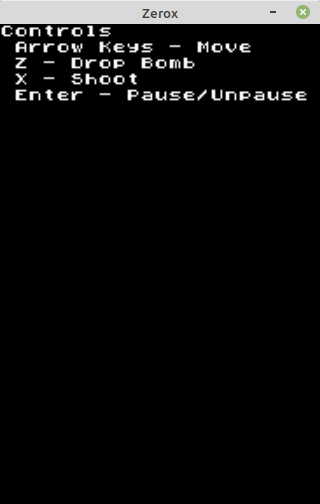
I've added a how to play screen on the main menu. I also finished Level 7 (the second to last level). I just need to do the finishing touches on level 8, and assuming there aren't any problems with the other levels, then I'm done with levels.

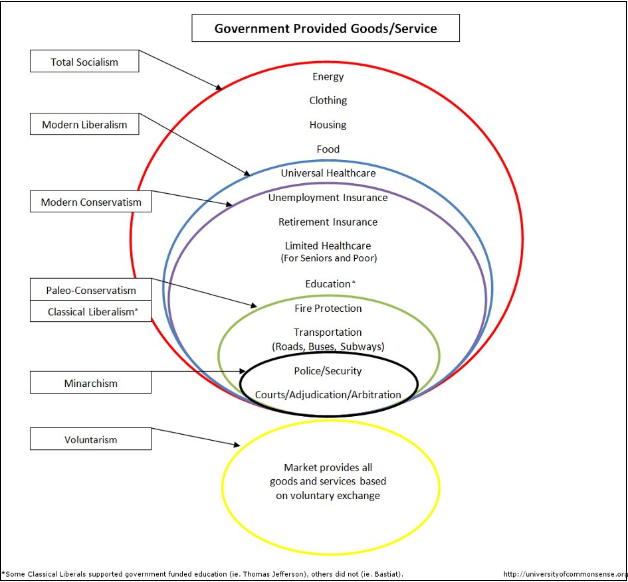
The left is calling for a nuclear war because they are all closeted Posadists.
- Sex
- Male
- Primary OS
- Linux Mint
- Programming Languages
- C/++/#, Python, Java, JavaScript, PHP, SQL, Assembly
- Ioncom Official Site
- http://ioncom.helioho.st/
Joined Jun 2020