

LukeAlmighty 🇨🇿 @LukeAlmighty@gameliberty.club
- This account is satire
- None of it is serious
- Fetish 1
- Muscular girls
- Fetish 2
- Dress shirts
- Fetish 3
- Yandere
- Fetish 4
- Women
- This is a satire account
- It's satine
>>>Satire account<<<
Fascism:
When you don't let people abuse your kids.
LukeAlmighty DO NOT have any pronouns. You can only refer to LukeAlmighty by LukeAlmighty's name. Please, be tolerant of this.
 Please be patient, LukeAlmighty have autism
🇨🇿
I you are in Czech republic, DM me, I'll be happy to grab a beer with you
>>>Satire account<<<
Joined Jul 2019
LukeAlmighty 🇨🇿
boosted

LukeAlmighty 🇨🇿
boosted





LukeAlmighty 🇨🇿
boosted

@Mackiavelli13 @Terry @apropos That's another thing: This war isn't over until ZOG says it's over. Russia's goal is peacefully reabsorbing the eastern Ukraine (Donetsk, Lugansk, Kherson, Zaporozhia, Kharkov) and disempowering the Ukrainian ZOG puppet government; ZOG's goal is the total dismantling of Russia as a sovereign entity and crushing the Russian people for their insolence.
Even if a truce is called, it will just lead to an informal low-level terrorism-based conflict, like 2014-2022. Writing a truce with ZOG never works because they never uphold their part of the bargain; just ask the Palestinians.
Even if a truce is called, it will just lead to an informal low-level terrorism-based conflict, like 2014-2022. Writing a truce with ZOG never works because they never uphold their part of the bargain; just ask the Palestinians.
LukeAlmighty 🇨🇿
boosted
@Duine Yeah that makes sense. I didn't mean to be too dismissive btw.
As for you bringing up the dogmatism of the standard model, I do have an anecdote about this, or at least a category of them. When it comes to quantum uncertainty, I always raise the question to physics professors, including my own (I took Physics I and II in college even though I'm not one), why the conclusion is drawn that it is impossible to take both values (usually position and momentum iirc) must be taken at face value. Isn't it possible, after all, that we might just not know how to take both of them?
This might be an example where you say the question is meaningless, but the question is less about the real answer which is obviously yes. It's more about if the professor himself is willing to be self aware. Almost every one of these men that I've dealt with and academic physics got kind of mad at me for raising this line of thought. They bruskly dismissed me and told me that no it is definitely impossible to measure both of these things and no it is not possible that we simply don't know how.
There's this essentially circular reasoning that I've noticed academics in particular are notorious for. As you say, observations that contradict the standard model must be false because the standard model is true, and we know that the standard model is true because all of the valid observations confirm it.
When I was doing undergraduate research, I was made to throw out a ton of "trash data" all the time, and it was usually considered that because it didn't make any sense given the current model. I was tasked with taking images of yeast cells and calculating their diameter using Matlab. I ended up succeeding by using OpenCV instead. But there were tons of cases where the yeast cells just had completely bizarre shapes that didn't even come close to resembling the life cycle in the textbook. But they were there.
To look back to the question of the known universe being in a big void, I was asking if this question saw any exploration, like maybe they could detect inbound particles from the great Beyond or something like that, coming from far enough away that there are no bodies like galaxies or stars. For some reason one of my old astronomical fixations has been on the edge of the universe, as in if it exists, and how it works.
@LukeAlmighty @coolboymew
As for you bringing up the dogmatism of the standard model, I do have an anecdote about this, or at least a category of them. When it comes to quantum uncertainty, I always raise the question to physics professors, including my own (I took Physics I and II in college even though I'm not one), why the conclusion is drawn that it is impossible to take both values (usually position and momentum iirc) must be taken at face value. Isn't it possible, after all, that we might just not know how to take both of them?
This might be an example where you say the question is meaningless, but the question is less about the real answer which is obviously yes. It's more about if the professor himself is willing to be self aware. Almost every one of these men that I've dealt with and academic physics got kind of mad at me for raising this line of thought. They bruskly dismissed me and told me that no it is definitely impossible to measure both of these things and no it is not possible that we simply don't know how.
There's this essentially circular reasoning that I've noticed academics in particular are notorious for. As you say, observations that contradict the standard model must be false because the standard model is true, and we know that the standard model is true because all of the valid observations confirm it.
When I was doing undergraduate research, I was made to throw out a ton of "trash data" all the time, and it was usually considered that because it didn't make any sense given the current model. I was tasked with taking images of yeast cells and calculating their diameter using Matlab. I ended up succeeding by using OpenCV instead. But there were tons of cases where the yeast cells just had completely bizarre shapes that didn't even come close to resembling the life cycle in the textbook. But they were there.
To look back to the question of the known universe being in a big void, I was asking if this question saw any exploration, like maybe they could detect inbound particles from the great Beyond or something like that, coming from far enough away that there are no bodies like galaxies or stars. For some reason one of my old astronomical fixations has been on the edge of the universe, as in if it exists, and how it works.
@LukeAlmighty @coolboymew


LukeAlmighty 🇨🇿
boosted

LukeAlmighty 🇨🇿
boosted
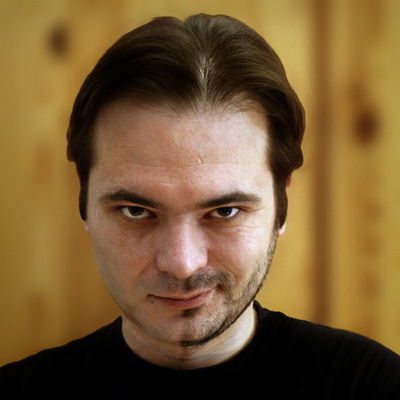
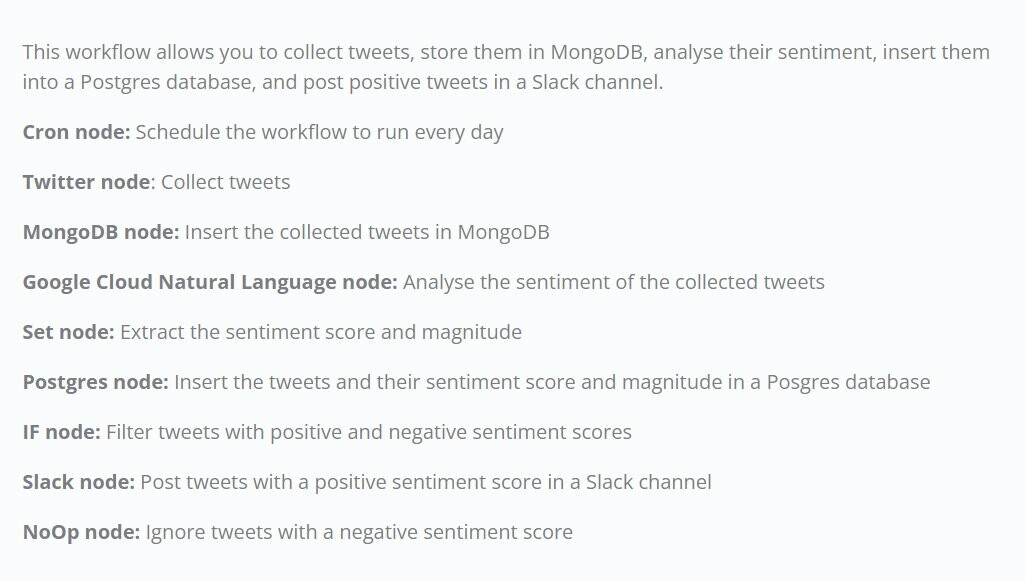
Tyhle hračky ještě ani nejsou AI a už i tak mi přijdou až příliš "mocné" pro běžné smrtelníky. Tenhle workflow jde nastavit na pár kliknutí (a případně libovolně upravit), a to je jen relativně nevinný příklad, umí to prakticky cokoliv. Jo, líbí se mi to, ale odkaz dávat nebudu.
LukeAlmighty 🇨🇿
boosted




 🌿
🌿 
LukeAlmighty 🇨🇿
boosted

@LukeAlmighty @alyx
an actual interview that happened
 don't you think burying this guy for criticizing you proves his point?
 well if i don't flex on him then people might consider his ideas
 so to prove you don't run everything you buried someone for saying you run everything which is only possible with a great degree of influence
an actual interview that happened
don't you think burying this guy for criticizing you proves his point? well if i don't flex on him then people might consider his ideas so to prove you don't run everything you buried someone for saying you run everything which is only possible with a great degree of influence












- This account is satire
- None of it is serious
- Fetish 1
- Muscular girls
- Fetish 2
- Dress shirts
- Fetish 3
- Yandere
- Fetish 4
- Women
- This is a satire account
- It's satine
>>>Satire account<<<
Fascism:
When you don't let people abuse your kids.
LukeAlmighty DO NOT have any pronouns. You can only refer to LukeAlmighty by LukeAlmighty's name. Please, be tolerant of this.
Please be patient, LukeAlmighty have autism
🇨🇿
I you are in Czech republic, DM me, I'll be happy to grab a beer with you
>>>Satire account<<<
Joined Jul 2019