LukeAlmighty 🇨🇿 @LukeAlmighty@gameliberty.club
- This account is satire
- None of it is serious
- Fetish 1
- Muscular girls
- Fetish 2
- Dress shirts
- Fetish 3
- Yandere
- Fetish 4
- Women
- This is a satire account
- It's satine
>>>Satire account<<<
Fascism:
When you don't let people abuse your kids.
LukeAlmighty DO NOT have any pronouns. You can only refer to LukeAlmighty by LukeAlmighty's name. Please, be tolerant of this.
 Please be patient, LukeAlmighty have autism
🇨🇿
I you are in Czech republic, DM me, I'll be happy to grab a beer with you
>>>Satire account<<<
Joined Jul 2019
Hanging yourself by baloons might be the dumbest unique suicide idea out there 
LukeAlmighty 🇨🇿
boosted

Plenty of rope to go around.
IMG_20230211_175014_728~2.jpg
IMG_20230211_175014_728~2.jpg
LukeAlmighty 🇨🇿
boosted
If I analyze the personality traits of all the male charactersbI want to fuck, some of the qualities I find attractive are
>Assertiveness
>Confidence
>Hidden inferiority complex
>Is the alpha of his group
>A little stupid
>A BI BOTTOM SLUUUUUUUUT 🤘😝🤘
LukeAlmighty 🇨🇿
boosted


Hey dawg, I heard you like blackface.
This shit was today in our TV news. Please, play the video to all your US friends.
https://tn.nova.cz/zpravodajstvi/clanek/489513-cesko-ozilo-200-let-starou-tradici-do-ulic-se-vydaly-masopustni-pruvody

In case you felt bad for being alone
Death is inevitable for male octopuses once they’ve mated because they stop feeding, they become uncoordinated, often attracting predators in the wild, and they lose the ability to heal their skin. This period near the end of life, called senescence, is driven by secretions from the optic gland that trigger the reproductive organs while inactivating the salivary and digestive glands, thereby causing loss of appetite and eventual starvation.
Most octopuses are short-lived – only living for 1-4 years. Interestingly, the optic gland is like a self-destruct system that appears to control reproduction and life span in response to environmental factors such as light, temperature, and nutrition.
Most species of octopus are “semelparous,” meaning they reproduce once and then die. Salmon are another example of a semelparous marine species.
After mating, male octopuses normally starve to death or attract predators, thereby becoming part of the food chain.
Why do Octopuses Die after Reproduction?
Wang and Ragsdale (2018) suggest that semelparity in octopuses (reproduce once and then die) is likely an evolutionary mechanism that drives post-reproductive death.
Many octopus are cannibalistic. Hatchlings from the same clutch often eat each other and females are known to kill and eat the males after mating. There is every possibility that a female octopus would eat her own young if given the chance.
Death after reproduction is a good way of ensuring that a female does not consume her own young!
Octopuses Seem to Lose Control before Dying
Octopuses near the end of life seem to lose control over their own bodies and look as if they’ve forgotten how to swim properly. They frequently lose their balance and trip over their own arms.
Senescent octopuses may even chew their own arms and bite off chunks of tissue.
Octopuses have a relatively short life-span – a bit of a shame when you consider how intelligent they are.
What is Senescence and how does it Work?
Senescence is a period of at the end of life when the functional characteristics of living organisms gradually deteriorate. Senescence represents the last part of an animal’s lifecycle before it dies.
With octopuses, senescence is triggered by reproduction and ends with the animal’s death.
According to Anderson et al. (2002) the are four conditions or activities that can be used as indicators of octopus senescence:
(a) loss of appetite and lack of feeding, leading to weight loss,
(b) retraction of the skin around the eye,
(c) undirected or uncoordinated activity, and
(d) the occurrence of white lesions on the skin.
The loss of appetite in both male and female octopuses during senescence is well documented, and it appears that fasting inevitably leads to death by starvation.
When Octopus Eyes Grow Large, the End is Near!
When octopuses stop eating in senescence, their eyes stay the same size while the body shrinks as the animal loses weight. This causes the skin around the eyes to retreat, making the eyes look bigger.
Both Male and Female Octopuses experience Senescence
For the female octopus, life after mating is characterized by an extreme dedication to caring for her eggs. During the brooding process, she will clean and protect her eggs without feeding until her death – for months or even up to a year – losing between 50-71% of her body weight.
Unlike females, male octopuses don’t provide any clear signals that they’ve entered senescence. The best sign that males are becoming senescent is their lack of appetite. They stop eating, and their bodies begin to deteriorate.
What Role does the Optic Gland play in Senescence?
The optic gland between the octopus’s eyes is somewhat analogous to the pituitary gland in humans.
In a key experiment (Wodinsky (1977), researchers removed optic glands from female Caribbean two-spot octopuses (O. hummelincki) that were brooding their clutches of eggs and had stopped feeding.
The females suddenly lost their maternal instincts and abandoned their eggs. They resumed feeding, gained weight and some even mated again. They went on to live a much longer life, nearly 6 months longer than their counterparts with the intact optic glands.
Wang and Ragsdale (2018) conclude that rather than secreting a single hormone, “the optic gland likely enlists multiple signaling systems to regulate reproductive behaviors, including organismal senescence.”
For octopuses, it turns out that the optic glands and optic gland secretions constitute something like a ‘self-destruct system’ ensuring death after reproduction.


LukeAlmighty 🇨🇿
boosted

@dave @LukeAlmighty @Eiregoat @Shadowman311 @skylar
>“The science” has been pretty robust for decades now,
No science has been robust for decades, there is a reproducibility crisis.
>“The science” has been pretty robust for decades now,
No science has been robust for decades, there is a reproducibility crisis.
LukeAlmighty 🇨🇿
boosted

I used to refer people to a cool wikipedia article that was just "List of scientists who oppose the mainstream consensus on climate change" and it was just a list of like 50 well credentialed scientists, but wikipedia deleted the page, not relevant enough I suppose!
Watching Wall-e is giving me factorio PTSD
Why the fuck does Eve in Wall-e have a gun?
LukeAlmighty 🇨🇿
boosted

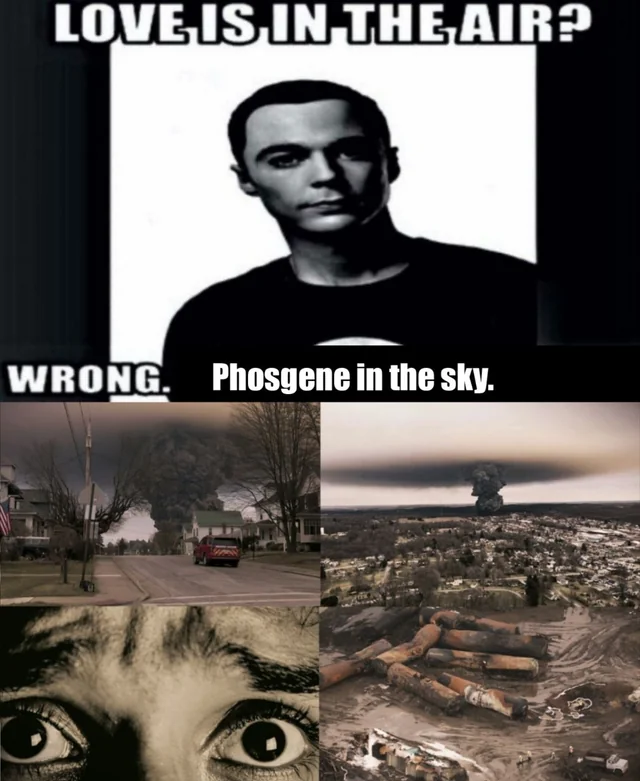
You know it's typical that a train would be America's Chernobyl, given that our entire train network is a waking nightmare








- This account is satire
- None of it is serious
- Fetish 1
- Muscular girls
- Fetish 2
- Dress shirts
- Fetish 3
- Yandere
- Fetish 4
- Women
- This is a satire account
- It's satine
>>>Satire account<<<
Fascism:
When you don't let people abuse your kids.
LukeAlmighty DO NOT have any pronouns. You can only refer to LukeAlmighty by LukeAlmighty's name. Please, be tolerant of this.
Please be patient, LukeAlmighty have autism
🇨🇿
I you are in Czech republic, DM me, I'll be happy to grab a beer with you
>>>Satire account<<<
Joined Jul 2019