
xianc78 @xianc78@gameliberty.club
- Sex
- Male
- Primary OS
- Linux Mint
- Programming Languages
- C/++/#, Python, Java, JavaScript, PHP, SQL, Assembly
- Ioncom Official Site
- http://ioncom.helioho.st/
Joined Jun 2020
@gabriel @silverpill Well even then, you still need some sort of way to make digital payments for the purposes I've mentioned. Some people would rather use it in a decentralized and (somewhat) anonymous manner.
@gabriel @silverpill
>or normalize digital currenecy
I never understood this sentiment because I never hear anyone claiming that Bitcoin (or any other cryptocurrency) should replace cash. I always saw cryptocurrencies as a decentralized alternative to payment processors like PayPal and nothing more. That's what got me excited about it when I first heard about it back in 2013-2014. I always felt that we need a way to make decentralized payments over the Internet for things like donating to FOSS projects, renting VPSes, etc. You can't really do that with cash or barter, but that doesn't mean that digital currencies should replace those things.
xianc78
boosted

I'm glad Ruffle does such a good job. There would have been so much weird classic homemade Flash that would have been lost. Homestar Runner forever!
xianc78
boosted

xianc78
boosted

xianc78
boosted

Governments tell us to cut eating red meat and dairy products to ‘save the planet’ yet they ram through hundreds of massive data centres that consume vast amounts of energy and water…


@beardalaxy I would like to see games distributed via flash drives. There was some LootCrate-like service that gave you an indie game on a flash drive every month but they have long since been shutdown.
I also want to see cereal box games to make a comeback. It would be a great way to get people to try new games.
@beardalaxy @lina @PurpCat It seems like both missions were made to be shocking as possible in order to create a Streisand effect.
xianc78
boosted
Took care of the bee hive yesterday. It was probably not the best day to go outside in a bee suit. After I got out all the frames and took off the bee suit, my shirt 100% drenched in sweat. I drank two cups of water, laid down on the couch and thought I was going to die 😩 ... Then I finally got up and mowed the lawn.
xianc78
boosted

xianc78
boosted

Home Depot: The only place where buying a light bulb gets your face scanned like your a suspect and your car's plates tracked like a fugitive.
Facial recognition at checkout.
Flock cameras in the lot = hard pass.
Boycott Home Depot. Vote with your wallet.
xianc78
boosted

xianc78
boosted
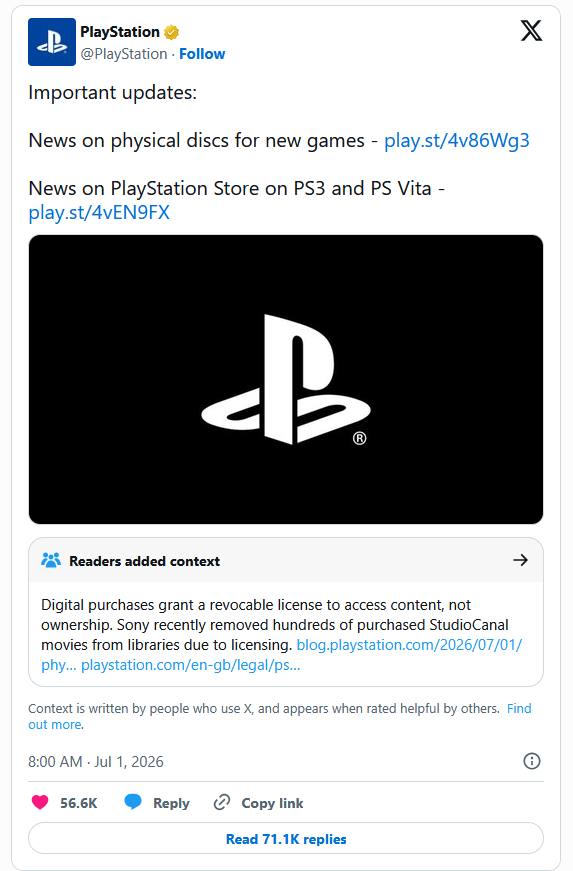
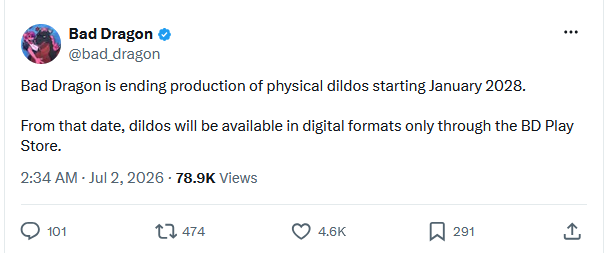
sony fucked up so hard even the furry sex toy companies are making jokes at their expense
xianc78
boosted


All 'puters should have a console port dammit
xianc78
boosted

Fun drinking game: Take a shot for every anti-libertarian US state or federal bill that has the words "protect", "kids", "child", "parent" or "terrorism" in it. Most participants die before arriving to the hospital.
@PurpCat @lina
>because few developers want to be seen as making a "mass shooter simulator"
And even fewer developers want to make games involving child death. That's why children are absent in games like GTA, Postal, and Hatred. This especially became true after Columbine. Hell, a lot of people believe that part of the reason that Mother 3 still hasn't been localized is the fact that child death is a key part of the game's plot.
xianc78
boosted








@PurpCat eh wait why the fuck are redditors thinking its fucked up to shoot up a russian airport?
i thought they relish in the suffering of the russian people that they never even met
i thought they relish in the suffering of the russian people that they never even met
@bonkmaykr
>I imagine it wasn't very well thought out because Commodore's main business model was to cut hardware costs, not sell at a loss and live off of software licensing.
That's what also partly killed the TurboGrafx-16 outside of Japan. It seems like the common mistake that computer manufacturers make when trying to enter the console business.
>I don't know much about Atari, I think they tried to improve security after the 2600 but that doesn't exactly work if nobody's buying your machines to begin with.
Atari just never recovered from the video game crash. The 7800 was soft-launched shortly before the NES, but could not compete with it after the NES came to market (games were the exact same ones from the 2600 era, but with better graphics). The Lynx was way too expensive, bulky and ate up batteries. And the Jaguar was a nightmare to program for and whatever advantages it had compared to it's 32-bit or even 16-bit competition was never really shown off during it's lifetime. Piracy didn't kill any of those consoles, but the Atari 2600 was declared an open platform by the courts and that did contribute to their downfall.
Even to this day, they have no idea what they are doing. They thought they could've learned from the mistakes the Ouya made with the VCS, but they didn't realize that PC gaming has become much more accessible over the years (especially when it comes to plugging a PC into the TV) that there really isn't any demand for an "open console" anymore.
- Sex
- Male
- Primary OS
- Linux Mint
- Programming Languages
- C/++/#, Python, Java, JavaScript, PHP, SQL, Assembly
- Ioncom Official Site
- http://ioncom.helioho.st/
Joined Jun 2020